| PCB Structure |
Single-sided
Double-sided
Multilayer
HDI
|
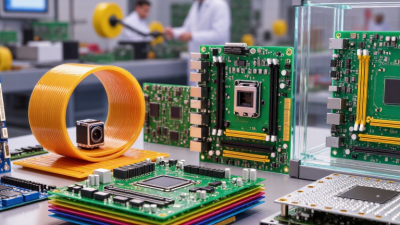
Single-sided boards use one conductive copper layer. Double-sided boards use copper on both sides. Multilayer boards contain three or more conductive layers separated by dielectric material. HDI uses fine features, microvias, and high-density interconnects. |
Simple controls; general digital and power circuits; high-density computing, communications, and compact electronics. |
Confirm layer count, sequential lamination capability, microvia process control, registration limits, and documented stack-up approval. |
Use the simplest structure that meets routing, impedance, thermal, and mechanical requirements. |
| Manufacturing Method |
Subtractive etching
Semi-additive processing
Laser drilling
|
Standard subtractive processing forms traces by etching unwanted copper. Semi-additive processes support finer conductive features. Laser drilling is commonly used for microvias in HDI boards. |
Standard subtractive processing suits most conventional rigid boards; semi-additive and laser processes suit fine-line and high-density designs. |
Request process capability data for minimum trace/space, microvia diameter, annular ring, copper thickness, and layer-to-layer registration. |
Do not select advanced processes only for marketing value; match them to the design rules and production volume. |
| Board Material |
FR-4 epoxy laminate
High-Tg laminate
Low-loss laminate
Polyimide
Metal-core
|
Standard FR-4 is widely used for general electronics. High-Tg materials provide greater thermal stability. Low-loss materials reduce signal attenuation at high frequencies. Polyimide supports flexible circuits, while metal-core boards improve heat spreading. |
General electronics; lead-free reflow and high-temperature environments; high-speed or RF designs; flexible products; LED and power thermal management. |
Verify laminate datasheets, Tg, decomposition temperature, Z-axis expansion, dielectric constant, dissipation factor, and lot traceability. |
Choose material from measured electrical, thermal, flexing, and environmental requirements—not from price alone. |
| Copper Thickness |
Standard copper; heavy copper; mixed copper weights |
Greater copper thickness generally supports higher current and improves heat spreading, but it can make fine-line etching and reliable plating more difficult. |
Standard digital boards; power distribution, motor control, battery systems, and high-current interconnects. |
Check finished copper thickness, plating uniformity, current-carrying design assumptions, and cross-section test records. |
Specify finished copper, not only starting foil, and evaluate current, temperature rise, via reliability, and manufacturability together. |
| Surface Finish |
HASL
Lead-free HASL
ENIG
Immersion tin
OSP
|
HASL provides a solderable coating but may have greater surface variation. ENIG offers a flat surface for fine-pitch assembly. OSP is a thin organic coating suited to controlled handling and shorter storage periods. |
Cost-sensitive through-hole or general assembly; fine-pitch and pad-flatness requirements; lead-free assembly; short supply-chain cycles. |
Confirm finish thickness, solderability testing, nickel and gold layer control where applicable, storage conditions, and surface contamination limits. |
Select based on component pitch, assembly process, shelf-life needs, contact requirements, and total cost. |
| Electrical Performance |
Controlled impedance
High-speed signal integrity
RF performance
|
Impedance depends on trace geometry, copper thickness, dielectric thickness, and material properties. Stack-up variation can affect insertion loss, crosstalk, and timing margins. |
High-speed digital interfaces, RF circuits, networking equipment, imaging systems, and precision instrumentation. |
Require impedance coupons, stack-up calculations, dielectric data at the operating frequency, and test reports tied to production lots. |
Approve the stack-up before fabrication and define impedance tolerance, test method, and acceptance limits in the fabrication drawing. |
| Thermal Management |
Thermal vias
Copper planes
Metal core
Heat-sink interface
|
Thermal vias transfer heat from component pads to internal or external copper. Metal-core constructions provide a thermally conductive base for suitable applications. |
Power converters, LED lighting, motor drives, battery management, and high-power processors. |
Review thermal resistance data, via filling or plugging requirements, flatness, dielectric isolation, and thermal test evidence. |
Validate the complete thermal path from component to enclosure, not only the PCB material. |
| Reliability Class |
IPC Class 1
IPC Class 2
IPC Class 3
|
IPC Class 1 focuses on general electronic products. Class 2 requires extended performance and higher consistency. Class 3 applies to products where continued or on-demand performance is critical. |
Consumer and noncritical products; most industrial and commercial electronics; aerospace, medical, automotive safety-related, and other high-reliability applications when specified. |
State the required IPC class on drawings and purchase documents; verify inspection criteria, defect limits, and escalation procedures. |
Choose the class according to product risk and service conditions, while recognizing that IPC class does not replace product-specific validation. |
| Quality Standards |
IPC-A-600
IPC-6012
IPC-2221
ISO 9001
|
IPC-A-600 defines visual acceptability criteria for printed boards. IPC-6012 covers qualification and performance for rigid printed boards. IPC-2221 provides generic design guidance. ISO 9001 specifies quality management system requirements. |
Use the standards together: design rules, board performance specification, visual acceptance, process control, and quality-system governance. |
Request current certificates, scope statements, internal audit evidence, corrective-action records, and a clear mapping between standards and inspection plans. |
Treat certification as evidence of a system, not as proof that every board will meet the project specification. |
| Safety and Compliance |
Flammability rating
RoHS
REACH
Conflict minerals data
|
Flammability requirements depend on the end product and applicable safety design. RoHS restricts certain hazardous substances in covered electrical and electronic equipment. REACH addresses chemical substances in the European Union. |
Consumer, industrial, medical, transportation, and products sold into regulated markets. |
Obtain material declarations, test reports where required, controlled-substance statements, and evidence covering laminates, finishes, solder, and process chemicals. |
Define the target market and legal requirements before material approval; compliance responsibility may extend beyond the PCB supplier. |
| Inspection and Testing |
AOI
Electrical test
X-ray
Microsection
Reliability testing
|
AOI detects many visible pattern defects. Electrical testing checks for opens and shorts. X-ray helps inspect hidden features. Microsection analysis verifies internal construction, plating, and via quality. |
Inspection depth should increase with board complexity, product risk, hidden interconnects, and production history. |
Confirm test coverage, sampling plan, coupon design, calibration records, nonconformance handling, and delivery of inspection reports. |
Build a risk-based inspection plan rather than relying on a single inspection technology. |
| Supplier Engineering Capability |
DFM review
Stack-up design
Impedance modeling
Failure analysis
|
A capable engineering team can identify manufacturability risks before production, including insufficient spacing, unsuitable drill structures, thermal constraints, and impedance deviations. |
Complex rigid, flexible, rigid-flex, HDI, high-speed, and high-reliability designs. |
Evaluate sample DFM reports, engineering response time, change-control discipline, root-cause analysis, and ability to communicate in the project language. |
Prefer suppliers that demonstrate preventive engineering, not only low quotation prices. |
| Production Capacity |
Prototype
Pilot build
Mass production
Flexible scheduling
|
Prototype capability does not automatically indicate stable volume production. Capacity should be assessed for the specific board technology, material set, and quality class required. |
Early design validation; controlled product introduction; recurring production with forecasted demand. |
Review demonstrated monthly capacity, bottleneck equipment, capacity allocation, surge planning, lead-time history, and second-source readiness. |
Qualify the supplier at the intended production stage and confirm scale-up controls before release. |
| Traceability and Change Control |
Lot traceability
Material records
Process revision control
PCN procedure
|
Traceability connects finished boards to materials, process conditions, inspection results, and shipment records. Change control helps prevent unapproved changes to materials, processes, or manufacturing locations. |
All products, with increased importance for regulated, safety-related, long-life, and high-reliability applications. |
Request a sample certificate of conformity, lot history, material batch record, revision history, and documented product-change notification process. |
Make traceability and written change notification contractual requirements for long-life products. |
| Lead Time and Total Cost |
Tooling
Material availability
Yield
Logistics
Inspection cost
|
The quoted unit price excludes many factors, including engineering, tooling, expedited freight, test fixtures, scrap, yield loss, qualification, and inventory carrying cost. |
All sourcing decisions, especially when comparing standard boards with advanced materials or complex structures. |
Compare complete landed cost, realistic lead time, minimum order quantity, tooling ownership, warranty terms, and delivery performance history. |
Use total cost of ownership and supply continuity—not unit price alone—as the final sourcing metric. |
| Recommended Selection Workflow |
Requirements → Stack-up → DFM → Prototype → Qualification → Production monitoring |
A controlled workflow reduces redesign risk and confirms that the selected board, materials, process, and supplier remain suitable from engineering samples through volume production. |
Any project where reliability, schedule, compliance, or supply continuity matters. |
Require documented approvals at each gate, including design review, first-article inspection, process capability review, and periodic supplier performance review. |
Select the PCB and supplier as one integrated decision rather than evaluating the board specification separately from manufacturing capability. |