Industrial equipment rarely stays still. Motors vibrate, control panels open for service, and cable carriers bend repeatedly during each production cycle. Flexible Wire can accommodate movement more readily than many rigid conductors, helping maintain electrical connections in changing layouts. That advantage depends on choosing the right construction. A cable suited to a sensor lead may not withstand the heat, abrasion, or repeated motion near a machine drive. Details matter.
A sound selection starts with the application: expected bending frequency, minimum bend radius, operating temperature, voltage, and exposure to oil, moisture, or chemicals. Conductor strand count, insulation material, shielding, and jacket design also affect performance. Check the manufacturer’s data sheet and confirm that the cable matches the equipment’s terminals and installation space. These are practical checks, not paperwork for its own sake. A cable can look robust and still fail early if it is pinched, routed too tightly, or used beyond its rated conditions.
Installation deserves equal attention. Keep moving cables away from sharp edges, support them where needed, and follow the specified bend radius. Then inspect them during routine maintenance. No wire is maintenance-free. Flexible Wire offers useful adaptability, but it cannot correct poor routing or an unsuitable design. This guide explains where flexible wire can help, what to compare before purchase, and which trade-offs deserve a closer look. One point is easy to overlook: “flexible” describes a construction, not a guarantee of service life.
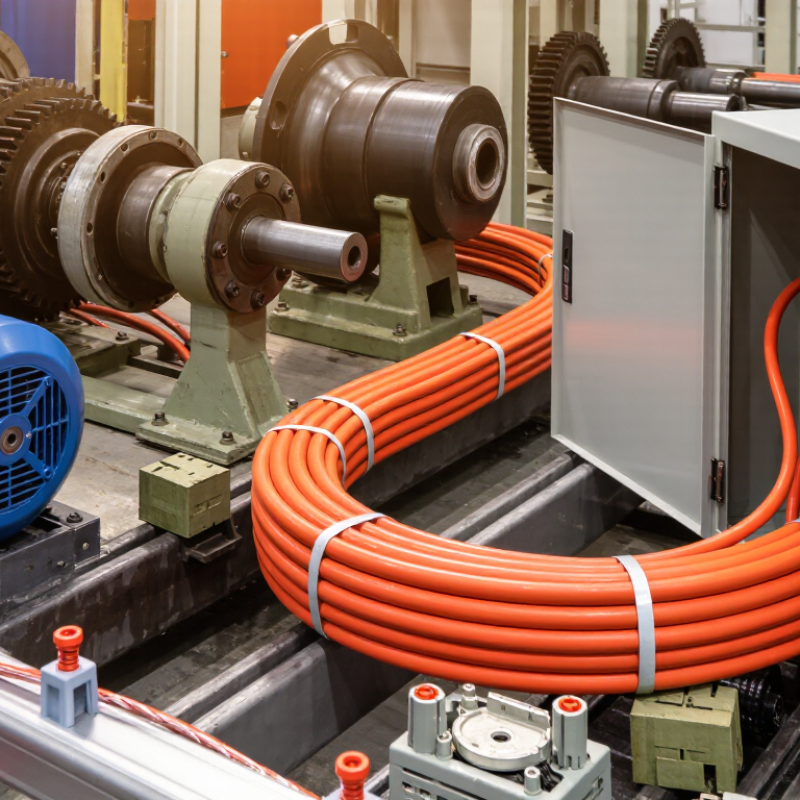
Flexible wire is a conductor designed to bend more easily than a solid-core wire. It is commonly made from many thin metal strands twisted together. Each strand can shift slightly as the wire curves, reducing stress on any single point. Many fine strands. That matters in equipment with moving parts, tight bends, or vibration.
Copper is often used because it conducts electricity well and can be drawn into fine strands. The strands are gathered into a bundle, then twisted or laid in a consistent direction. Strand count and diameter affect flexibility, resistance, and durability. A finer bundle generally bends more readily, but its actual performance also depends on wire size and construction. Small details count.
An insulating layer surrounds the conductor to limit electrical contact and protect it from its environment. Common insulation materials include PVC, silicone, and cross-linked polyethylene; each handles heat, abrasion, oils, and moisture differently. The right choice depends on the installation, not just the stated temperature range. One easy-to-miss point: repeated bending can still fatigue a wire, especially near connectors. Flexible does not mean indestructible. Check the intended bend radius, operating conditions, and strand construction against the equipment requirements.
Industrial flexibility starts inside the conductor. IEC 60228:2004 classifies Class 5 and Class 6 copper conductors as flexible and very flexible. Its resistance data lists a maximum of 13.3 Ω/km for a 1.5 mm² Class 5 copper conductor at 20°C. Class 6 allows finer, more numerous strands, which can reduce bending stiffness. Small strands matter. They help a cable move repeatedly around a machine joint without forcing one solid core to take every bend.
The outer materials and cable geometry matter just as much. Silicone insulation suits applications requiring high-temperature performance, while thermoplastic elastomers or polyurethane may better resist abrasion and oils, depending on the grade. A helical strand lay, carefully selected conductor diameter, and a flexible jacket help limit kinking during repeated movement. Shielding can control electrical interference, but a stiff shield may restrict motion. That trade-off is easy to underestimate. In practice, test the complete cable under its real bend radius, temperature, and movement cycle; a flexible sample can still fatigue sooner than expected.
| Material or Design Feature | How It Enables Flexibility | Typical Industrial Benefits | Selection Considerations |
|---|---|---|---|
| Fine-stranded copper conductor | Many small copper strands bend more readily than a single solid conductor of the same approximate cross-sectional area. | Useful for equipment leads, portable machinery, and wiring that must be routed through confined spaces. | Stranding class and conductor size affect flexibility. Check the applicable cable standard and the product datasheet for the intended movement. |
| High-flexibility stranding, such as IEC 60228 Class 5 or Class 6 | Class 5 and Class 6 conductors use stranded construction; Class 6 generally uses finer strands than Class 5. | Can make installation and repeated bending easier than using a solid conductor. | Conductor class alone does not establish suitability for continuous flexing or a specific bend radius; verify the cable’s stated application and test data. |
| Annealed copper | Annealing softens copper and improves its ductility, allowing strands to bend more easily during handling and service. | Commonly used where conductors need to be formed or flexed during installation. | Choose conductor size and stranding to meet electrical, mechanical, and temperature requirements. |
| Tinned copper strands | The tin coating does not itself make a cable flexible, but it can help protect copper strands from oxidation and support solderability. | May be considered in humid or corrosive environments and in assemblies requiring soldered connections. | Confirm compatibility with the operating environment and termination method. Tinning is not a substitute for an appropriately rated cable jacket. |
| PVC insulation or jacket | Flexible PVC formulations can provide a bendable covering for general-purpose cables. | Often used for indoor control wiring and general industrial connections where its ratings are suitable. | Temperature range, oil resistance, flame performance, and low-temperature flexibility vary by formulation. Check the cable rating. |
| Thermoplastic elastomer (TPE) jacket | Elastomeric formulations can combine flexibility with resilience, including in some cables intended for repeated movement. | May suit moving equipment and applications requiring a flexible outer covering. | Performance differs by compound. Verify abrasion, chemical, temperature, and flex-life data for the specific cable. |
| Polyurethane (PUR) jacket | Flexible PUR compounds can retain bendability while providing a tough outer surface. | Often selected where abrasion resistance and resistance to oils or mechanical wear are important. | Resistance to chemicals, hydrolysis, and temperature depends on the PUR formulation. Confirm suitability for the exposure conditions. |
| Silicone rubber insulation or jacket | Silicone rubber can remain flexible across a broad temperature range compared with many general-purpose insulation materials. | Useful for certain high-temperature equipment leads and applications requiring pliable insulation. | Check mechanical strength, abrasion resistance, voltage rating, and the stated temperature limits; these vary by cable construction. |
| XLPE insulation | Cross-linked polyethylene is primarily chosen for electrical and thermal performance rather than maximum flexibility; stranded conductors can still be used. | Can provide good heat and electrical properties in industrial power cables. | Do not assume an XLPE cable is suitable for frequent movement. Check the complete cable construction and minimum bend radius. |
| Fine, flexible conductor combined with a suitable jacket | Flexibility depends on the complete cable: conductor stranding, insulation thickness, fillers, shielding, and jacket construction all contribute. | Allows the cable to be matched more closely to fixed routing, occasional movement, or repeated-flex applications. | For moving machinery, use a cable specifically rated for the motion type, cycle count, travel distance, and installation conditions. |
| Appropriate bend radius and strain relief | Respecting the specified minimum bend radius reduces excessive stress on conductors and insulation; strain relief limits pulling and bending at connection points. | Can help reduce fatigue, insulation damage, and premature failure during installation and operation. | Minimum bend radius is product-specific and may differ for fixed installation, occasional flexing, and continuous motion. Follow the manufacturer’s datasheet. |
Flexible wire earns its place where machinery moves, vibrates, or needs frequent service. In a cable carrier, fine copper strands bend together instead of forcing one solid conductor to take every movement. IEC 60228 defines Class 5 flexible and Class 6 extra-flexible conductors, with strand construction and maximum resistance specified by conductor size. That matters at the design stage: flexibility is not a substitute for selecting the correct cross-section and insulation.
The electrical benefit depends on sound sizing. The Copper Development Association gives annealed copper a reference conductivity of 100% IACS at 20°C, a useful benchmark when evaluating conductor material. Flexible construction helps maintain connection reliability around moving equipment, but it does not erase voltage drop or heating caused by undersized wire. Small details matter. A tight bend near a terminal can still concentrate stress, even when the cable itself is highly flexible.
Match the wire to the motion. Check bend radius, travel length, temperature, and expected cycles against the cable maker’s test data and applicable specifications. There is a trade-off: finer strands improve handling, but they do not guarantee longer service life in every installation. That is easy to overlook. Real installations rarely follow a perfect laboratory path.
Flexible wire appears wherever equipment moves, vibrates, or must fit through a tight route. On robotic arms, fine-stranded conductors bend repeatedly as joints change position. Cable carriers on machine tools guide power and signal wires beside coolant lines and metal chips. The carrier limits twisting, but it does not prevent wear if the bend radius is too small. Small details matter.
Factories also use flexible wire for pendant controls, movable sensors, portable maintenance tools, and connections near motors or pumps. In a control cabinet, flexible conductors can make crowded wiring easier to route around terminals. Yet flexibility alone is not enough. A wire that bends well may still be unsuitable for heat, oil, abrasion, or a demanding flex cycle. Looks can mislead.
Match conductor size and insulation to current, temperature, chemicals, and movement, then follow the equipment maker’s routing guidance. One easy-to-miss issue is a wire pulled taut or rubbing against a sharp edge.
Where motion is continuous, confirm the cable’s stated flex-life conditions rather than relying on appearance or strand count. Industrial conditions vary, and the right choice depends on the actual route.
Selecting flexible wire starts with the movement it must handle. Will it bend occasionally inside a control cabinet, or flex repeatedly beside a moving machine? Those are different demands. Movement changes everything. Check the expected bend radius, travel distance, and flex-cycle requirements, then compare them with the cable’s technical data. A fine-stranded conductor can suit repeated motion, but strand count alone does not guarantee long service life.
Next, match the wire to its electrical and physical surroundings. Confirm conductor size against current, voltage, installation method, and ambient temperature; bundled wires may need more careful assessment. Choose insulation for actual exposure, such as oil, heat, moisture, or abrasion. Details matter. Also check connector compatibility and leave enough slack to prevent sharp bends at terminations. A tidy installation can still fail early if the cable rubs against an edge.
There is no perfect wire for every application. A cable that is highly flexible may cost more or need extra protection. That trade-off can be easy to overlook. Review the manufacturer’s specifications, and, where practical, test a sample through the real movement path before approving a design. The test may reveal a routing problem, not a wire problem.
Lower resistance can reduce voltage drop and resistive heating, but selecting flexible wire also requires checking the required current rating, insulation temperature and environmental ratings, installation conditions, and flex-life requirements. Values shown are nominal DC resistance for copper conductors at 20°C, in ohms per 1,000 feet; stranded flexible wire can have slightly higher resistance than an equivalent solid conductor.
WhatsAppOffer Electronics Manufacturing All-in-One
PCBONLINE® is a registered trademark or service mark of pcb online limited or its affiliates.
Copyright © 2001-2024 Pcb Online Limited. All rights reserved