What Are the Top Types of RMU Electrical Panels?

Choosing an Rmu Electrical Panel is not just a matter of comparing product names. The right design depends on network voltage, available space, operating conditions, and how the system must be maintained. A compact unit beside a factory wall may face very different demands from equipment in a coastal substation. Small details matter.

Common types are often grouped by insulation method and switching arrangement. Air-insulated RMUs use air around key components, while gas-insulated designs place switching parts inside a sealed enclosure. Solid-insulated models use molded insulating materials. Each approach brings trade-offs in footprint, service needs, environmental considerations, and purchase cost. Some gas-insulated units use SF6; others use alternative gases, so product data should be checked carefully.

Switching functions offer another useful way to compare panels. A load-break switch with fuses can protect transformer feeders, while circuit-breaker configurations support protection schemes that require relays and coordinated tripping. RMUs may also be extensible or non-extensible, affecting how easily future feeder connections can be added. Not every site fits. A neat specification sheet cannot replace a review of fault levels, cable connections, access clearances, and local operating practice. Even familiar terms can vary between manufacturers, which makes direct comparison less simple than it looks. This guide examines the main RMU types, their practical strengths, and the questions engineers and buyers should ask before selecting equipment. The final choice should be confirmed against verified technical documentation and assessed by qualified power-system professionals.
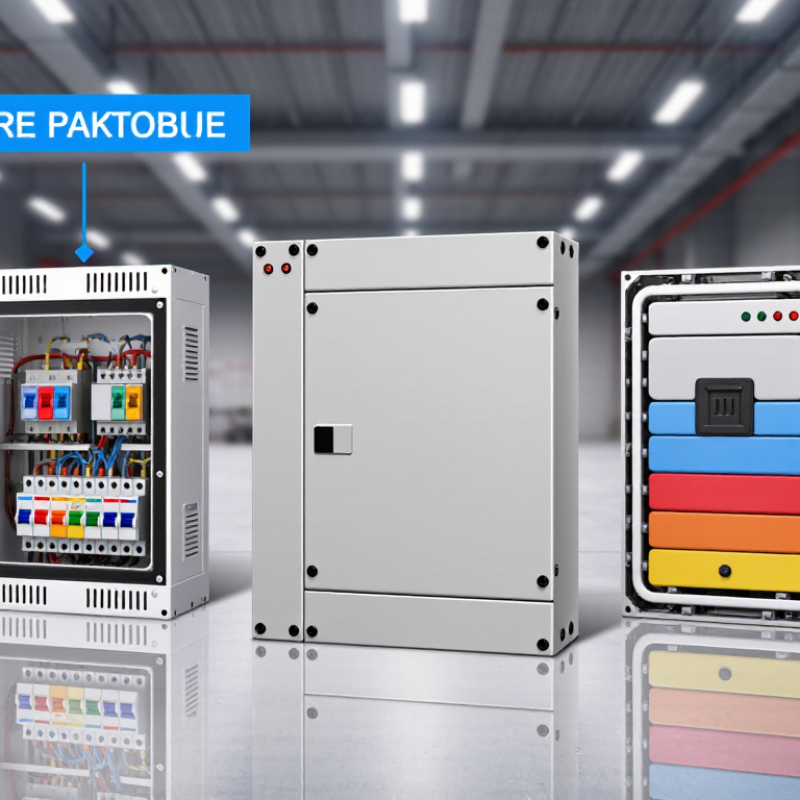
What Are the Top Types of RMU Electrical Panels?

What RMU Electrical Panels Are and How They Operate

An RMU, or ring main unit, is compact medium-voltage switchgear used to connect and protect distribution feeders. It commonly contains load-break switches, circuit breakers, and earthing switches inside a metal enclosure. In a ring network, power can reach a distribution transformer from either direction, depending on network design. The enclosure may use air or insulating gas, so site conditions and maintenance needs matter.

During normal operation, switches direct current through the selected feeder. If a fault occurs, protection equipment detects abnormal current and opens the relevant circuit, helping isolate the affected section. Operators can then use switching points to restore supply from another direction when the network allows it. This is not always automatic. IEC 62271-200:2021 covers metal-enclosed switchgear for rated voltages above 1 kV and up to 52 kV. The IEA’s 2023 report Electricity Grids and Secure Energy Transitions says about 80 million kilometres of grids must be added or refurbished by 2040, underscoring the importance of reliable distribution equipment.

Tips: Check the panel’s voltage rating, fault rating, operating mechanism, and enclosure protection against the site specification. Confirm switching procedures with qualified personnel. A compact unit still needs clear access, sound earthing, and regular inspection. One detail is easy to miss: network layout determines whether alternate-feed restoration is actually possible.

How RMU Panels Are Classified by Insulation Technology

RMU panels are often classified by the material that insulates their live electrical parts. Air-insulated designs use air gaps and barriers to separate conductors. They can be easier to inspect, but usually need more cabinet space. Dust and moisture also deserve attention in service rooms.

Gas-insulated panels place switching components inside sealed compartments filled with insulating gas. This arrangement supports a compact footprint, useful where floor space is limited. The enclosure must remain sealed, and technicians need suitable procedures for inspection and maintenance. Some designs use alternatives to traditional insulating gases, so the gas type and its handling requirements should be checked in the equipment documentation. Compact does not mean maintenance-free.

Solid-insulated RMUs cover conductors with materials such as epoxy resin. The insulation is built around the components, reducing exposed live parts and helping create a compact unit. Surface damage or contamination can still matter, though; solid insulation is not invulnerable. In practice, the right type depends on available space, indoor conditions, maintenance access, and the utility’s operating needs. A detail that is easy to overlook: compare the installation environment, not just panel dimensions. Classification helps narrow choices, but it cannot replace a review of the site and the manufacturer’s technical data.

What Are the Top Types of RMU Electrical Panels? — Classification by Insulation Technology
Insulation Type Primary Insulating Medium Typical Construction Main Characteristics Common Applications Key Considerations
Air-insulated RMU Ambient air around live conductors and switching components Busbars and switching devices are separated by air clearances and insulating barriers, typically inside a metal enclosure. Uses a familiar insulation medium and can allow straightforward access for inspection and maintenance. The larger electrical clearances can make the unit less compact than sealed designs. Indoor or outdoor medium-voltage distribution in buildings, industrial facilities, and utility networks where space permits. Requires suitable clearances, clean insulation surfaces, and protection against moisture, dust, and contamination according to the installation environment.
SF6 gas-insulated RMU Sulfur hexafluoride gas in a sealed compartment Live parts are enclosed in a gas-filled tank. Switching may use vacuum interrupters, SF6 interrupters, or another design depending on the equipment. Sealed construction supports compact dimensions and helps protect internal insulation from external contamination. SF6 has strong insulating and arc-quenching properties. Compact substations, urban distribution networks, and installations with limited floor space. SF6 is a potent greenhouse gas. Leak prevention, gas handling, recovery, and end-of-life procedures are important. Applicable regulations and phase-down requirements should be checked.
Alternative-gas-insulated RMU Dry air, nitrogen, or another SF6-free insulating gas or gas mixture Conductive parts are enclosed in a sealed or controlled-pressure compartment designed for the selected gas and equipment rating. Can avoid the use of SF6 while retaining a compact, enclosed arrangement. Performance and design depend on the particular gas system and rated voltage. New medium-voltage installations seeking to reduce the use of high-global-warming-potential insulating gases. Confirm the specified gas composition, pressure or density-monitoring approach, operating limits, service procedures, and applicable standards for the exact model.
Solid-insulated RMU Solid dielectric materials, commonly molded or cast insulation such as epoxy resin Insulation is molded around or used to support and separate energized components. External surfaces may still use air clearances or other insulation methods. Can provide a compact design without an SF6-filled main insulation compartment. Solid insulation is not dependent on maintaining a gas pressure in the same way as gas-insulated equipment. Indoor and outdoor distribution applications where compact equipment and reduced reliance on insulating gas are desired. Inspect for damage, tracking, or contamination as specified by the manufacturer. Solid insulation is generally not repaired in the same way as a replaceable gas charge; component replacement may be required.

Classification note: Vacuum describes the arc-interruption method, not the primary insulation technology of an RMU. An RMU may therefore use a vacuum interrupter together with air, gas, or solid insulation. Actual ratings, construction, and service requirements vary by design and applicable standards.

Gas-Insulated RMU Panels: Design and Typical Applications

Gas-insulated ring main unit (RMU) panels place switching components inside sealed, metal-enclosed compartments. The gas provides insulation, allowing smaller clearances than air-insulated designs. Typical configurations combine a busbar, load-break switches, earthing switches, and circuit-breaker or fuse ways. Space is precious. These panels suit compact substations in dense urban areas, commercial buildings, underground sites, and renewable-energy installations.

Their small footprint can simplify placement indoors or beside a building, while enclosed live parts reduce exposure to dust and accidental contact. However, compactness does not remove the need for careful access planning. Technicians still need room to operate switches, test circuits, and replace components. The trade-off deserves more attention than it often gets. IEA’s 2023 report, Electricity Grids and Secure Energy Transitions, says annual grid investment must rise above US$600 billion by 2030 to meet transition needs. That wider expansion makes compact distribution equipment increasingly relevant, though it does not guarantee suitability at every site.

Gas choice matters. Many installed units use sulfur hexafluoride (SF₆), whose 100-year global-warming potential is 25,200 times that of CO₂, according to the IPCC Sixth Assessment Report. Sealed construction helps prevent leakage, but operators still need inspection and end-of-life handling procedures. Alternative insulation gases are emerging, yet their performance and service requirements vary. Selection should consider voltage, fault levels, indoor conditions, maintenance access, and the utility’s long-term environmental plan.

Air-Insulated and Solid-Insulated RMU Panels

Air-insulated RMU panels use air around live conductors, so they generally need more clearance and cabinet space. Their open, familiar layout can make visual inspection straightforward, though dust, moisture, and confined installation spaces demand attention. That matters in real sites.

Solid-insulated panels instead embed conductors in molded insulating material, often epoxy. This compact construction can reduce exposure of primary insulation to surrounding air, but inspection and repair depend on the panel’s design. “Solid-insulated” does not mean every compartment is sealed or maintenance-free.

IEC 62271-200 sets requirements for metal-enclosed switchgear above 1 kV, giving engineers a common basis for assessing equipment. For projects comparing insulation options, check rated voltage, short-circuit withstand, internal arc classification, operating conditions, and service access—not footprint alone.

The IEA’s 2023 report Electricity Grids and Secure Energy Transitions says annual grid investment must rise to over USD 600 billion by 2030. That expansion makes compact equipment attractive, but it does not settle every site decision.

The IPCC Sixth Assessment Report gives sulfur hexafluoride a 100-year global warming potential of 25,200. Some RMU designs avoid SF6, but panel construction varies; confirm the actual insulating medium and end-of-life process.

A small oversight: cable compartments and terminations can still shape the total footprint.

Key Factors for Comparing RMU Panel Types

Comparing ring main unit (RMU) panels means looking beyond their compact cabinets. Air-insulated designs are easier to inspect, but often need more space. Gas-insulated units can fit tight substations; check the insulating medium, service arrangements, and end-of-life handling. Solid-insulated options reduce reliance on gas, though repair procedures and local support deserve close review. There is no universally best type.

Compare rated voltage, continuous current, short-circuit withstand, and switching duties against the network study—not just the nameplate headline. Check the number of incoming and outgoing ways, protection options, cable access, and room for future expansion. The IEA’s 2023 Electricity Grids and Secure Energy Transitions report says over 80 million kilometres of grids may need to be added or refurbished by 2040. That growth makes maintainability and interoperable monitoring practical selection criteria, not extras.

Tips: Ask suppliers for verified type-test data and clear maintenance intervals. Sketch the actual cable bends and door swing in the proposed footprint; drawings can hide awkward access. Compare total ownership costs, including inspection, spares, and outage time. A low initial price can be misleading. Also confirm ratings under the site’s temperature and installation conditions, since catalogue values may assume different conditions.

Common RMU Configurations: A Functional Comparison

Compare common arrangements by the number of ring-line ways and transformer-protection ways.

L denotes a ring-line way, typically using a load-break switch; T denotes a transformer-protection way, which may use a fuse-switch combination or a circuit breaker. The configurations shown are common examples, and actual RMU lineups vary by network design and application.