Top 10 Three Phase Transformer Manufacturers Worldwide

Three Phase Transformer equipment is central to moving electricity from generation sites to factories, commercial buildings, and local distribution networks. Its importance grows as grids expand and adapt to new sources of power. The International Energy Agency’s 2023 report, Electricity Grids and Secure Energy Transitions, estimates that 80 million kilometres of grid infrastructure must be added or refurbished by 2040. That is roughly the length of today’s entire global grid. The report also says annual grid investment must rise above USD 600 billion by 2030. A substantial challenge.

These figures do not measure transformer demand directly. They do, however, show why dependable transformer supply, efficient designs, and maintenance support matter to utilities and industrial buyers. A transformer installed in a substation must match its voltage, load profile, cooling needs, and operating environment. Details count. So does service after delivery.

This overview of 10 manufacturers worldwide considers product range, technical capabilities, international presence, and support networks. It is a practical starting point, not a universal ranking. A company’s scale alone cannot establish the best fit for every project. Procurement teams should verify current specifications, certifications, delivery schedules, and local service capacity against their own requirements. Some comparisons remain imperfect because manufacturers report capabilities differently. That limitation is worth keeping in view.
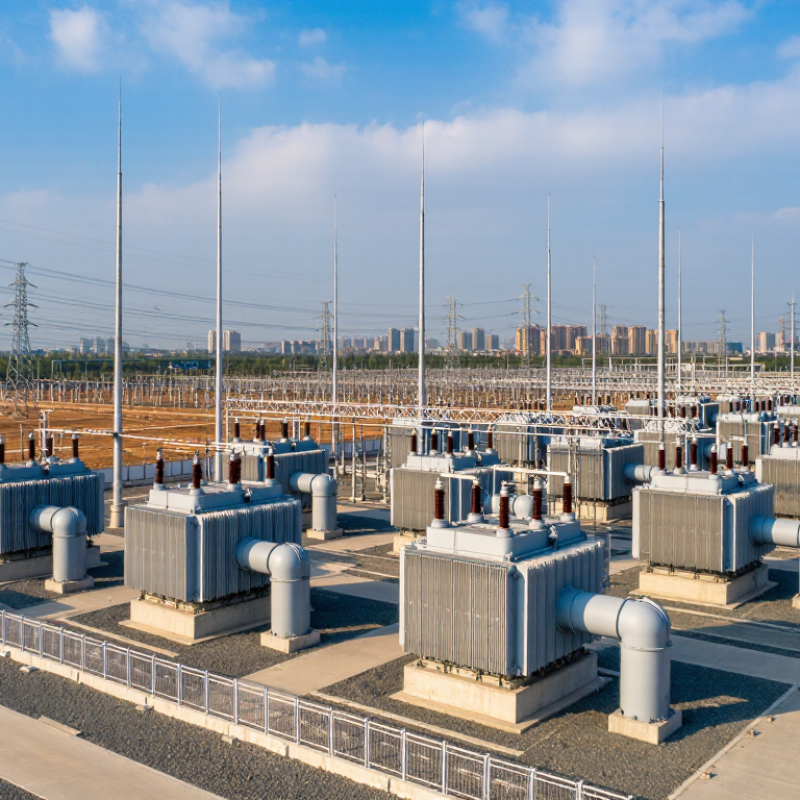
Top 10 Three Phase Transformer Manufacturers Worldwide

Three-Phase Transformers: Operating Principles and Main Applications

A three-phase transformer transfers energy between circuits through electromagnetic induction. Three primary windings create changing magnetic flux in a shared core, inducing voltage in three secondary windings. The phases are separated by 120 electrical degrees. Turns ratio sets the voltage change; winding connections shape how the system handles grounding and certain harmonics. The core matters. In practice, engineers also weigh insulation, cooling, load profile, and fault levels. A neat wiring diagram cannot capture every site condition.

These units serve utility substations, factories, commercial buildings, and renewable-energy connections. They can step voltage up for transmission or down for distribution, while supplying steady power to motors, pumps, and other three-phase loads. The International Energy Agency’s 2023 report, Electricity Grids and Secure Energy Transitions, says annual grid investment must rise from about US$300 billion to more than US$600 billion by 2030. That figure covers grids broadly, not transformers alone, but it signals the scale of network upgrades. Selection still needs careful review: an efficient unit may perform poorly if its cooling, noise limits, or protection settings do not fit the installation. There is no universal best configuration.

Criteria for Identifying Leading Manufacturers Worldwide

Selecting a leading three-phase transformer manufacturer requires more than comparing price lists. Start with the intended duty: voltage levels, load profile, installation environment, and expected service life. A supplier should explain how its design addresses heat, insulation, noise, and fault conditions. Ask for test records tied to the proposed unit, not just general product sheets. Details matter.

Review engineering depth and quality controls. Look for documented factory testing, traceable materials, and clear procedures for handling design changes. Confirm that testing and compliance claims match the relevant project requirements, such as applicable IEC or IEEE standards. A neat brochure proves little. Where possible, speak with operators who have used similar units under comparable conditions.

Service capability deserves equal attention. Check access to spare parts, response times, commissioning support, and the scope of the warranty. Delivery history and financial stability can also affect project risk. No scorecard is perfect. A factory visit may reveal orderly test bays, but one visit cannot guarantee consistent work across every production run. Weigh evidence from several sources, and record where information remains uncertain.

Profiles of Ten Major Three-Phase Transformer Manufacturers

Profiles of ten major three-phase transformer manufacturers should compare more than rated capacity. A useful profile records voltage range, cooling method, insulation system, factory locations, and service coverage. It also checks whether a supplier builds power, distribution, or specialized industrial units. These differences matter when a project faces tight space, high ambient temperatures, or variable renewable output.

The International Energy Agency’s 2023 report, Electricity Grids and Secure Energy Transitions, says annual grid investment must rise above USD 600 billion by 2030, from roughly USD 300 billion today. That expansion increases demand for dependable transformer supply, but a large factory does not guarantee short delivery times. Ask for test documentation, repair support, and realistic lead-time evidence. Details matter.

Tips: Compare like with like. Request losses at the same rating and loading conditions, plus guaranteed sound levels and temperature-rise limits. One awkward gap in many comparisons is that public profiles rarely disclose factory utilization, so published capacity can overstate near-term availability.

Comparing Product Ranges, Technologies, and Global Reach

Comparing the top three-phase transformer manufacturers means looking beyond nameplate capacity. Product ranges may include distribution units, medium-power equipment, and large power transformers for utility networks. Check voltage classes, insulation options, cooling methods, and stated loss levels. These details affect installation space, operating costs, and maintenance planning. A broad catalog is useful, but it does not guarantee a suitable design for every site.

Tips: Request verified test data. Compare efficiency at realistic loading, not just peak ratings. Check whether the supplier can support commissioning and spare-parts access in your region. Small details matter.

Technology comparisons should cover core materials, winding design, temperature monitoring, and noise control. Ask how testing follows the relevant IEC or IEEE requirements, and confirm which requirements apply to your project. Global reach also means more than shipping capacity: local engineering support, delivery timelines, and service coverage can vary by country. A polished comparison table can still miss these practical differences. I would treat published performance figures as a starting point, then confirm them against project-specific documents. Even experienced buyers can overlook how site altitude, ambient temperature, or load variation changes the specification.

Top 10 Three Phase Transformer Manufacturers Worldwide - Comparing Product Ranges, Technologies, and Global Reach

Comparison note: Company and brand names are intentionally omitted. The anonymous entries below are illustrative capability profiles based on common industry product categories and technologies; they are not a verified ranking or company-attributed specifications. Actual ratings and availability vary by design, standards, and project requirements.

Profile Typical Three-Phase Product Range Common Applications Relevant Technologies Global Reach Benchmark Typical Selection Considerations
Manufacturer 01
Grid-scale portfolio
Power transformers across high-voltage and extra-high-voltage classes; ratings are project-specific. Transmission networks, grid interconnections, and large substations. Oil-immersed designs; ONAN, ONAF, and OFAF cooling options; online condition-monitoring systems. Multi-region project delivery, commonly supported by local service or engineering partners. System voltage, short-circuit withstand, transport limits, losses, and grid-code requirements.
Manufacturer 02
Distribution-focused portfolio
Three-phase distribution units for utility and commercial distribution networks, commonly in medium-voltage classes. Distribution substations, commercial buildings, and light industrial facilities. Liquid-filled and dry-type designs; standard taps and enclosure options; efficiency-focused core designs. Regional manufacturing and distribution with export availability varying by market. Primary and secondary voltage, installation environment, efficiency rules, and maintenance access.
Manufacturer 03
Industrial power portfolio
Medium- and high-voltage three-phase units engineered for industrial loads and site-specific duty. Mining, metals, petrochemicals, manufacturing, and large process plants. Robust winding and insulation designs; impedance customization; forced cooling where required. Project-based international supply, often combined with commissioning and field services. Load cycles, harmonics, ambient conditions, fault levels, and plant expansion plans.
Manufacturer 04
Renewable integration portfolio
Three-phase transformers for collection systems, step-up duties, and grid connection. Wind and solar plants, battery energy storage, and renewable-energy substations. Application-specific insulation and cooling; adaptable voltage ratios and impedance; monitoring options. International project reach shaped by renewable-energy development and local grid requirements. Variable loading, harmonics, environmental exposure, grid connection rules, and maintenance logistics.
Manufacturer 05
Dry-type specialist profile
Three-phase cast-resin or other dry-type transformers, typically for indoor and space-constrained installations. Buildings, data centers, hospitals, transport infrastructure, and industrial interiors. Air cooling; cast-resin insulation options; temperature sensors and enclosure configurations. Often served through regional sales, distribution, and installation networks. Fire-safety requirements, ventilation, noise limits, enclosure rating, and indoor access.
Manufacturer 06
Special-purpose portfolio
Custom three-phase transformers designed around unusual electrical, mechanical, or environmental requirements. Furnaces, rectifier systems, traction power, test facilities, and specialized industrial processes. Custom winding arrangements, tap-changer configurations, impedance design, and thermal management. Typically supplied internationally on an engineered-to-order basis. Duty cycle, waveform, overload profile, harmonic spectrum, and site-specific standards.
Manufacturer 07
Compact substation portfolio
Three-phase transformers supplied as standalone units or integrated into compact substations. Urban distribution, commercial developments, utilities, and infrastructure projects. Packaged layouts; liquid-filled or dry-type options; coordinated protection and monitoring interfaces. Availability commonly depends on local assembly, utility approvals, and regional partners. Footprint, access for replacement, enclosure requirements, protection coordination, and noise.
Manufacturer 08
High-efficiency portfolio
Distribution and power transformer designs offered with loss-conscious configuration options. Utilities, energy-conscious buildings, and network modernization programs. Optimized magnetic cores; low-loss design options; efficiency testing and performance documentation. Market coverage varies with applicable efficiency regulations and procurement specifications. Capital cost versus lifetime losses, loading profile, energy prices, and local efficiency rules.
Manufacturer 09
Grid modernization portfolio
Three-phase distribution and power transformers designed for modernized and monitored networks. Smart-grid projects, substations, utility upgrades, and critical infrastructure. Digital sensors and monitoring interfaces; online dissolved-gas analysis may be specified for suitable oil-filled units. Multi-market project support is generally paired with local utility and service requirements. Data integration, cybersecurity requirements, condition-monitoring strategy, and service capability.
Manufacturer 10
Regional utility portfolio
Three-phase distribution and substation transformers aligned with regional utility specifications. Local and national utility networks, rural electrification, and network replacement programs. Utility-standard designs; liquid preservation options; tap settings and accessories configured to specification. Strongest coverage is typically within established home markets, with export scope varying by project. Utility qualification, applicable IEC or IEEE requirements, lead time, spare parts, and service access.

Factors to Consider When Selecting a Transformer Manufacturer

When comparing three phase transformer manufacturers, begin with the actual operating conditions. Record the load profile, voltage levels, frequency, installation location, and expected room for future growth. A unit serving a dusty factory floor faces different demands from one installed in a clean utility room. Details matter.

Check how the manufacturer verifies performance. Ask for test records covering temperature rise, losses, insulation, and routine electrical checks. Confirm that the proposed design fits applicable technical standards and your site requirements. Ask for evidence. Clear drawings, material specifications, and traceable test results make reviews easier. A polished brochure is not enough. One detail teams sometimes miss is access for lifting and maintenance; a transformer that fits on paper may be awkward to install.

Consider service over the full equipment life, not just the quoted price. Review warranty terms, spare-parts availability, technical support, delivery schedules, and the clarity of maintenance guidance. Ask how the manufacturer handles design changes and unexpected delays. Compare total operating costs, including energy losses and cooling needs. Be cautious with claims that lack supporting data. No checklist removes every risk, and project requirements can change; document assumptions before choosing a supplier.

Three-Phase Transformer Selection: Common Grid Frequencies

Check that a transformer’s rated frequency matches the electrical grid at its installation site.

50 Hz and 60 Hz are common nominal AC grid frequencies worldwide. Actual requirements depend on the installation location; confirm frequency compatibility and other specifications with the manufacturer.