China Top 10 Circuit Board Fabrication Manufacturers?
China’s electronics supply chain depends on dependable Circuit Board Fabrication. From smartphones and medical instruments to electric vehicles, printed circuit boards carry signals through dense, carefully engineered layers. A factory’s reputation, however, cannot be judged by equipment photographs alone.
This guide examines China’s top ten circuit board fabrication manufacturers through practical criteria. These include process capability, material control, layer accuracy, testing systems, certifications, delivery consistency, and customer support. We also consider high-density interconnect, flexible boards, rigid-flex designs, and quick-turn prototypes. Details matter. A clean production floor helps, but it does not replace measurable quality data.
IPC President and CEO John W. Mitchell has stated, “Quality and reliability must be built into every process.” That principle shapes this review. Strong manufacturers should demonstrate traceability, controlled lamination, reliable plating, and documented electrical testing. They should also explain how they manage impedance, thermal stress, solder-mask coverage, and component-ready finishes.
No ranking is perfect. Buyer priorities differ. A startup may value rapid prototypes, while an automotive supplier may require long-term process stability. Some manufacturers communicate impressively but provide limited factory evidence. That deserves caution. Others may have excellent production lines but weaker English-language support. This guide therefore avoids relying on marketing claims alone. It compares visible capabilities with practical purchasing needs, helping readers identify suitable partners for demanding Circuit Board Fabrication projects in China.
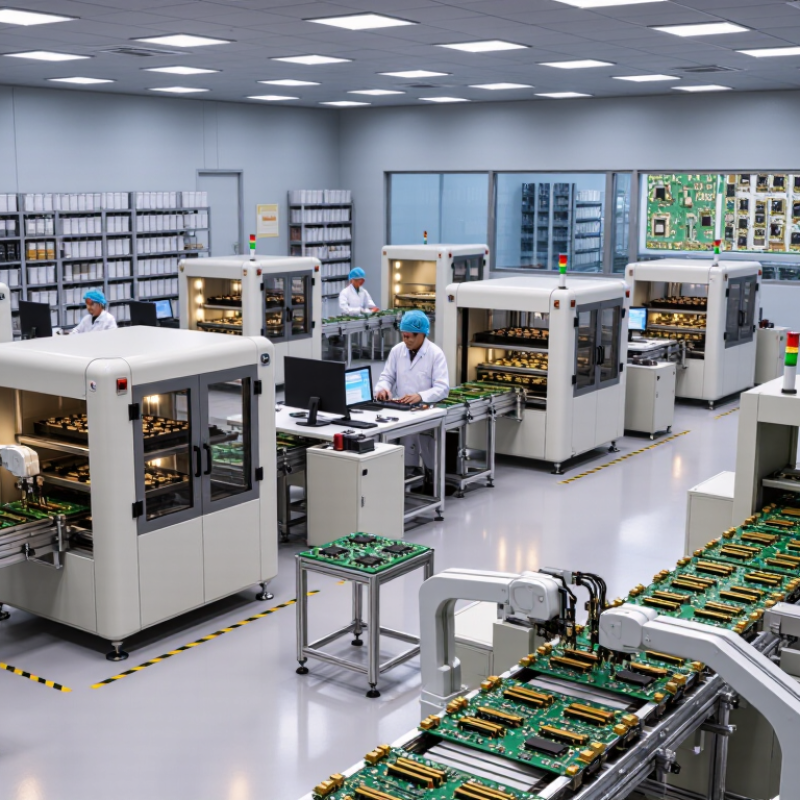
Industry Overview: China’s Role in Circuit Board Fabrication
China has become a major center for circuit board fabrication, serving consumer, industrial, automotive, and medical electronics. Its strength comes from dense supplier networks, skilled technicians, automated production lines, and efficient logistics. A typical fabrication cluster can source laminates, copper foil, drilling tools, and testing services within short distances. That proximity often shortens development cycles and supports competitive pricing. But scale alone does not guarantee dependable boards.
When evaluating China’s top ten manufacturers, buyers should examine process control rather than factory size. Important evidence includes quality systems, traceability records, impedance testing, and documented corrective actions. For multilayer boards, engineers should verify layer registration, via reliability, surface finish consistency, and thermal performance. Prototype work also reveals communication quality. Clear design-for-manufacturing feedback can prevent expensive revisions before mass production. However, public rankings can be incomplete. Some assessments rely on marketing claims, outdated capacity figures, or limited customer experience. Data can age.
China’s industry is moving toward high-density interconnect, flexible circuits, embedded components, and lower-impact production methods. These advances require tighter inspection and more specialized materials. Factories increasingly use automated optical inspection, electrical testing, and statistical process monitoring. Yet automation does not remove human judgment. A missed specification or unclear drawing can still cause delays. Reality is messier. Reliable sourcing depends on audits, sample approval, and regular technical communication, especially when production pressure exposes weaknesses in otherwise impressive manufacturing systems.
Top 10 Chinese Circuit Board Fabrication Manufacturers
China’s top ten circuit board fabrication manufacturers are best compared by capability, not publicity. The strongest facilities support rigid, flexible, and rigid-flex boards for industrial, medical, automotive, and communication equipment. Their workshops commonly use automated optical inspection, controlled drilling, laser via formation, and lead-free surface finishing.
Quality begins with traceability. A reliable manufacturer records laminate batches, drilling parameters, plating thickness, and inspection results. Many leading factories follow ISO 9001 and automotive or medical quality systems where required. They also provide impedance testing, microsection analysis, and electrical testing before shipment. Details matter.
Production scale differs widely. Some facilities handle prototype orders within days, while others focus on high-volume multilayer production. Ask about minimum order quantities, engineering support, stack-up review, and defect response time. A factory may have impressive equipment but weak communication. That problem is easy to underestimate.
The most dependable suppliers usually offer stable material sourcing, clear engineering changes, and documented corrective actions. They understand thermal management, fine-pitch components, and high-speed signal requirements. Yet no manufacturer is perfect. Delivery pressure can still create avoidable mistakes. My own assessment would include sample boards, factory records, and a small trial order before larger commitments.
Manufacturing Capabilities, Technologies, and Quality Standards
China Top 10 Circuit Board Fabrication Manufacturers?
Evaluating China’s top circuit board manufacturers requires more than comparing production volume. Examine their manufacturing capabilities, process controls, and engineering experience. Leading facilities may produce rigid, flexible, rigid-flex, HDI, and multilayer boards. They should also support fine-pitch assembly preparation, controlled impedance, laser drilling, and via-in-pad structures. These capabilities matter when designs become smaller and electrically faster.
Technology alone does not guarantee reliable boards. Ask whether engineers use automated optical inspection, X-ray inspection, flying-probe testing, and microsection analysis. Reliable manufacturers should provide material certificates, lot traceability, impedance reports, and documented corrective actions. Standards such as IPC guidelines and ISO 9001 can strengthen confidence, but certificates need practical verification. A perfect brochure is not proof. Even mature production lines can miss defects, especially during new material changes or tight-tolerance projects. That weakness deserves honest discussion.
Tips:
Request sample reports before placing a large order. Check copper thickness, drilling accuracy, solder-mask alignment, and surface-finish consistency. Confirm how the factory handles nonconforming boards and customer complaints. Environmental controls also matter, including chemical management and waste treatment under applicable regulations. A useful supplier explains limitations clearly, rather than promising every capability. Engineers should review your Gerber files, stack-up, and testing requirements before production. Small pilot runs often reveal process problems that quotations hide.
Market Comparison: Services, Industries, and Global Reach
China Top 10 Circuit Board Fabrication Manufacturers
A useful comparison of China’s top ten circuit board manufacturers should examine more than production volume. Service depth often separates a reliable partner from a low-cost supplier. Leading factories may provide quick-turn prototypes, multilayer boards, rigid-flex designs, surface finishing, and turnkey assembly. Sample reviews should check drilling accuracy, copper thickness, solder mask quality, and inspection records. Traceability matters.
Industry coverage also reveals practical capability. Automotive and industrial control projects usually demand stable materials, strict process records, and long-term supply planning. Medical and communication equipment require tighter documentation and dependable electrical testing. Consumer electronics may prioritize speed, compact layouts, and competitive pricing. No supplier wins every category. A factory strong in prototypes may struggle with large-scale consistency.
Global reach depends on more than shipping capacity. Export experience, technical English, regional support, and clear engineering changes can reduce costly delays. International customers should review certifications, factory audits, environmental controls, and corrective-action procedures. Pricing comparisons must include tooling, testing, packaging, freight, and revision costs. Prices mislead.
The strongest candidates usually combine automated optical inspection, electrical testing, controlled production environments, and responsive project management. Still, published capabilities are not proof of daily performance. A small pilot order can expose communication gaps, uneven solder finishes, or weak documentation before volume production begins. That step is sometimes skipped, even by experienced purchasing teams.





 Phone
 WhatsApp
 Email