Choosing a Machine Tool manufacturer is not simply a matter of comparing prices or spindle speeds. Global buyers need evidence that a supplier can deliver stable accuracy, repeatable output, and dependable support after installation. Historian Robert S. Woodbury described this importance clearly: “A machine tool is a machine for making machines.” That idea still matters on a modern factory floor.
This guide examines ten leading Machine Tool manufacturers serving international markets. It considers machining centers, CNC lathes, turning systems, grinding equipment, automation, and digital production technologies. It also looks beyond brochures. Buyers should examine actual tolerances, control systems, component quality, operator training, spare-parts access, and response times. A polished machine may still disappoint without local service.
Details matter.
The selection also reflects practical experience from manufacturing environments. A machine that runs reliably during a short demonstration may behave differently during months of continuous production. Energy use, maintenance intervals, software compatibility, and factory conditions can change the final purchasing decision. Some rankings remain debatable. Markets change. Product lines evolve, and regional performance is not always identical.
For this reason, the list should serve as a starting point rather than a final verdict. Each manufacturer has different strengths, from high-speed automotive production to precise aerospace machining or flexible job-shop work. Readers should match those capabilities with their materials, floor space, workforce, and future plans. The best Machine Tool is not always the most expensive one. It is the one that performs consistently when production becomes difficult.
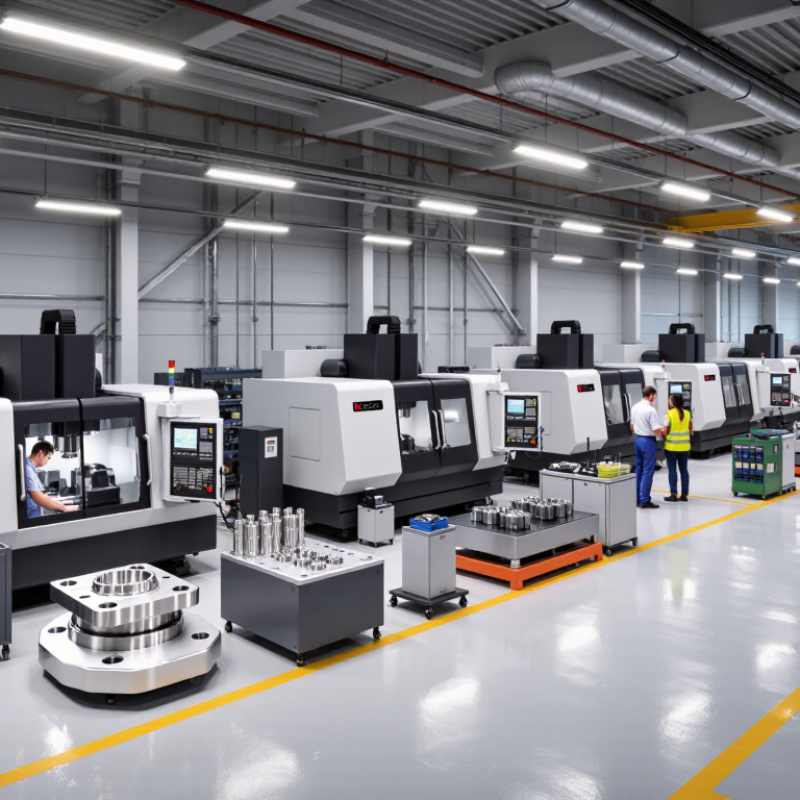
A leading Chinese machine tool manufacturer is defined by more than production volume or a polished catalog. Global buyers should examine engineering depth, process control, and real operating evidence. A reliable manufacturer can explain spindle accuracy, thermal stability, guideway design, and expected service intervals in clear language. It should also provide inspection records, material traceability, and repeatability data for the exact machine configuration.
Factory experience matters on the shop floor. Look for organized assembly areas, calibrated measuring equipment, and technicians who can discuss common failure points. A serious supplier supports factory acceptance testing with cutting samples, dimensional reports, and documented corrections. After delivery, responsive technical support is equally important. Spare-part identification, remote diagnostics, installation guidance, and operator training can reduce costly downtime. A beautiful machine can still disappoint.
Tips: Request references from similar industries, not only large showcase projects. Compare test conditions carefully. Ask who performs final inspection and how results are recorded. Visit the factory if possible, but do not treat a clean showroom as complete proof. Even experienced manufacturers may have uneven service across regions, and buyers should acknowledge that risk. A written support plan, realistic lead time, and clearly defined acceptance criteria create stronger accountability than promises made during a sales meeting.
Evaluating China’s machine tool industry requires more than comparing prices. The China Machine Tool Industry Association reported a 13.6% decline in industry operating revenue in 2023. This signals uneven demand, not poor manufacturing capability. Buyers should examine production stability, export experience, and financial resilience. Ask for recent delivery records and audited quality data.
Precision must be tested, not promised. Request laser interferometer results, ballbar tests, spindle runout readings, and sample-cutting reports. Check positioning accuracy after thermal changes. A machine may perform well for two hours, then drift during a long production shift. The International Organization for Standardization’s ISO 230 series provides useful testing principles. Still, factory acceptance testing should match your actual material, tooling, and cycle time.
Service quality often decides total cost. Gardner Intelligence’s World Machine Tool Survey has consistently ranked China among the world’s largest machine tool consumers, reflecting deep supplier capacity and component networks. However, capacity varies sharply between factories. Review spare-parts response times, remote diagnostics, software support, and technician training. Confirm electrical safety, documentation, and local compliance before shipment. A 72-hour continuous trial can reveal cooling, lubrication, and control-system weaknesses. Do not overlook them. Some supplier claims remain difficult to verify independently, so buyers should use third-party inspections and written acceptance criteria.
China’s top 10 machine tool manufacturers reflect the country’s broad industrial capabilities. Their profiles cover vertical machining centers, horizontal systems, CNC lathes, grinding equipment, heavy-duty boring machines, and automated production lines. The China Machine Tool Industry Association reported continued recovery in domestic orders during 2023, while Gardner Business Media’s World Machine Tool Survey placed China among the world’s largest producers and consumers. These figures show scale, but scale alone does not prove suitability.
The first profile focuses on compact CNC lathes for automotive suppliers. The second specializes in five-axis machining for aerospace components. The third builds large gantry mills for energy projects. The fourth develops grinding machines for tight-tolerance parts. The fifth supplies economical vertical machining centers. The sixth combines robotics with flexible production cells. The seventh targets die and mold manufacturing. The eighth produces heavy-duty turning equipment. The ninth emphasizes smart factory connectivity. The tenth serves export buyers with customized specifications and regional support. Some profiles overlap. That is normal, because Chinese manufacturers often serve several industries at once.
Tips: Compare spindle speed, positioning accuracy, controller compatibility, and service response. Request test-cut videos and inspection reports. ISO 230 testing can reveal practical machine performance. Also check local voltage, software support, spare-part availability, and operator training. Industry reports provide useful direction, yet rankings can be imperfect. A factory visit or independent inspection may expose details that brochures omit. Fancy specifications are not always useful. Real production evidence matters more.
| Profile | Established | Main Production Base | Primary Product Categories | Typical Industries Served | Ownership or Listing Information | International Market Coverage | Notable Capability |
|---|---|---|---|---|---|---|---|
| Profile 01 | 1935 | Northeast China | Horizontal and vertical machining centers, turning centers, flexible manufacturing systems | Automotive, rail transportation, general engineering, energy equipment | Large state-owned industrial group; publicly listed operations within the group | Asia, Europe, North America, South America and other industrial markets | Long-established heavy-duty machine tool manufacturing and turnkey production-line experience |
| Profile 02 | 1933 | Northeast China | CNC lathes, machining centers, boring and milling machines, automation systems | Automotive, aerospace, construction machinery, mold manufacturing | Publicly listed Chinese machine tool manufacturer | Export activities across Asia, Europe, the Americas and the Middle East | Broad product range covering both standard CNC equipment and large customized machines |
| Profile 03 | 1965 | Shaanxi Province | CNC gear-making machines, machining centers, precision grinders and turning equipment | Automotive, robotics, industrial transmission, aerospace and precision engineering | Publicly listed industrial enterprise with a long history in precision machinery | Asia, Europe, North America and selected emerging manufacturing markets | Strong specialization in gear processing, precision transmission components and complete production solutions |
| Profile 04 | 1956 | Jiangsu Province | CNC press brakes, shears, laser cutting systems and sheet-metal forming equipment | Sheet-metal fabrication, electrical equipment, appliances, automotive and construction | Publicly listed manufacturer specializing in metal-forming equipment | More than 60 overseas markets through distributors and direct sales channels | Integrated sheet-metal processing lines combining forming, cutting, automation and software |
| Profile 05 | 2002 | Zhejiang Province | Vertical machining centers, horizontal machining centers, gantry machines and CNC turning centers | Automotive components, electronics, precision parts, energy and general manufacturing | Publicly listed private enterprise | North America, Europe, Southeast Asia, India and other export destinations | High-volume production of standardized CNC machines with strong automation compatibility |
| Profile 06 | 1937 | Shandong Province | Large gantry machining centers, forging equipment, heavy-duty presses and automated lines | Aerospace, rail transportation, shipbuilding, energy and heavy equipment | State-owned large-scale equipment manufacturer | Projects and equipment supplied to customers in Asia, Europe, Africa and the Americas | Engineering capability for oversized workpieces, heavy-duty machining and complete production systems |
| Profile 07 | 1933 | Central China | CNC machining centers, turning centers, boring machines and customized production equipment | Automotive, commercial vehicles, general machinery and complex metal components | Established industrial manufacturer with public-sector and corporate ownership history | Export-oriented business serving customers in Asia, Europe, Africa and Latin America | Experience in automotive production lines and customized machining solutions |
| Profile 08 | 2007 | Zhejiang Province | CNC turning centers, vertical machining centers, five-axis machines and automated cells | Automotive, aerospace, medical components, electronics and general engineering | Privately owned manufacturer with international distribution operations | Europe, North America, Southeast Asia, the Middle East and other regions | Focus on cost-effective CNC equipment, standardized platforms and flexible automation |
| Profile 09 | 1993 | Zhejiang Province | CNC lathes, turning-milling centers, Swiss-type machines and precision automation | Automotive, electronics, medical devices, hydraulic parts and precision components | Private enterprise with overseas sales subsidiaries and service partners | Asia, Europe, North America and other export-oriented manufacturing regions | Specialization in compact precision turning, multitasking machining and unmanned production |
| Profile 10 | 1993 | Zhejiang Province | CNC turning centers, vertical machining centers, five-axis machines and intelligent manufacturing systems | Automotive, aerospace, mold-making, energy and precision engineering | Publicly listed private manufacturer | Distributors and service networks covering Asia, Europe, North America and the Middle East | Combination of CNC machine tools, digital factory solutions and production-line automation |
Note: The profiles summarize publicly reported company histories, production bases, product categories and market coverage. Exact product availability, certifications, service locations and export scope should be confirmed directly with the manufacturer before purchasing.
China Top 10 Machine Tool Manufacturers for Global Buyers
Chinese machine tool manufacturers now serve automotive, aerospace, energy, electronics, and medical production lines. The 2024 Gardner Business Media World Machine Tool Survey ranked China as the world’s largest machine tool consumer by value. This scale supports broad product development and competitive pricing. It also creates practical advantages for overseas buyers, including faster customization, extensive component supply, and technicians familiar with high-volume production.
Product strengths differ across the leading manufacturers. Some focus on five-axis machining centers for turbine parts and aircraft structures. Others specialize in turning centers, gear equipment, laser systems, or automated production cells. The IFR World Robotics 2024 report recorded 276,288 industrial robot installations in China during 2023, representing 51% of global installations. This ecosystem helps machine builders integrate robots, pallet changers, probing systems, and digital monitoring.
Real factories expose the limits. A low machine price may hide training, software, or spare-part costs. Buyers should inspect spindle performance, positioning accuracy, chip control, and service response. Factory acceptance tests matter. So does local support. Smaller workshops may value simple maintenance, while aerospace suppliers need traceability and stable five-axis accuracy. Data sheets are useful, but cutting trials reveal more. Some published claims still deserve careful verification.
The chart presents an aggregated, non-brand view of major Chinese machine-tool product categories. The application score represents the number of relevant sectors among six common global industries: automotive, aerospace, energy, medical, electronics, and general engineering. It is not a company ranking, sales share, or market-share measurement.
Selecting a Chinese machine tool supplier requires more than comparing catalog prices.
In factory audits, I look at assembly cleanliness, operator training, and calibration records. A polished showroom proves little. Ask for the machine’s working envelope, spindle speed, positioning accuracy, repeatability, and tested material range. Request inspection reports from recent machines, not only sample documents.
Speak with the technical team before negotiating. Their answers reveal practical knowledge. Ask how they control thermal expansion during long production runs. Check whether critical castings receive stress relief and whether electrical components match your local requirements.
A live video call can show machining and final testing, but an independent inspection is stronger.
I once relied too heavily on photographs. That was a costly lesson.
Your contract should define acceptance tests, spare parts, software access, warranty response times, packaging, and delivery responsibilities. Include measurable standards, such as test cuts, surface finish, and axis accuracy.
Verify export documents and compliance requirements in the destination country. Ask for references from buyers with similar materials and production volumes.
A supplier may offer an attractive price yet lack field-service capacity. Keep a realistic budget for installation, training, tooling, and unexpected adjustments.
Good communication matters. So does documentation. Even experienced buyers should leave room for doubt, because a machine that performs well during inspection may behave differently after shipping and installation.
WhatsAppOffer Electronics Manufacturing All-in-One
PCBONLINE® is a registered trademark or service mark of pcb online limited or its affiliates.
Copyright © 2001-2024 Pcb Online Limited. All rights reserved