Outdoor Lighting is not a box to tick after choosing a fixture. For global buyers, it shapes safety, operating costs, product life, and the feel of a site after dark. A warehouse gate needs clear visibility; a hotel path needs softer, comfortable light. The right choice depends on the place, not just the product sheet.
The U.S. Department of Energy’s “LED Outdoor Area Lighting” guidance reports that LED systems can use substantially less energy than conventional lighting, while also emphasizing appropriate controls and design. The International Energy Agency’s work on efficient lighting likewise points to LEDs as a major energy-saving opportunity. Those findings matter, but they do not make every LED fixture a good purchase. Glare, uneven coverage, poor weather resistance, and hard-to-replace components can turn a low-priced order into a costly one.
Lighting researcher Dr. Mark Rea has long studied how light affects human vision and performance. A practical takeaway from his work is that visibility depends on more than brightness alone. Buyers should ask for photometric files, confirm color temperature and ingress protection, and check whether the supplier can support installation and maintenance. Small details matter. A dark corner beside a loading bay may reveal more than a polished catalog image.
This guide offers ten practical checks for comparing Outdoor Lighting products across markets. Some choices will still involve trade-offs. That is worth admitting. An efficient fixture is useful; a well-matched one is better.
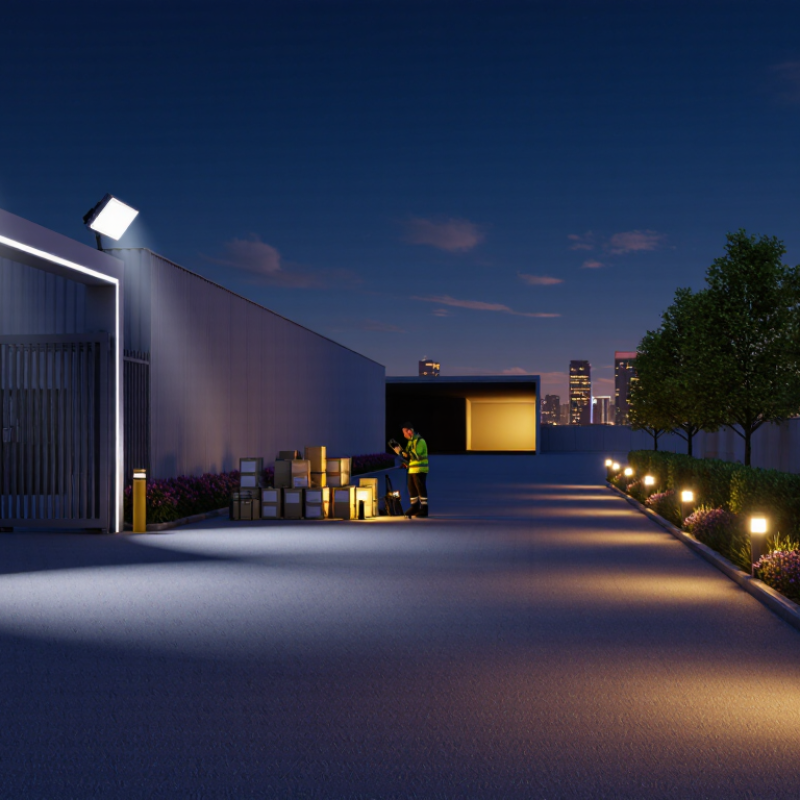
Global buyers should judge outdoor lighting beyond price and wattage. Key priorities include ingress protection, corrosion resistance, optical control, lumen output, color temperature, controls, efficiency, safety certification, warranty terms, and spare-part access.
A coastal walkway needs sealed housings and marine-grade finishes, while a warehouse yard needs uniform light with limited glare.
The application decides the specification.
The International Energy Agency reports that lighting uses about 15% of global electricity. Its 2024 energy-efficiency analysis also confirms that LED technology is now dominant in many lighting markets, although older installations remain widespread. A 2024 market estimate from Fortune Business Insights places LED lighting adoption at more than half of global lighting demand. Market estimates vary, so buyers should check the methodology, region, and product definition.
Tips:
Request LM-79 photometric testing, LM-80 data, and a clear L70 lifetime claim. Compare delivered lumens, not only rated watts. Review operating temperatures and surge protection for harsh sites. Ask for samples under real mounting conditions. A spreadsheet helps, but it can hide installation mistakes. I have seen efficient fixtures perform poorly when optics, pole spacing, or cleaning access were ignored. That detail deserves more attention. Calculate total cost using energy, maintenance, controls, shipping, and replacement parts. Verify local certification requirements before purchase, because acceptance rules differ across countries.
Outdoor lighting succeeds when photometric planning matches real ground conditions, not just a catalog image. Start by measuring the target area, mounting height, surface color, and expected activity. Lumens describe total light output; they do not guarantee brightness on a pathway. Dark stone absorbs more light than pale concrete. I have seen plans look strong on paper but feel dim after installation. That assumption can fail.
Tips: Calculate useful illumination across the whole area, then check uniformity. Place fixtures on a scaled plan and mark overlapping beam footprints. A narrow beam can highlight a tree, while a wider beam reduces harsh patches along a walkway. For pedestrian routes, avoid bright pools separated by black gaps. Use photometric files or verified test data when available. Guessing is expensive.
Choose correlated color temperature according to the setting. Around 3000 K creates warm, comfortable light for homes, hospitality spaces, and landscaped seating. Around 4000 K appears cleaner and more neutral near entrances, work zones, and security-sensitive areas. Color rendering also matters; quality light should reveal paving colors and facial details naturally. Check glare from eye level, especially beside steps or driveways. Weather, dust, voltage variation, and aging can reduce output. Leave a sensible margin, but do not simply over-light. Local standards and professional review should guide the final layout.
Typical fixture-lumen targets vary by application. Narrower beam angles concentrate light for paths and walls, while wider beams provide broader coverage for floodlighting and area lighting. A warm-to-neutral CCT range of 3000–4000 K is commonly used to balance visual comfort, visibility, and color appearance outdoors.
For global buyers, weatherproof ratings matter more than polished product photos. IP ratings follow IEC 60529.
IP65 means complete dust protection and resistance to water jets.
IP66 adds stronger protection against powerful water jets.
Neither rating permits permanent immersion.
Choose IP65 for covered walkways, façades, and sheltered garden areas. Select IP66 for exposed walls, coastal sites, or locations cleaned with pressure spray. The difference sounds small. It is not. A poorly sealed cable gland can defeat a high IP rating within one rainy season. Check the complete fixture, connectors, and installation instructions.
IK08 follows IEC 62262 and indicates resistance to a 5-joule impact, roughly comparable to a 1.7-kilogram object falling from 300 millimeters. This rating suits public paths, parking areas, and low-mounted luminaires. It does not guarantee protection from every type of vandalism. Site context still matters.
Grand View Research valued the global outdoor lighting market at about USD 15.34 billion in 2022 and projected an 8.2% CAGR through 2030. That growth increases pressure to compare technical details carefully, not just lumen output. The U.S. Department of Energy also emphasizes that outdoor LED performance depends on thermal management, optical design, and environmental conditions.
I have seen failures blamed on “bad LEDs” when trapped moisture caused corrosion. Ratings are useful. They are not magic. Salt air, ultraviolet exposure, drainage, and temperature cycling deserve separate checks before purchase.
For global buyers, outdoor LED efficacy should be measured at the complete luminaire, not only at the LED package. A 100 lm/W target is a practical starting point for roads, campuses, and parking areas. The U.S. Department of Energy’s 2023 Solid-State Lighting R&D Opportunities report notes that laboratory LED packages can exceed 200 lm/W. Real fixtures perform lower because lenses, drivers, heat, and dirt reduce delivered light. Ask for tested luminaire efficacy, thermal data, and photometric files.
Smart dimming can reduce waste when it matches actual activity. The International Energy Agency estimates that lighting uses roughly 15% of global electricity consumption. Occupancy sensors can lower output after midnight, while scheduled dimming can keep pathways at safer, quieter levels. DOE lighting-control studies commonly indicate energy savings of 20–40%, depending on operating hours and control quality. Specify gradual dimming, manual override, surge protection, and a clear response when sensors fail.
Small details matter. A fixture may claim 120 lm/W in a laboratory, then deliver less on a hot pole. This is where many purchasing decisions become optimistic. Review LM-79 test reports, ambient-temperature limits, glare ratings, and driver performance at low dimming levels. The DesignLights Consortium’s technical requirements also show why efficacy alone is insufficient; quality, controllability, and tested performance must work together. I would still request a night-time trial. One poorly aimed fixture can waste more light than its datasheet suggests.
For outdoor lighting, compliance paperwork should match the exact product, driver, and intended market.
CE marking signals that the manufacturer declares conformity with applicable European requirements; it is not a general quality rating.
RoHS documentation addresses restrictions on specified hazardous substances in electrical equipment. Ask suppliers for the Declaration of Conformity, test reports, and model numbers, then check that each document matches the cartons you receive.
Small mismatch, big headache.
For North American projects, confirm the relevant UL safety listing and installation conditions rather than relying on a logo in a sales sheet. The U.S. Department of Energy’s LED Basics guidance notes that quality LED products commonly have rated lives of 25,000 hours or more; actual outdoor performance still depends on heat, moisture, and operating conditions.
Read the warranty beside the lifespan claim.
A “50,000-hour life” does not necessarily mean a 50,000-hour warranty, nor does it promise unchanged brightness. DOE’s solid-state lighting resources describe rated life through maintained light output, often using the L70 measure.
Ask what output level the supplier guarantees, how failures are assessed, and whether labor, shipping, or replacement parts are covered. Put the answers in the purchase contract.
Check corrosion protection, ingress rating, and driver temperature for the installation site, too. I have seen buyers focus on the lamp and overlook the driver; that can be an expensive lesson.
Keep sample test records and inspect a pilot shipment before ordering at scale.
WhatsAppOffer Electronics Manufacturing All-in-One
PCBONLINE® is a registered trademark or service mark of pcb online limited or its affiliates.
Copyright © 2001-2024 Pcb Online Limited. All rights reserved