What is a Non Telecentric Lens and Its Applications?
Non Telecentric Lenses have gained significant attention in industrial optics and imaging applications. Leading expert Dr. Emily Tan, a renowned imaging specialist, once stated, “Non Telecentric Lenses provide unique depth-of-field benefits that can optimize performance in critical applications.” This statement underscores the importance of understanding how these lenses function and their diverse uses.
In contrast to telecentric lenses, non telecentric lenses capture images without maintaining constant magnification across the field. This design allows for enhanced flexibility in various applications, making them suitable for tasks like 3D scanning and machine vision. Their ability to capture detailed three-dimensional structures enables engineers to develop advanced automation systems, yet it introduces challenges in maintaining image accuracy.
Addressing the limitations of non telecentric lenses is essential for maximizing their potential. Users must consider factors such as distortion and perspective errors while optimizing setups. Despite these hurdles, the versatility of non telecentric lenses continues to influence industries, from manufacturing to medical imaging. As more applications emerge, a deeper understanding of their mechanics is crucial for innovative advancements.
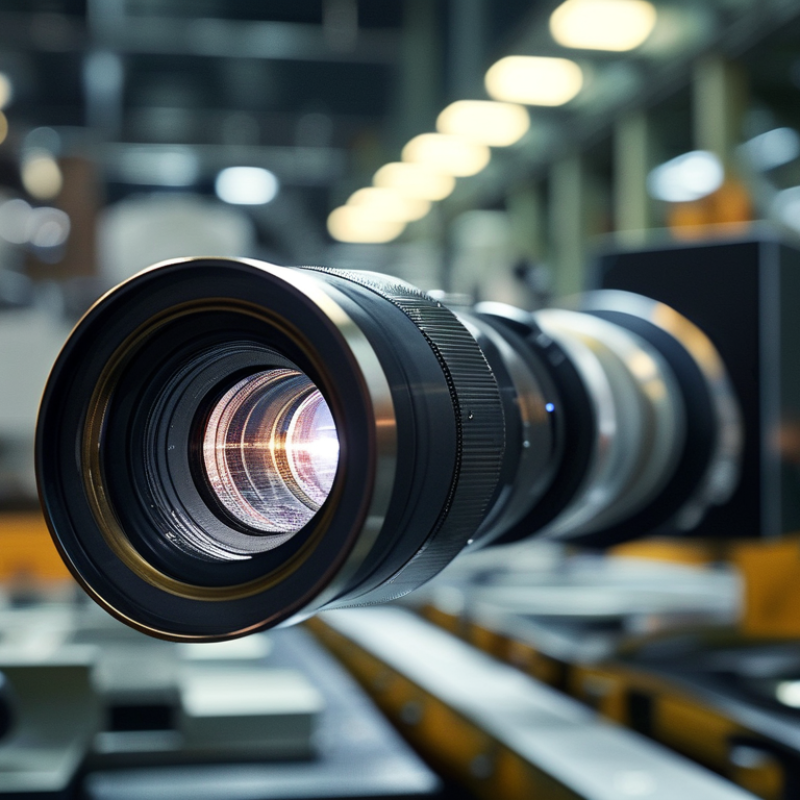
Definition of Non Telecentric Lenses and Their Key Characteristics
Non telecentric lenses serve a specific function in optical systems. Unlike telecentric lenses, which maintain consistent magnification across the image plane, non telecentric lenses are sensitive to the object's distance. This sensitivity can lead to variations in image size and distortion, especially for objects at different depths.
These lenses find applications in optical measurement systems, machine vision, and imaging technology. In machine vision, they help capture details of objects accurately. This is crucial in quality control processes. However, using non telecentric lenses requires careful calibration and positioning. Minor shifts in the object can lead to noticeable discrepancies in measurements.
Tips for using non telecentric lenses effectively include ensuring a stable setup. Small vibrations can skew results. Additionally, consider the working distance. This distance impacts the performance of the lens. Use a controlled environment to minimize lighting variations. Ensure that subjects are appropriately aligned for the best clarity. Each of these factors can significantly affect the imaging quality and accuracy.
Comparison Between Telecentric and Non Telecentric Lenses
Non-Telecentric Lenses and telecentric lenses serve different purposes in industrial optics. Telecentric lenses maintain an even magnification across the field of view. This is crucial in applications like measurement and inspection, where precision is essential. Non-telecentric lenses, on the other hand, do not keep this characteristic. They can cause distortions at angles, making them less ideal for critical measurements.
In many industrial settings, non-telecentric lenses are preferred for their cost-effectiveness and versatility. Reports indicate that non-telecentric designs are often lighter and more compact. These lenses work well for general imaging tasks, where the shift in magnification is tolerable. However, this may lead to inaccuracies in high-precision applications. The choice largely depends on the specific requirements of the task at hand.
Tips: When selecting a lens, consider the application environment carefully. Will you prioritize versatility or precision? Also, keep in mind that non-telecentric lenses can introduce perspective errors. Analyze the depth of field to ensure it meets the needs of your project. Balancing cost and functionality is key.
Common Applications of Non Telecentric Lenses in Various Industries
Non-telecentric lenses are essential in various industries due to their unique optical characteristics. These lenses do not maintain the same magnification across different distances, which can influence the quality of measurements. They find applications in machine vision, semiconductor inspection, and medical imaging, where precision is critical.
In the manufacturing industry, non-telecentric lenses aid in quality control. They capture images of products at different angles, ensuring every detail is thoroughly analyzed. This can help identify defects that could be easily missed. Additionally, in the semiconductor sector, these lenses are crucial for inspecting circuit patterns, ensuring devices function correctly.
Tips:
Choose the right lens based on the specific application; it can make a difference. Pay attention to light conditions as they greatly impact the outcome. Understanding the limitations of non-telecentric lenses is important, as their performance can vary in practical scenarios.
Advantages and Disadvantages of Using Non Telecentric Lenses
Non telecentric lenses are known for their unique design and functionality. These lenses have applications in various fields, such as microscopy and metrology. They offer a versatile solution for capturing images under specific conditions. Their ability to maintain image quality across varying object distances is noteworthy.
However, non telecentric lenses also come with limitations. One major disadvantage is image distortion at angles away from the optical axis. According to a report by the Optical Society, this distortion can lead to inaccuracies in measurements in sensitive applications. The effective use of these lenses thus depends on the careful management of angles and positioning. Their design may also introduce vignetting, which affects the overall brightness and image quality.
Despite these drawbacks, non telecentric lenses can be advantageous. For instance, their greater depth of field can be beneficial for industrial applications. This feature allows for easier focusing across different working distances. Yet, users must consider both the benefits and imperfections when integrating these lenses into their systems. Balancing the advantages against potential image quality issues is essential for efficient application in real-world scenarios.
Advantages and Disadvantages of Non Telecentric Lenses
Future Trends and Innovations in Non Telecentric Lens Technology
The future of non-telecentric lens technology is promising. Innovations are focused on enhancing image quality and precision. Recent developments in materials allow for lighter and more durable lenses. These advancements increase the applicability of non-telecentric lenses across various industries.
Many manufacturers are exploring compact designs. This trend caters to the growing demand for space-efficient optical systems. With miniaturization, these lenses can be integrated into smaller devices. The use of advanced coatings improves light transmission and reduces reflections, which is vital in precision applications.
Tip: When selecting a non-telecentric lens, consider the working distance and field of view. Ensure these parameters align with your specific application needs. It’s essential to balance performance with size.
As expectations heighten, there's room for challenges. Some users report inconsistencies in batch production. Variations can affect optical performance. It's crucial to work closely with reputable manufacturers to ensure reliability. This collaboration can lead to innovations tailored to your requirements.
Tip: Test lenses under real-world conditions to verify performance. Real-world trials can reveal issues not apparent in standard tests.
What is a Non Telecentric Lens and Its Applications? - Future Trends and Innovations in Non Telecentric Lens Technology
| Application Area | Key Features | Benefits | Future Trends |
| Machine Vision | High precision, uniform illumination | Improved accuracy in measurements | Integration with AI for smarter systems |
| Metrology | Minimal distortion over a wide field | Reliable and repeatable results | Development of ultra-high precision lenses |
| Semiconductor Inspection | Telecentric design reduces perspective errors | Enhanced inspection capability for chips | Adoption in next-gen lithography processes |
| Optical Systems | Multi-element design for optimized performance | Versatile applications across industries | Innovation in multi-spectral imaging |
| Medical Imaging | High-resolution imaging capabilities | Better diagnostics and patient outcomes | Emerging technologies for portable imaging |


 Phone
Phone WhatsApp
 Email
Email