Choosing a commercial power plant in 2026 is not simply a matter of comparing nameplate capacity or advertised efficiency. The right choice must fit the facility’s hourly demand, fuel access, site conditions, budget, and maintenance capability. A plant that performs well in a brochure may struggle when temperatures rise, loads fluctuate, or replacement parts take weeks to arrive. Start with the actual load curve. Check peak demand, operating hours, backup requirements, and expected changes over the next decade. Small details matter: a warehouse’s refrigeration load differs sharply from a campus’s morning peak. Sometimes the data is incomplete. That needs to be acknowledged, not glossed over.
Energy scholar Vaclav Smil’s work offers a useful reminder: infrastructure, fuel availability, cost, and time shape energy decisions. Apply that perspective when comparing reciprocating engines, turbines, CHP systems, and other technologies. Examine total lifecycle cost, not just purchase price. Ask for documented performance at your expected operating conditions, realistic service intervals, emissions data, and references from comparable installations. Review grid connection needs and local permitting requirements with qualified professionals. A vendor’s promise is not a performance guarantee. Request clear assumptions and written service commitments.
This outline will help buyers assess reliability, efficiency, fuel flexibility, emissions, financing, and supplier support before making a shortlist. It will also consider risks that spreadsheets can hide, such as staffing gaps or uncertain fuel prices. No option is perfect. The best decision is usually the one whose limits are understood, measured, and manageable.
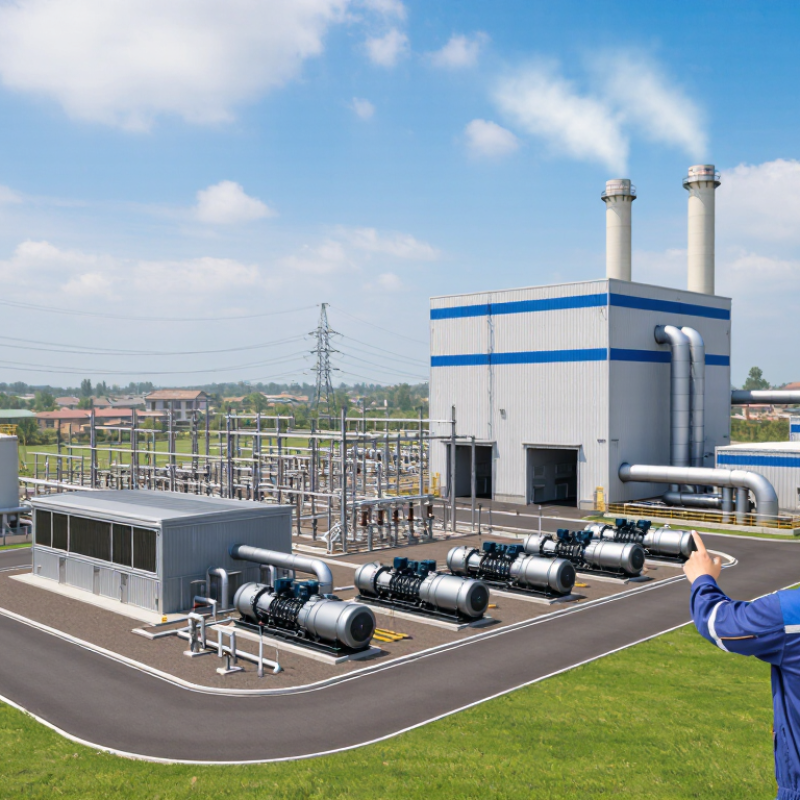
Before comparing commercial power plants, map how your facility uses electricity across a real operating week. Pull at least twelve months of utility bills, interval-meter data, and outage logs. Separate steady loads, such as refrigeration or pumps, from short peaks caused by compressors, welders, or simultaneous startup. Record both kilowatts and kilowatt-hours; one describes peak demand, the other energy consumed over time. Measure the peaks. A Tuesday average can hide a five-minute surge that affects equipment sizing. Note planned expansion, seasonal shifts, and critical circuits that must remain powered. Do not rely only on nameplate ratings: motors may draw much more current during startup.
Then define operating requirements in practical terms. How many hours must the plant run without grid support? Which loads can be shed, and how quickly can they restart? Specify acceptable voltage and frequency variation, transfer time, noise limits, available fuel storage, and the space needed for service access. Ask operators to walk the site with an electrical engineer; a door clearance or exhaust route can change the layout. Keep essential and deferrable loads on separate schedules where possible. This can reduce oversizing. Still, estimates are imperfect: occupancy changes, added machinery, and neglected maintenance all alter demand. Document assumptions, verify them against measured data, and leave a sensible margin rather than choosing capacity from one unusually busy day.
Choosing a commercial power plant starts with the load profile, not the largest capacity on a specification sheet. Record hourly demand, peak loads, planned outages, and critical equipment. A cold-storage site may need steady power, while a factory may need brief bursts for motor starts. Those patterns can change the best technology.
Gas turbines suit larger, relatively steady loads and can use natural gas or other approved gaseous fuels. Reciprocating engines often respond quickly to changing demand and can be installed in modules. Combined heat and power systems may improve overall fuel use when a facility can consistently use recovered heat. That matters. Solar paired with batteries can reduce daytime fuel consumption, but storage duration and cloudy periods affect dependable output.
Fuel choice changes operating costs, logistics, and emissions. Natural gas can provide dispatchable power where pipeline supply is reliable; onsite fuel storage may improve resilience, but adds maintenance and safety needs. Diesel generators are often useful for backup, though fuel age, testing, and exhaust controls deserve attention. Biogas may fit sites with a steady local supply, but its quality can vary. Hydrogen readiness sounds attractive, yet actual supply, equipment compatibility, and cost need careful verification. No option is perfect.
Compare proposals using the same assumptions for annual run hours, fuel prices, maintenance, and efficiency at part load. Ask for performance data under your site’s temperature and altitude conditions. A common mistake is treating rated output as guaranteed output. It isn’t. Review noise, emissions, service access, and fuel delivery plans with qualified engineers before choosing.
| Technology | Typical fuel or energy source | Indicative scale | Efficiency or output characteristic | Dispatchability | Operational emissions | Key advantages | Main considerations |
|---|---|---|---|---|---|---|---|
| Combined-cycle gas turbine (CCGT) | Natural gas; some designs may support specified low-carbon fuel blends, subject to equipment limits. | Commonly about 100–1,000 MW per plant. | Typically about 50–62% net electrical efficiency on a lower-heating-value basis, depending on design and conditions. | Dispatchable; generally suited to steady output and load-following, though start-up and ramp performance vary by plant. | Emits carbon dioxide and nitrogen oxides when operating. Direct CO₂ emissions are generally lower per kWh than coal generation, but not zero. | High efficiency among fossil-fuel thermal plants; established technology; relatively compact site footprint. | Requires dependable gas supply and pipeline or storage infrastructure. Fuel-price exposure and methane leakage across the supply chain affect cost and climate impact. |
| Simple-cycle gas turbine | Natural gas; some units can use other liquid or gaseous fuels if specifically designed for them. | Commonly about 20–300 MW per unit. | Typically about 30–40% net electrical efficiency, with actual performance affected by ambient temperature and equipment design. | Highly dispatchable and often capable of rapid start-up; commonly used for peak demand and backup. | Emits carbon dioxide and nitrogen oxides during operation. Emissions per kWh are generally higher than for a modern CCGT. | Fast response, comparatively simple plant configuration, and useful for short-duration or emergency generation. | Lower fuel efficiency than combined-cycle generation; economics may depend on relatively infrequent operation and the value of capacity or flexibility. |
| Gas reciprocating-engine plant | Natural gas, biogas, or other engine-compatible gaseous or liquid fuels, subject to engine specifications. | Individual engines are often about 1–20 MW; multiple engines can be combined into a larger plant. | Large gas engines commonly achieve roughly 40–50% electrical efficiency, with variation by engine and operating conditions. | Dispatchable; multiple engines can be started and operated independently for flexible output. | Emits carbon dioxide and local air pollutants when using fossil gas; emissions depend on fuel, controls, and operating profile. | Modular construction, flexible operation, and the ability to maintain some output while individual engines are serviced. | Many engines may be needed for large capacity. Noise, local air permits, fuel quality, and maintenance planning require attention. |
| Coal-fired steam plant | Coal; plant design and fuel handling systems are matched to specific coal properties. | Commonly about 100–1,000 MW per unit. | Modern units typically operate at roughly 33–45% net electrical efficiency, depending on steam conditions, fuel, and plant design. | Dispatchable, but many units are less flexible than gas plants and may have longer start-up times. | High direct carbon dioxide emissions; also produces air pollutants and solid residues that require control and management. | Can provide large quantities of controllable power where fuel supply and supporting infrastructure are available. | High carbon intensity, significant pollution-control and ash-handling needs, substantial water use at many sites, and exposure to tightening environmental rules. |
| Nuclear fission plant | Uranium-based nuclear fuel; fuel-cycle arrangements and requirements depend on reactor design and national regulation. | New commercial units are commonly several hundred to around 1,600 MW each; smaller reactor designs are a separate, site- and regulation-dependent category. | Typically about 30–37% thermal-to-electric efficiency; plants can produce large amounts of electricity at high capacity factors. | Generally suited to continuous output; the ability and economics of load-following depend on reactor design and operating rules. | Very low direct greenhouse-gas emissions during generation. Radioactive waste and nuclear safety require specialized, regulated management. | Reliable low-carbon generation with high energy density and relatively small fuel-volume requirements. | High capital cost, long development and construction timelines, demanding licensing and safety requirements, and a need for long-term waste arrangements. |
| Biomass-fired power plant | Sustainably sourced wood residues, agricultural residues, or other eligible biomass; feedstock characteristics vary. | Often about 5–100 MW, although project scale varies by feedstock availability and plant design. | Typically about 20–35% net electrical efficiency for electricity-only steam plants; combined heat and power can improve total useful-energy utilization. | Dispatchable when fuel is available and stored; suitable for scheduled generation. | Emits carbon dioxide and air pollutants at the stack. Overall climate impact depends on feedstock sourcing, regrowth, processing, and transport; it should not be assumed to be zero-carbon. | Can use suitable local residues and provide controllable output; combined heat and power may serve nearby heat demand. | Requires a reliable, sustainable fuel supply and extensive handling and storage. Transport distance, feedstock seasonality, and air-quality rules matter. |
| Solar photovoltaic (PV) | Sunlight; no combustion fuel. | Commercial plants can range from a few MW to hundreds of MW or more, depending on land and grid capacity. | Output varies with sunlight, weather, season, orientation, and shading. Capacity factor is site-dependent and is not directly comparable to thermal-plant efficiency. | Variable and weather-dependent; output can be forecast but is not fully dispatchable without storage or other balancing resources. | No direct air emissions during electricity generation; lifecycle emissions arise from equipment manufacturing, construction, and end-of-life management. | Modular deployment, no fuel-price exposure, and generally low water use during operation. | Needs suitable land or rooftop area, grid connection, and a plan for variability. Storage or complementary generation may be needed to meet firm supply targets. |
| Onshore wind | Wind; no combustion fuel. | Individual turbines are commonly about 2–15 MW; projects may contain multiple turbines. | Output depends on the wind resource, turbine design, and site conditions. Capacity factor is location-specific and does not represent thermal efficiency. | Variable and weather-dependent; output can be forecast but is not fully dispatchable. | No direct air emissions during electricity generation; lifecycle emissions arise from manufacturing, construction, and decommissioning. | No fuel purchases and typically low water use during operation; can complement solar where resource patterns differ. | Requires a suitable wind resource, transmission access, land and permitting, and management of variability and potential local impacts. |
| Comparison note: All figures are broad screening ranges, not guaranteed project values. Actual performance, cost, emissions, water use, permitting, construction time, and suitable plant size depend on technology design, site conditions, fuel quality and availability, grid requirements, and local regulations. Compare lifecycle impacts and total system costs as well as plant-level figures. | |||||||
Choosing a commercial power plant starts with the site, not the equipment. Check land control, slope, soil bearing capacity, flood exposure, road access, water availability, and nearby homes. A parcel can look ideal on a map yet require costly drainage or foundation work. Check the ground, too. Early geotechnical studies can reveal weak soils before design assumptions become expensive. Permit timelines also depend on local environmental reviews, water use, noise limits, and construction approvals. Confirm which agencies must review the project before committing to a schedule.
Grid access deserves equal scrutiny. The Lawrence Berkeley National Laboratory’s 2024 Queued Up report found about 2,600 gigawatts of generation and storage capacity awaiting grid connection in the United States at the end of 2023. Queue position alone does not guarantee a connection; study results may require network upgrades, added costs, or a smaller export limit. Request preliminary utility feedback and assess substation capacity, transmission constraints, and the likely route for a connection line.
The International Energy Agency’s Electricity Grids and Secure Energy Transitions report says roughly 80 million kilometres of grids must be added or refurbished worldwide by 2040 under its net-zero pathway. That scale makes connection studies and upgrade planning essential. Keep room in the project schedule for revised studies and permit requests. One uncomfortable question is easy to postpone: can the plant still work if connection costs rise or the export limit falls? A realistic answer should shape land negotiations and financing assumptions.
Assess site suitability, permits, and grid-connection requirements before selecting a project location.
How to use this chart: These indicative U.S. AC voltage ranges help frame an early grid-connection discussion. Ranges overlap, and actual voltage classes vary by utility and region. Confirm available capacity, upgrade needs, interconnection rules, land-use constraints, and permitting requirements with the relevant authorities before choosing a site.
Choosing a commercial power plant in 2026 means looking beyond the purchase price. Estimate fuel, staffing, maintenance, planned overhauls, and eventual replacement costs across the plant’s expected service life. Ask for assumptions behind every estimate, including operating hours and fuel prices. A low bid can become expensive when a major component needs attention early.
Efficiency should be assessed at the loads the facility actually uses, not only at a stated peak rating. Compare performance at partial load and during seasonal temperature changes. A plant that runs well on a test sheet may behave differently beside a dusty loading bay or in summer heat. Check how heat recovery, if needed, affects the overall design. Details matter.
Review emissions data for the expected operating profile, and confirm how measurements were produced. Then examine reliability: maintenance intervals, critical spare parts, service access, and backup capacity. Ask what happens during a component failure, and how long a repair typically takes. Visit a comparable site if possible. Listen for vibration, look for clear service records, and ask operators what they would change. Their answer may be imperfect, but that is useful. A polished proposal rarely captures every operational headache.
Choosing a commercial power plant in 2026 starts with the supplier, not the brochure. Ask for project references that match your operating hours, load profile, and site conditions. Request documented factory tests, commissioning procedures, warranty terms, and a clear list of exclusions. A polished proposal can still omit local service coverage or spare-parts lead times. Check those details.
Installation planning should begin with a site survey. Confirm equipment access, foundation dimensions, ventilation routes, exhaust clearances, and electrical connection points before delivery. Ask who coordinates civil, electrical, and mechanical work, and who signs off each stage. A simple responsibility chart can prevent costly handoff disputes. Details matter. Keep a realistic allowance for permitting, weather delays, and site changes; schedules often look cleaner on paper.
Maintenance support deserves equal attention. Request a sample service schedule showing inspection intervals, consumables, expected downtime, and required operator training. Clarify emergency response times and which parts are stocked nearby. During commissioning, record baseline readings, alarm settings, and load-test results for future comparison. Some plans may seem excessive until a small fault stops production. Review the assumptions with your operations team, especially if demand changes seasonally.
WhatsAppOffer Electronics Manufacturing All-in-One
PCBONLINE® is a registered trademark or service mark of pcb online limited or its affiliates.
Copyright © 2001-2024 Pcb Online Limited. All rights reserved