What Is a Heavy Duty Cantilever Racking System?
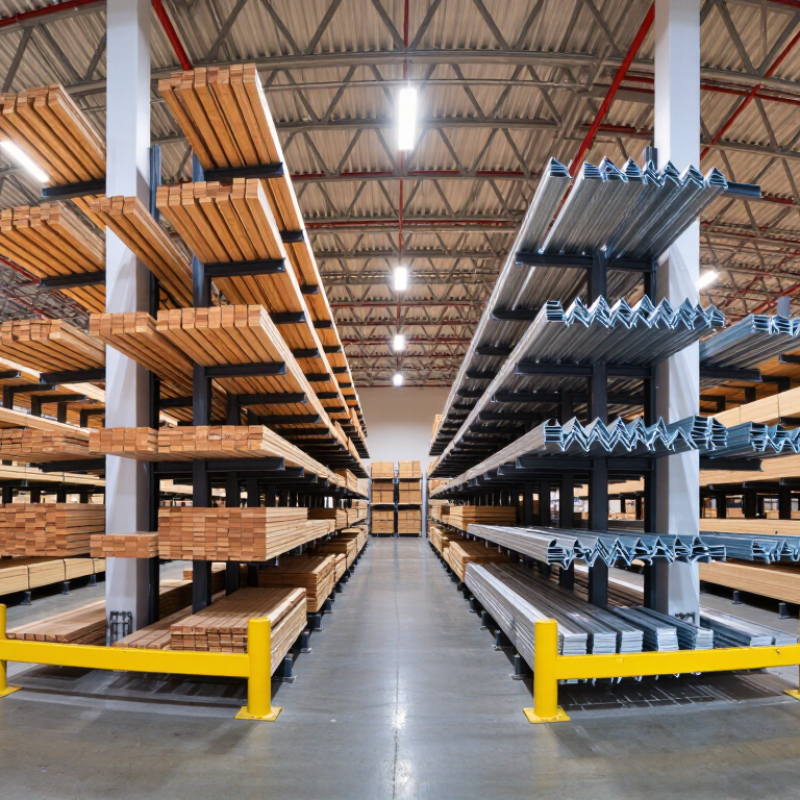
A Heavy Duty Cantilever Racking System stores long, bulky materials on projecting arms instead of enclosed shelf bays. Think of timber bundles, steel sections, or large panels resting on open supports. Forklifts can approach from the front, which helps when loads vary in length or need quick access. The frame, columns, arms, and anchors must work together. A small mismatch can matter.
David E. Mulcahy, author of Warehouse Distribution and Operations Handbook, is a recognized warehouse-operations reference. I cannot verify a direct quotation from him about cantilever racks, so the line below is a paraphrase, not a verbatim quote: “Plan the rack around the load, the handling method, and the space available.” That principle is practical, but it is not a substitute for a site-specific design review. Arm capacity, load distribution, aisle clearance, floor condition, and impact protection all deserve careful attention. Real loads are not always neat rectangles.
This guide explains what the system is, how its parts support stored materials, and where it can fit in a warehouse. It also considers selection and safety factors that are easy to overlook when comparing prices. A rack may look simple. Its design should not be guesswork.
Definition and Purpose of a Heavy-Duty Cantilever Racking System
What Is a Heavy Duty Cantilever Racking System?
A heavy-duty cantilever racking system stores long, bulky materials on projecting arms attached to upright columns. Unlike conventional shelving, it has no front posts blocking the load face. This open design suits items such as steel sections, timber, pipes, and sheet materials. The arms can often be adjusted to fit different load lengths.
Its purpose is to support organized storage while keeping loads accessible from the aisle. A forklift can approach the rack and place materials directly onto the arms. That matters. Operators can select items without moving several items in front of them, though safe handling still depends on clear aisles and suitable equipment.
Capacity needs careful planning. Each arm and upright has a rated limit, and the load must be distributed as specified by the rack design. Uneven bundles or long materials extending beyond the supports can create instability. In real warehouses, the first layout is rarely perfect. Measure the longest loads, check floor conditions, and allow room for forklift turns before installation. Periodic inspections can reveal bent arms, loose connections, or impact damage; small defects deserve attention, even when the rack still appears usable.
Core Components and Their Functions
A heavy duty cantilever racking system stores long, bulky loads such as steel tube, timber, or sheet material. Its upright columns carry the structure, while horizontal arms project outward to support goods without front-facing obstructions. This open layout makes loading easier with a forklift, but it also requires careful control of load placement.
The base and column form the main support. Base plates spread forces across the floor, and suitable anchors help resist movement or tipping. Arms connect to the columns at selected heights. Their length and spacing should match the dimensions and weight of the stored material; a bundle resting too far beyond an arm can create uneven stress. Small details matter. Adjustable connections allow the storage levels to change, though frequent changes should be checked against the rack’s rated capacity.
Diagonal and horizontal bracing link the uprights and help keep the frame stable. End stops can reduce the chance of material sliding off, while column guards help limit impact damage in busy aisles. Capacity labels give operators a visible reference, but labels cannot correct a poorly distributed load. Inspect arms, connections, anchors, and floor conditions regularly. A bent arm may look minor. It may not be. Actual capacity depends on the complete configuration and installation, so site conditions deserve a second look.
How Cantilever Racking Stores and Retrieves Long Loads
A heavy-duty cantilever rack stores long loads on horizontal arms attached to upright columns, leaving the front open. This layout suits timber, steel sections, pipe, and sheet materials that do not fit neatly on standard pallets. Operators place loads from the front, then retrieve them with a forklift or suitable handling attachment. The open face makes lengths easier to access. It also means careful load placement matters.
During loading, distribute weight across the arms and keep each bundle within its designed support points. Do not assume every arm has the same capacity: the rack configuration, column spacing, and load position affect safe limits. The Rack Manufacturers Institute’s ANSI MH16.3 specification addresses the design of cantilever steel storage racks; site-specific capacities should come from the rack design and qualified review. In MHI’s 2023 Annual Industry Report, 87% of surveyed supply chain professionals expected technology investment to rise over the next five years. That broader trend does not prove automation improves every rack operation. A practical detail can still be missed: long loads may flex or shift during retrieval. Check clearances, secure bundles, and keep the travel path unobstructed. Sometimes the awkward load sets the real limit.
Load Capacity, Layout, and Configuration Options
A heavy duty cantilever racking system stores long, bulky materials on horizontal arms supported by vertical columns. Its safe load capacity depends on more than the steel thickness. Arm ratings, column ratings, spacing, bracing, and floor conditions all matter. Check the rated capacity per arm and per upright, and confirm how loads must be distributed. A bundle of steel pipe behaves differently from a stack of timber. Uneven loading can create unexpected stress. Small details matter.
Layout choices should reflect the longest items, handling equipment, and available floor space. Single-sided racks can sit against a wall; double-sided rows provide access from both sides. Arm length and column spacing can be configured for different product dimensions, while adjustable arms allow changes as inventory shifts. Leave enough aisle width for a forklift to turn and place loads without striking columns. Measure the longest stock, not just the average piece. It is tempting to maximize storage density, but tight aisles can slow daily handling. That trade-off deserves a second look. Before installation, have a qualified racking professional verify the proposed layout, ratings, and floor anchoring for the actual loads.
What Is a Heavy Duty Cantilever Racking System?
Cantilever racking stores long or bulky goods on projecting arms supported by upright columns. The chart compares illustrative arm-load ratings across three example configurations.
Example ratings are for comparison only, not universal specifications. Actual capacity depends on the rack design, arm length, column spacing, bracing, material, and load distribution. Confirm rated capacities with the system designer and follow applicable local codes.
Common Applications and Essential Safety Considerations
A heavy-duty cantilever racking system stores long, bulky materials that ordinary pallet racks handle poorly. Typical loads include steel sections, timber, pipes, and sheet goods. Open fronts let forklifts place items without front columns blocking access. In a busy yard, that can mean fewer awkward moves. Long loads need room. Clear aisles and suitable forklift attachments matter just as much as rack capacity.
Applications vary, but safety basics stay consistent. Check the manufacturer’s load rating, secure the rack to the floor as specified, and distribute loads evenly across the arms. Keep heavy stock low, and do not let materials project into travel paths.
The U.S. Bureau of Labor Statistics reported a 4.8 recordable-injury-and-illness rate per 100 full-time workers in transportation and warehousing in its 2022 Survey of Occupational Injuries and Illnesses. That figure covers a broad sector, not cantilever racks alone, but it underlines why handling risks deserve attention.
Bent arms or loose anchors are not cosmetic issues.
Tips: Inspect uprights, braces, anchors, and arms on a regular schedule; document damage and remove unsafe bays from use. Recheck clearances after changing load sizes. A layout that worked for shorter stock may not work for longer bundles. Even experienced teams can miss that.


 Phone
 WhatsApp
 Email