Choosing a Braided Cable Sleeve in 2026 is less about picking a color and more about matching protection to the job. A sleeve routed behind a warm server rack faces different demands from one protecting cables beneath a vehicle dashboard. Check the cable bundle’s outside diameter, the sleeve’s expansion range, and the route’s tightest bend. A neat fit matters. Too loose, and the bundle can shift; too tight, and installation may become difficult.
Industry growth offers useful context, but not a product recommendation. Grand View Research’s Cable Management Market Size, Share & Trends Analysis Report estimated the global cable management market at USD 23.8 billion in 2023 and projected an 8.1% compound annual growth rate from 2024 to 2030. That broad category includes much more than braided sleeves, so the figure should not be read as sleeve-specific demand. Still, it points to the growing importance of organized cable systems across industries. Details matter.
For a practical comparison, look at material, operating-temperature range, abrasion resistance, and whether the sleeve can be installed over existing connectors. PET sleeves often suit general-purpose bundling, while tougher environments may call for other materials or added protection. Confirm the manufacturer’s test conditions; a rating without its context can mislead. Also check cut-edge fraying and the space available around clips or grommets. A small oversight can turn a tidy installation into rework. No single sleeve is right for every route, and even a well-documented specification cannot replace checking the actual cable bundle and installation conditions.
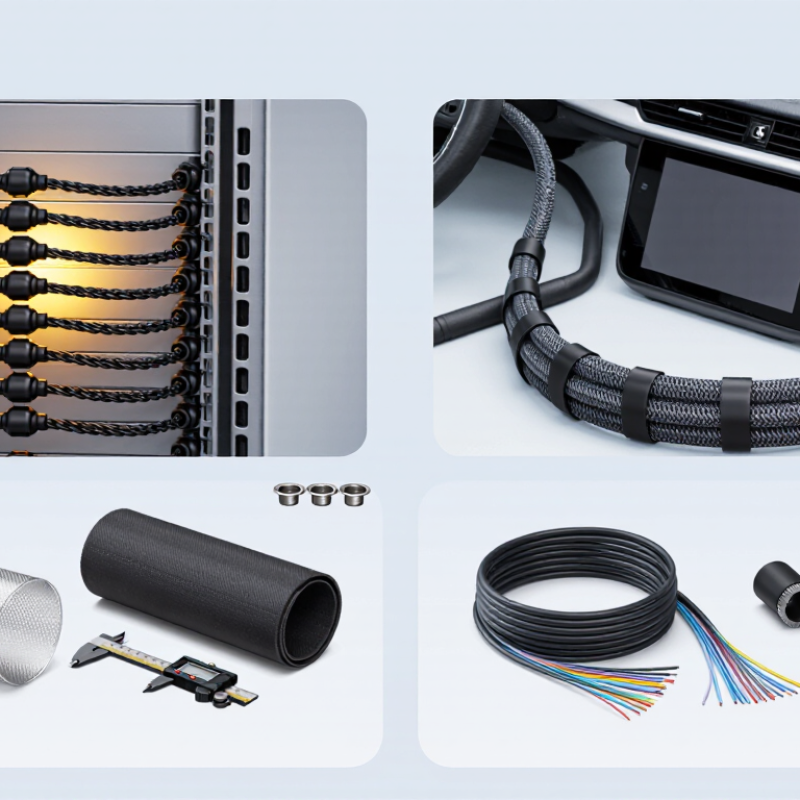
A braided cable sleeve is a flexible cover woven from strands of material, often polyester or nylon. It gathers loose wires into a neater bundle and helps shield them from rubbing against desk edges, equipment frames, or nearby cables. That matters in busy spaces. The open weave also allows air to circulate, unlike some solid wraps. Many sleeves can expand to fit bundles of varying sizes, but their stated diameter is only a starting point. A tight fit can be difficult to install and may strain connectors.
Tips: Measure the thickest cable bundle, including bends. Check whether the sleeve resists abrasion, heat, or chemicals your setup may encounter. These properties vary by material and construction. Trim carefully; cut edges can fray, and some sleeves need an end cap or other finish.
A sleeve organizes cables; it does not repair damaged insulation or guarantee protection from water. For a desk setup, flexibility and easy access may matter most. In a workshop, tougher abrasion resistance could be more useful. I’ve found that real cable bundles rarely stay as tidy as they look during planning. Leave room for movement, especially near plugs and hinges. If the fit feels forced, choose a larger size.
Identify what the cable bundle must withstand before choosing a sleeve. A desk setup may need protection from rubbing against sharp furniture edges. A workshop bundle may face dust, vibration, or repeated handling. Outdoor cables can encounter sunlight and moisture, so check that the sleeve is rated for those conditions. Heat matters, too: a sleeve should not trap warmth around cables that already run hot. No single material suits every route.
Measure the bundle at its widest point, including connectors if they must pass through the sleeve. Then compare that measurement with the sleeve’s stated expansion range. Too tight, and installation becomes frustrating; too loose, and the bundle may shift or snag. Also consider whether cables need to branch off along the route. A closed sleeve can look tidy, but it may be inconvenient when connections change. This detail is easy to overlook.
Tips: Check the sleeve’s temperature and abrasion ratings. Test a short section on the actual cable bundle before ordering more. Leave room for future cables, but not so much that the sleeve sags. If the route bends sharply, inspect the bend after installation; the chosen size may need a second look.
Braided cable sleeves differ in material, weave, and the protection they provide. PET, or polyester, is a common choice for flexible cable bundles that need everyday abrasion resistance. For hotter environments, compare the sleeve’s stated temperature rating with the conditions near the cables; material names alone do not guarantee suitability. Small details matter. A sleeve should protect the bundle without replacing proper cable insulation or strain relief.
Weave affects both coverage and installation. A tighter braid can shield more of the cable surface, while a more open weave may expand more easily around connectors and branch points. That convenience can leave gaps. Check the expanded diameter against your thickest connector, then confirm the relaxed sleeve still fits snugly. For routes exposed to sunlight, oils, or repeated rubbing, check the product’s specific performance data rather than assuming every braided sleeve handles these conditions equally well. Ratings vary.
Tips: Cut with a tool suited to the sleeve material, and secure the edge to limit fraying. Test a short section around a real connector first. It may take a second try. Recheck the fit after routing; bends can pull a loose sleeve away from the cable.
The ranges show representative melting points for PET (250–260°C), Nylon 6,6 (255–265°C), and PPS (280–290°C). A polymer’s melting point is not its recommended continuous-use temperature. For a braided sleeve, check the specific product’s temperature rating, weave coverage, abrasion requirements, and any applicable fire or electrical certifications.
A sleeve that fits on paper may still bind around a real cable bundle. Measure the bundle at its widest point, including connectors or branches that must pass through. For a simple run, a flexible tape works; for an irregular harness, measure its circumference and divide by 3.14 to estimate diameter. Leave room for movement and future wires. Fit matters.
Expandable braided sleeve widens when compressed lengthwise, then narrows as it stretches. Check the product’s stated diameter range rather than choosing by nominal size alone. A tight sleeve can restrict movement or make installation difficult, while an oversized one may sag and expose cables. Test a short section first, especially around bends. This is easy to overlook.
Choose the installation style to match the assembly. Slide-on sleeving is usually neatest when cable ends are accessible, but connectors may need to be removed. Side-entry or split sleeving can wrap around an assembled harness, though its seam may open under tension. Cut the braid cleanly and secure the ends as its material instructions recommend; some fabrics fray more than others. Avoid pulling hard across sharp edges. Check that cables still flex freely and that the sleeve does not cover parts needing inspection or ventilation. A small test fit can save a frustrating rework.
When choosing a braided cable sleeve in 2026, match its safety ratings to the actual installation. A sleeve used near hot components may need a different temperature rating from one inside a desk. Check the stated operating range, flame-performance information, and any relevant electrical or industry approvals. Requirements vary by application, so confirm them against the equipment documentation rather than relying on a general claim. Small details matter. Look for test conditions and scope, not just a printed rating.
Durability depends on more than fiber strength. Consider abrasion resistance, chemical exposure, moisture, and repeated bending. A sleeve that feels tough in your hand may still fray where it crosses a sharp panel edge. Check whether the listed diameter refers to the relaxed sleeve or its expanded range, then allow room for connectors and cable bundles. For 2026 specifications, use the latest technical data sheet and verify temperature limits, wall thickness, expansion range, and installation guidance. Standards and product details can change. It is easy to focus on a neat fit and miss service access; I would leave enough slack to reopen the sleeve without pulling on the cables.
| Selection factor | PET braided sleeve | Nylon braided sleeve | Fiberglass braided sleeve | What to verify before purchase |
|---|---|---|---|---|
| Typical material strengths | Lightweight, flexible coverage for bundling and general abrasion protection. | Flexible and tough; often selected where resistance to wear and repeated handling matters. | Used for high-temperature protection; construction and any coating affect performance. | Check the exact fiber, weave, coating, and tested performance in the product datasheet. |
| Temperature suitability | Temperature capability depends on the polymer grade and sleeve construction. | Temperature capability depends on the nylon type and product design. | Often considered for hotter environments, but the sleeve's coating, stitching, and construction can be limiting factors. | Compare the manufacturer's continuous-use temperature and any short-term exposure limit with the actual installation conditions. |
| Abrasion and mechanical protection | Commonly used to reduce scuffing and abrasion on wire bundles; protection varies with braid density and wall construction. | Can provide durable coverage for moving or frequently handled bundles; performance is product-specific. | Provides heat-oriented coverage; abrasion resistance should be confirmed for the actual sleeve, especially if coated. | Ask for a relevant abrasion or wear test result and confirm that the test setup represents the intended use. |
| Fit and installation | Many braided designs expand to pass over connectors and contract around a bundle. | Expansion and recovery depend on the braid pattern and product dimensions. | Fit and flexibility depend on fiber, weave, and whether the sleeve has a coating. | Check nominal diameter, expansion range, bundle size, connector clearance, cut-edge fraying, and termination method. |
| Flame and electrical safety | Flame performance cannot be inferred from “PET” alone; formulations and constructions differ. | Flame performance cannot be inferred from “nylon” alone; request evidence for the specific product. | A heat-resistant fiber does not by itself establish flame, dielectric, or electrical-insulation performance. | Request the exact rating, test standard, report or certification, and any limits on the tested construction. Do not treat a material name as a safety rating. |
| Relevant standards and rating checks | IEC 60684 covers flexible insulating sleeving, with requirements and test methods set out in its applicable parts. UL 94 classifies the flammability of plastic materials under specified test conditions; it is not, by itself, proof that a finished braided sleeve is certified. IEC 60529 defines IP enclosure-protection ratings, not a general protection rating for cable sleeve. | Confirm that the cited standard applies to the product and intended use, and check the certificate or test report for the exact sleeve construction. | ||
| 2026 specification check | There is no single universal 2026 specification or safety rating for all braided cable sleeves. Requirements depend on the application, material, construction, and applicable regulations or industry standards. | Use the latest applicable edition required by your project or jurisdiction. Request a current datasheet, revision date, traceable test documentation, and change-notification details. | ||
| Best-fit application guide | A practical starting point for general wire-bundle organization and abrasion coverage. | A practical starting point where flexible, durable coverage is needed and the verified temperature range is suitable. | A practical starting point for heat-related applications when the complete sleeve assembly is rated for the conditions. | Select against the full operating environment, including heat, abrasion, chemicals, moisture, movement, and required safety approvals. |
Note: Material-level descriptions are general guidance, not product ratings. Performance and compliance must be confirmed from current documentation for the exact sleeve being evaluated.
WhatsAppOffer Electronics Manufacturing All-in-One
PCBONLINE® is a registered trademark or service mark of pcb online limited or its affiliates.
Copyright © 2001-2024 Pcb Online Limited. All rights reserved