How to Choose the Best VTOL Fixed Wing Drone?
Choosing a Vtol Fixed Wing Drone begins with the mission, not the brochure. Will it map farmland, inspect power lines, or carry a compact survey sensor? Each task changes the required range, payload, camera stability, and landing setup. A machine that looks capable on a product page may struggle when wind picks up or the launch field becomes uneven.
Vertical-flight pioneer Igor Sikorsky captured a central aircraft trade-off: “The helicopter is probably the most versatile aircraft ever built, but it will never be as efficient as a fixed-wing airplane.” That distinction still matters. A VTOL fixed-wing design can take off vertically, then transition to efficient forward flight, but its real performance depends on the complete system. Battery or fuel endurance, payload weight, transition reliability, control links, and maintenance support all deserve close review. Trade-offs matter.
A useful comparison starts with measurable details: flight time under the intended payload, practical operating range, wind limits, and recovery options. Ask for test conditions, not just headline figures. Check whether the quoted endurance includes takeoff, transition, and a safe reserve. Small details count: a muddy field, a heavy sensor mount, or a distant service center can change the day’s plan. There is no perfect platform. I would also question my own shortlist; a familiar brand or impressive specification can distract from mission fit. This guide explains how to weigh those factors and choose a system suited to real operating conditions.
Define the Mission and Operating Environment
Begin with the job, not the airframe. That matters. Define the area to cover, the distance from launch to landing, the payload, and the time available. A mapping task over open farmland needs different endurance and camera coverage than repeated inspections near hills or tree lines. Write down the smallest landing area, expected recovery direction, and where ground crews can safely stand.
Then describe the operating environment in measurable terms: typical wind, gusts, temperature, precipitation, elevation, and signal obstructions. NOAA’s 1991–2020 U.S. Climate Normals use 30 years of station observations to show typical local conditions. They are useful for seasonal planning, but averages cannot tell you whether launch-day gusts will upset a short landing approach. Check site-level forecasts and record actual conditions during trials. A map can still mislead.
FAA’s 2024–2044 Aerospace Forecast presents low-, base-, and high-growth scenarios for commercial small-UAS fleets. That range is a practical reminder: estimate realistic weekly sorties, not just ideal-day capacity. For a VTOL fixed-wing aircraft, compare mission distance and payload against usable endurance after reserving time for diversion and recovery. Include the real setup time, too. Mud, uneven ground, salt spray, or a narrow launch clearing can matter as much as the flight plan. Test in representative conditions; one calm-day trial is thin evidence.
Compare VTOL Fixed-Wing Designs and Flight Capabilities
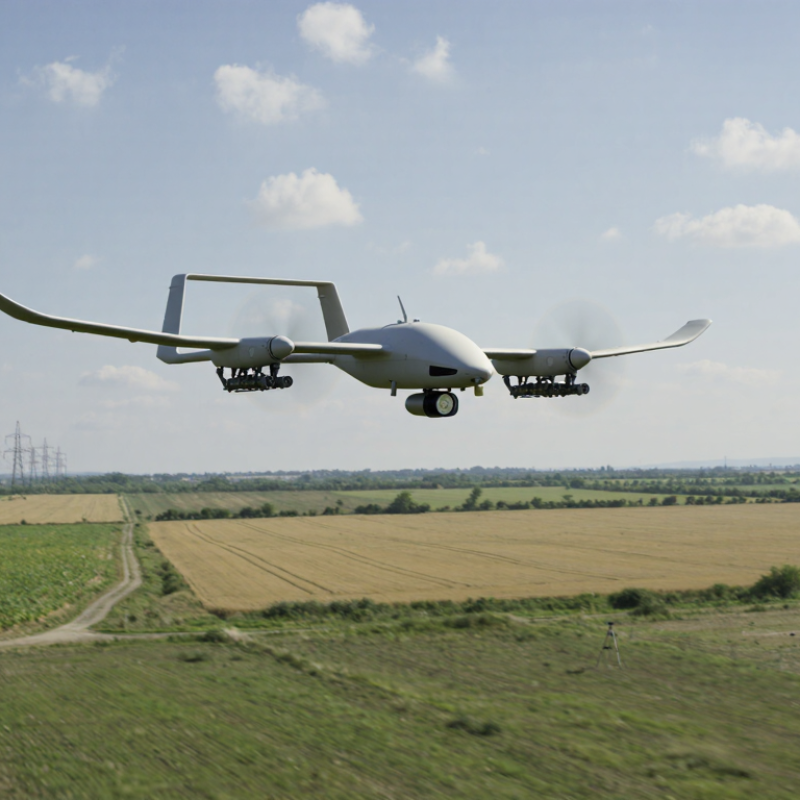
Choosing a VTOL fixed-wing drone starts with its lift-and-cruise design. A quadplane uses separate vertical lift rotors and a forward-flight propeller. Its layout is comparatively straightforward, and a failed transition may be easier to diagnose. The extra lift motors add weight and drag, though. That matters.
Tiltrotor designs pivot their propellers between vertical and forward flight. They can reduce duplicated propulsion hardware, but moving parts and transition control add complexity. Tiltwing designs rotate the wing as well as the motors, which can support efficient cruise but demands careful handling in changing wind. Neither layout is automatically better; maintenance access and the operator’s training matter too.
Compare real flight capabilities under the payload and weather you expect. A camera, mapping sensor, or other equipment changes takeoff weight, balance, and endurance. Ask for endurance figures with payload specified, and check how much reserve remains after takeoff, transition, and landing. Short flights near the intended operating area can reveal vibration, control response, and whether the aircraft holds position before moving into cruise. I would not plan around a brochure’s maximum range; wind and repeated transitions can reduce it. A little humility helps. The best fit is the design whose launch method, cruise speed, payload capacity, and maintenance demands match the actual mission.
Evaluate Payload, Endurance, Range, and Data Needs
How to Choose the Best VTOL Fixed Wing Drone?
Choosing a VTOL fixed-wing drone starts with the work it must do. List the camera, sensor, or other payload, including its weight, power draw, and mounting needs. A heavier sensor can reduce flight time and change handling. Check the aircraft’s usable payload capacity, not just its maximum figure. Then estimate endurance with your actual equipment attached. Manufacturer flight times are useful reference points, but wind, temperature, and repeated climbs can shorten them. A spreadsheet can make the plan look cleaner than it is.
Tips: Add a practical reserve to your expected flight time and range. Test with the real payload in a safe, representative area. Record battery use, wind, and image quality. Small details matter.
Range should match the size of the site and the location of launch and recovery points. Also consider whether the communication link remains dependable across the planned route. For data needs, decide how much detail you need, how often you must collect it, and how quickly you need to review it. High-resolution imagery creates larger files and may require more storage and processing time. Confirm that the aircraft can carry the sensor and power it throughout the mission. There is no perfect choice for every job; a modest setup that reliably captures usable data may outperform a longer-range aircraft with features you rarely use.
How to Choose the Best VTOL Fixed-Wing Drone
Compare illustrative mission profiles by payload and endurance. Larger bubbles indicate a greater indicative mission radius; hover over a bubble for its radius and estimated data volume. These planning examples are not product specifications—actual performance depends on aircraft configuration, weather, flight profile, regulations, and communications coverage.
Check Control Systems, Safety Features, and Regulatory Requirements
A VTOL fixed-wing drone must transition smoothly between hover and forward flight. Inspect the control system’s mode-switch logic, sensor redundancy, and return-to-home behavior. Ask what happens after a lost control link or unreliable positioning signal. Small details matter. Review flight logs and test transitions in a clear, controlled area before operational use.
Safety features should be practical, not just listed on a specification sheet. Check whether low-battery alerts leave enough reserve for a safe landing, especially in wind or cold conditions. Confirm that propeller guards, emergency procedures, and obstacle warnings suit the aircraft’s actual mission. Test it cold. A checklist can still miss a weak connector or confusing alert; record faults and repeat tests after repairs.
Regulations shape the aircraft choice as much as payload or range. Requirements for pilot qualifications, registration, airspace access, remote identification, and operations beyond visual line of sight vary by jurisdiction. The FAA’s 2024 Aerospace Forecast projects the U.S. commercial small-UAS fleet could reach about 955,000 by 2028, highlighting the need for clear operating procedures as use expands. Verify current local rules with the relevant aviation authority, and keep approval records and maintenance logs accessible. A capable aircraft is only useful when its control system, safety procedures, and operating permissions fit together.
Compare Total Cost, Support, and Maintenance Needs
When comparing VTOL fixed-wing drones, calculate the cost of keeping each aircraft mission-ready, not just its purchase price. Include batteries, payload integration, training, software, spare parts, shipping, and scheduled inspections. The FAA’s Aerospace Forecast, FY 2024–2044, counted 855,860 registered non-model aircraft in 2023. That figure is not specific to VTOL systems, but it shows why support capacity and parts availability deserve careful scrutiny.
Ask suppliers for written maintenance intervals, typical repair turnaround, warranty exclusions, and the cost of common replacement parts. A cracked propeller, worn landing component, or battery nearing retirement can affect budgets differently from a major airframe repair. Request a sample service schedule and price a realistic year of flying, including storage and transport. Small costs add up.
Support matters in the field. Check whether technicians can diagnose faults remotely, whether replacement parts are stocked nearby, and how quickly repairs are usually completed. Compare those details against your expected flight hours and downtime tolerance. A low purchase price may look attractive on paper. It may not stay that way. Estimates still have gaps: weather, operator skill, and usage can change maintenance needs, so leave room for uncertainty.


 Phone
 WhatsApp
 Email