For global buyers, choosing a Trench Pipe manufacturer involves more than comparing prices. Pipe material, diameter, wall thickness, joint design, and load rating all affect performance after installation. A product may look suitable in a catalogue yet fail to match the soil, drainage demands, or traffic loads at a specific site. Small details matter.
This guide introduces ten Chinese manufacturers for buyers researching trench and underground piping solutions. It offers a starting point, not a verified ranking or a guarantee of product suitability. Manufacturing capabilities vary, even among suppliers that serve similar markets. Ask for current technical data, applicable test reports, quality-control records, and clear product specifications. Where possible, review factory processes and speak with customers who have used comparable products. These checks can reveal differences that a polished brochure may not show.
Consider the full project, too. Confirm dimensions, connection compatibility, delivery arrangements, and after-sales support before requesting a quotation. Requirements differ by region and application, so buyers should check relevant local standards with qualified professionals. No supplier is right for every project. Even a careful shortlist can miss something; that is worth admitting. Use the profiles that follow to compare options, ask better questions, and identify which manufacturer merits a closer technical review.
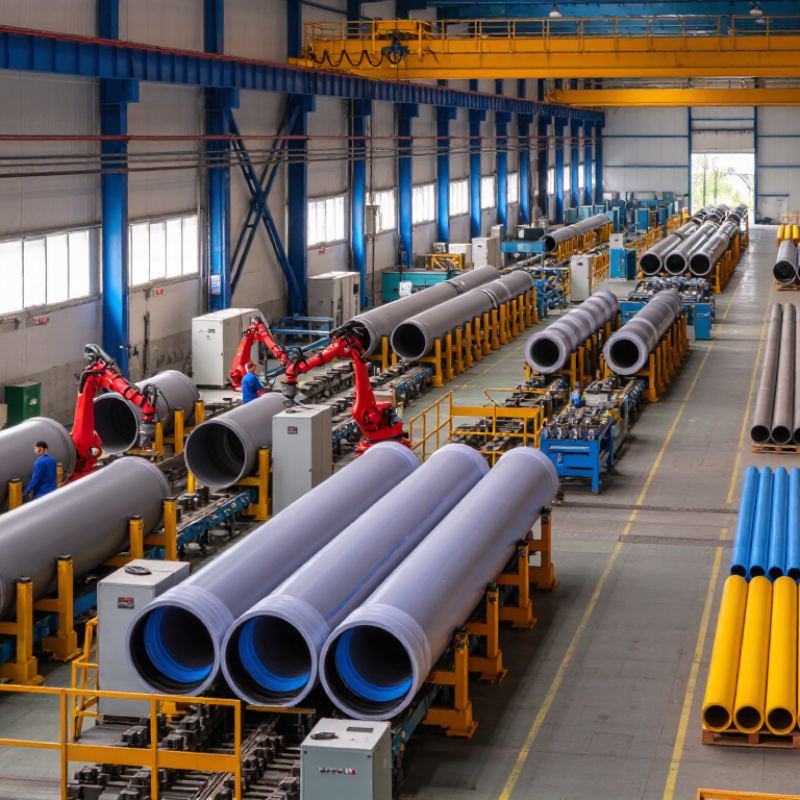
PE suits long, continuous runs where flexibility and corrosion resistance matter. Its fused joints can reduce leak paths, while coilable small-diameter pipe helps in tight utility corridors. PVC is common for gravity sewers and pressure-water lines, but installers must protect it from impact and follow the specified bedding and jointing method. A hard trench bottom can create uneven support. Fit matters.
Steel handles demanding pressure, structural loads, and exposed crossings, though coatings and corrosion protection need careful inspection. Ductile iron is often selected for buried water mains where strength and robust joints are priorities; its external protection should match soil conditions. No material wins every site. Groundwater, traffic loads, operating pressure, installation access, and maintenance plans all change the decision.
The scale of renewal is substantial: the U.S. Environmental Protection Agency’s 2023 Drinking Water Infrastructure Needs Survey estimated $625 billion in drinking-water infrastructure needs over 20 years. That figure is not a pipe-material forecast, but it shows why selection and lifecycle planning matter. A specification can look complete on paper and still miss local soil chemistry. A little humility helps. Teams should verify manufacturer-neutral test requirements, applicable standards, joint compatibility, and field inspection procedures before procurement.
ISO 4427-2:2019 provides a useful benchmark for PE pressure pipes, with outside diameters ranging from 16 to 2,000 mm. That span covers small service connections and large transmission mains. But diameter alone does not establish suitability. Buyers should also check SDR, pressure rating, material classification, wall thickness, and dimensional tolerances against project requirements.
The UNESCO World Water Development Report 2019 projected global water demand could rise by 20–30% by 2050. That pressure makes dependable pipe dimensions more than a catalog detail. On site, a few millimetres of mismatch can complicate jointing, especially on large-diameter pipe. Small details matter.
Request inspection records for outside diameter, wall thickness, and ovality, and verify the test method and sampling frequency. ISO 4427-2 is the reference point, not proof that every shipment meets it.
For trench projects, compare measured dimensions with the specified class and confirm that handling plans suit the pipe size. A 2,000 mm pipe needs different lifting, storage, and trench access planning than a 16 mm connection. This is easy to overlook. Supplier documents may look complete, yet unclear tolerances or inconsistent measurements deserve follow-up before procurement. UNESCO’s projection signals rising demand, but it does not replace project-specific hydraulic and installation checks.
Comparing China’s top 10 trench pipe manufacturers takes more than checking annual output. Ask whether stated capacity reflects installed production lines, current orders, or theoretical maximums. A factory may quote a large monthly figure, yet lack the molds or shifts needed for your diameter and delivery window. Request a production schedule and sample inspection records. Details matter.
Quality should be assessed against the pipe type and project specification. Check wall thickness, dimensions, material traceability, and documented test results. For corrugated products, inspect joint fit and profile consistency; for other pipe types, use relevant tests instead. Ask how defects are recorded and resolved. A polished sample is useful, but it cannot represent every batch. That deserves a closer look.
Export reach is not just a list of destination countries. Compare recent shipment experience, packing methods, port options, and the clarity of export documents. Ask for references from buyers handling similar volumes or climates, while respecting confidentiality. Also confirm who manages freight coordination and how delays are communicated. A supplier with broad reach may still be a poor fit for a small, urgent order. Compare responses side by side, and note what remains unanswered.
For global buyers comparing trench pipe manufacturers, ASTM D3034 offers a practical reference for PVC sewer pipe in nominal sizes from 4 to 15 inches. Common size designations include 4, 6, 8, 10, 12, and 15 inches. These numbers are nominal, not direct measurements of the pipe’s outside diameter. Check the applicable dimensional tables before matching pipe to fittings, manholes, or existing lines. A tape measure at the trench can prevent an expensive mismatch.
The standard helps buyers compare dimensions and product requirements, but a size label alone does not confirm suitability. Review the specified pipe stiffness, wall profile, joint design, and project requirements. For gravity sewer work, confirm that the selected pipe and joints suit the expected loads and installation conditions. Ask suppliers for current test documentation and clear marking details. Small print matters. Even a careful purchasing team can overlook differences between nominal size and measured dimensions; that mistake is worth checking before shipment. Keep the specification, inspection records, and receiving measurements together for a reliable comparison.
Global buyers should match pipe diameter to the hydraulic model, not just the trench drawing. Check internal diameter, wall thickness, joint type, and allowable working pressure together. ISO 2531:2009 sets requirements for ductile iron pipes, fittings, and accessories; the project specification should also name the applicable pressure class and test method. ASCE’s 2021 Report Card for America’s Infrastructure estimates that U.S. drinking-water systems lose nearly 6 billion gallons daily through leaks. That figure is not a forecast for every site, but it shows why leakage performance deserves attention. Small detail. Ask for pressure-test records and dimensional inspection results before shipment.
Compliance needs evidence that can be traced to each production lot. Request material certificates, coating details, inspection records, and clearly identified test standards. The U.S. EPA’s 2023 Drinking Water Infrastructure Needs Survey estimates $625 billion in drinking-water investment needs over 20 years. This U.S. estimate is not a global market measure, yet it underlines the value of durable, well-documented assets. Delivery planning matters just as much: confirm the packing list, port handling limits, shipment sequence, and spare-joint quantities. A late truck or mismatched gasket can stop installation. Ask suppliers for dated production milestones and buffer time for inspection. Schedules look neat on paper; ports and weather are less neat.
WhatsAppOffer Electronics Manufacturing All-in-One
PCBONLINE® is a registered trademark or service mark of pcb online limited or its affiliates.
Copyright © 2001-2024 Pcb Online Limited. All rights reserved