China Top Metal Filter Disc Manufacturers and Suppliers?
Choosing a Metal Filter Disc supplier in China takes more than comparing unit prices. Mesh size, material, disc diameter, edge finish, and operating conditions all affect performance. Small differences can change flow, particle retention, cleaning effort, and service life. Details matter. A polished product photo cannot confirm pore consistency or weld quality. Buyers should request drawings, material specifications, samples, and inspection records before approving production. They should also explain the fluid, temperature, pressure, and filtration needs the disc must handle.
This guide introduces manufacturers and suppliers, along with practical ways to assess their capabilities. Look for clear answers about available metals, woven or sintered construction, custom dimensions, production capacity, and quality checks. Ask how the supplier measures opening size and checks for damage or uneven construction. Where possible, compare a sample with the agreed specification under relevant operating conditions. A catalog is a starting point, not proof. Company claims deserve verification, and a low quote may leave important details unclear. Even experienced buyers can overlook cleaning requirements or installation fit. That deserves a second look. The right supplier is not automatically the largest or cheapest; it is one that communicates precisely, provides traceable documentation, and can show that its product matches your application. These points can help narrow the field, but final selection should depend on verified information and the needs of your process.
What Metal Filter Discs Are and How They Are Used
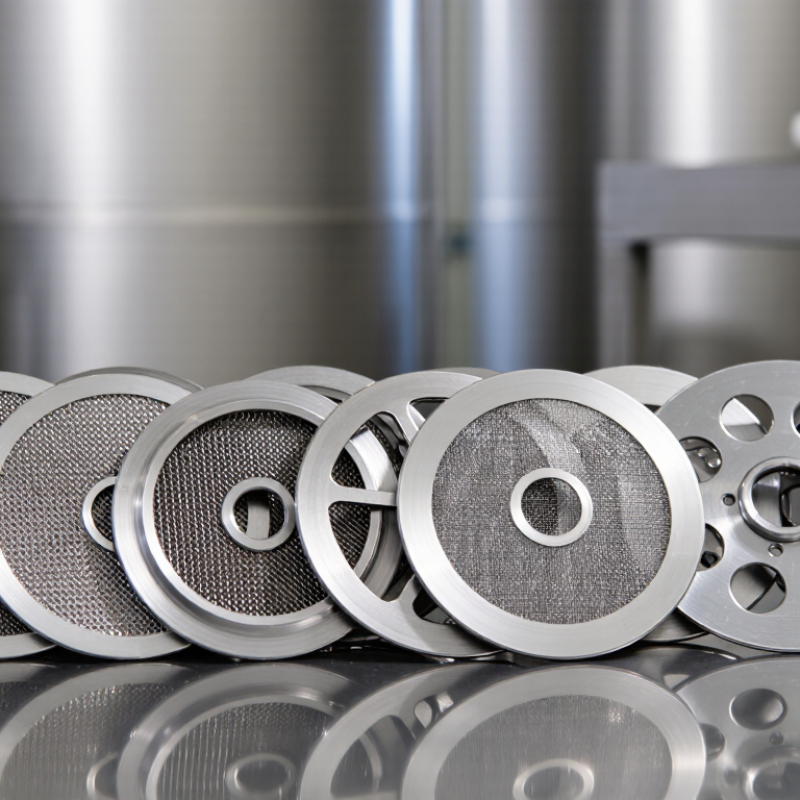
Metal filter discs are compact, porous components that trap particles while letting liquid or gas pass through. They may use woven metal mesh, perforated sheets, or sintered metal powder. Their pore structure, material, and thickness determine how much they retain and how quickly fluid flows. Common applications include hydraulic circuits, chemical processing, water treatment, and polymer extrusion. In a production line, a disc may sit inside a housing, catching scale or process debris before it reaches sensitive equipment. Small part. High stakes.
The broader market is growing: MarketsandMarkets’ 2023 Industrial Filtration Market report estimated the sector at US$33.8 billion in 2023, with a forecast of US$43.2 billion by 2028. That figure covers industrial filtration overall, not metal discs alone. Choosing a disc requires more than matching a micron rating. Check whether the rating is nominal or absolute, then consider pressure drop, operating temperature, fluid compatibility, and cleaning method. A disc that captures fine particles may restrict flow sooner. This trade-off is easy to underestimate. For sourcing, request material specifications and test details, and confirm that the disc’s dimensions and edge sealing suit the filter housing.
Materials, Designs, and Production Methods for Metal Filter Discs
Metal filter discs are made from materials chosen for the fluid, temperature, and cleaning conditions they must withstand. Stainless steel is common because it resists corrosion and tolerates repeated use. Nickel alloys may suit hotter or more chemically demanding service, while other metals can fit specific conductivity or cost needs. Material choice should be checked against the actual operating environment, not just a product sheet.
Design affects both filtration and flow. Woven wire mesh has defined openings and is often selected when particle-size control matters. Sintered metal, made by bonding metal particles with heat, forms a rigid, porous structure that can capture particles through its depth. Perforated discs are sturdier but usually offer less precise filtration. Not always. A finer opening can also increase pressure drop and clogging, so the smallest pore is not automatically the best choice.
Production may involve weaving or forming the medium, cutting it to diameter, and joining it to a support ring. Sintered versions require controlled powder preparation and heating; uneven density can create inconsistent flow. Laser cutting or stamping can shape discs, while deburring and edge finishing help prevent loose fragments. Small details matter. Inspection should include dimensions, visible defects, and, where specified, pore or flow testing. In practice, the test method should match the intended service; a clean-looking disc alone proves little.
China’s Metal Filter Disc Manufacturing and Supplier Landscape
China’s metal filter disc manufacturing landscape spans specialized workshops and larger production facilities. Suppliers commonly work with stainless steel, nickel alloys, and layered wire mesh, using processes such as stamping, resistance welding, and sintering. Capabilities differ widely. Some factories focus on fine mesh discs for laboratory or fluid-handling equipment, while others produce heavier parts for industrial filtration.
A disc’s performance depends on more than its stated micron rating. Mesh layers, open area, edge finish, thickness, and flatness can all affect flow and service life. A polished sample is not the whole story. Buyers can request drawings, material certificates, and inspection records, then compare a trial batch with the approved sample. Check pressure drop and fit under realistic operating conditions, not only on a desktop. This step is easy to overlook.
Supplier evaluation also means asking practical questions: How are dimensions checked? Can production lots be traced to material records? What happens when a disc arrives warped or its welds vary? Clear answers matter. Communication can be uneven, and a low quotation may omit testing or finishing details. That is worth reflecting on before placing a large order. A careful sourcing process balances technical evidence, repeatability, delivery capacity, and candid discussion of tolerances.
How to Evaluate Leading Chinese Metal Filter Disc Suppliers
Evaluating a metal filter disc supplier starts with operating conditions, not a catalog photo. Define the alloy, diameter, thickness, filtration rating, flow rate, and peak pressure before comparing quotations. Ask how pore size and flatness are measured, and whether tolerances appear on the technical drawing. Small gaps matter.
Request material certificates, inspection records, and clear batch identification. Then test a sample using the fluid, temperature, and pressure expected in service. A clean-looking edge proves little. For sintered discs, ask about production controls and how defects are detected; for woven or perforated designs, check mesh or hole consistency. A supplier’s test report is useful, but it should state the method and acceptance limits. It is easy to overrate a polished surface and overlook performance data.
Check whether the supplier can explain lead times, packaging, and how it handles out-of-spec parts. Specific answers are more reassuring than broad promises. Compare sample results with the drawing, including dimensions after cleaning or heat exposure when relevant. One awkward point: buyers may not know the exact filtration rating their process needs. Share real operating data where possible, and treat an uncertain specification as something to verify, not guess.
How to Select a Supplier for Your Filtration Requirements
Choosing a metal filter disc supplier starts with the process, not the catalogue. Record fluid chemistry, peak temperature, operating pressure, solids load, and cleaning method. Then request alloy certificates, pore-size distribution, thickness tolerances, and pressure-drop data. These details reveal whether a disc fits the duty or merely looks suitable. Grand View Research’s Industrial Filtration Market report estimated the global market at USD 29.55 billion in 2022, with a projected 4.6% CAGR through 2030. Market growth does not guarantee product quality.
Tips: Request a sample and test it in your actual fluid. Check bubble-point results, weld integrity, and batch traceability before approval. A short trial can reveal blinding, corrosion, or unexpectedly high pressure loss. Do not rely on nominal micron ratings alone; test methods and conditions matter. One detail is easy to miss: a supplier’s data sheet may not reflect your cleaning cycle. Set written acceptance limits, then review them after the first cleaning and reuse cycle.
Choosing a Metal Filter Disc: Stainless Steel Composition
Compare representative chromium and nickel composition ranges for stainless steel grades commonly considered for filter components. Grade chemistry can inform corrosion-resistance decisions, but the right disc also depends on filtration rating, operating temperature, pressure, and process fluid.
Composition ranges shown are representative ASTM A240 limits (weight percent). Confirm the applicable specification and grade with your supplier.


 Phone
 WhatsApp
 Email