China Top 10 Frameless Sliding Door Manufacturers?
Frameless Sliding Doors bring light and openness into homes, offices, and hospitality spaces. Their minimal appearance can be misleading. A clean glass panel still depends on precise measurements, reliable rollers, strong fittings, and careful installation. Small defects matter: a rough track or uneven gap can spoil daily use.
Architect Ludwig Mies van der Rohe’s famous maxim, “Less is more,” offers a useful design lens for these doors. It is not a technical specification. Rather, it reminds buyers that a nearly invisible frame leaves little room to hide poor workmanship. The practical test is simple: smooth movement, stable panels, and details that remain tidy after repeated use.
China’s manufacturers vary in product range, customization, hardware, and export support. This guide reviews ten companies through those buyer-focused criteria, while recognizing that capabilities and specifications can change. Ask for current drawings, glass and hardware details, installation guidance, and project references before comparing quotes. A polished catalog is not proof of consistent production. Nor is the lowest price always a bargain. Ranking suppliers is imperfect, especially when public information differs, but careful checks can narrow the field and make conversations with shortlisted manufacturers more productive.
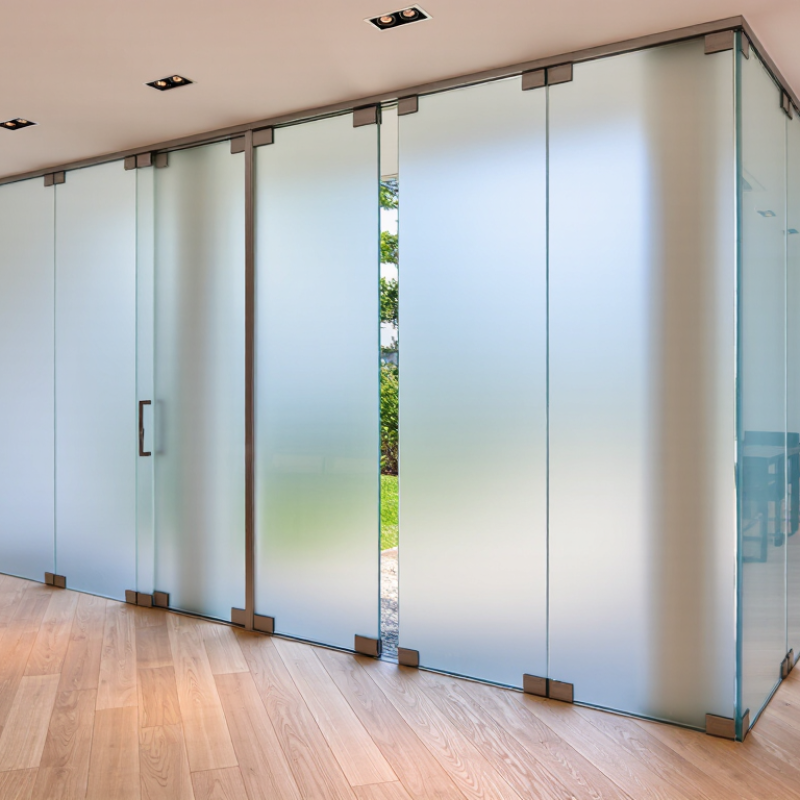
Frameless Sliding Doors Defined: Glass Panels, Tracks, and Structural Components
A frameless sliding door uses large glass panels with minimal visible framing. “Frameless” does not mean unsupported: the glass connects to rollers, clamps, or concealed fittings. Panel thickness and hardware capacity should suit the opening size and expected use. Tempered or laminated safety glass is commonly specified, but the right choice depends on the design and project requirements. Small details matter.
The track guides the door and carries its movement through rollers, while stops help prevent panels from leaving the intended path. Tracks may be mounted above the opening or set into the floor; each option affects drainage, cleaning, and accessibility. Structural supports above the opening must also handle the system’s weight. A sleek ceiling line can hide a demanding installation detail.
Seals at meeting edges and floor gaps can reduce drafts and rattling, though sliding doors rarely seal like fixed walls. Installation tolerances are tight: an uneven floor or misaligned track may cause scraping, uneven gaps, or noisy movement. I would not judge a system by glass appearance alone. Check how its components are supported, adjusted, and maintained over time.
China Top 10 Frameless Sliding Door Manufacturers? - Frameless Sliding Doors Defined: Glass Panels, Tracks, and Structural Components
Technical reference for comparing frameless sliding door systems. This is not a manufacturer ranking; specifications vary by design, opening size, and project requirements.
| System element | Common materials or specifications | Purpose and practical checks |
|---|---|---|
| Glass panel type | Toughened (tempered) safety glass; laminated safety glass may be specified where appropriate. | Confirm the glass build-up and applicable safety-glazing standard for the destination market and installation location. |
| Glass thickness | Common system options include 8 mm, 10 mm, and 12 mm glass; availability depends on the hardware system. | The appropriate thickness depends on panel dimensions, support conditions, and hardware limits; it should be confirmed by design review. |
| Glass edges and cut-outs | Finished edges and hardware holes or notches prepared before heat treatment, according to the approved drawings. | Check dimensions, hole positions, and edge finish before production; glass generally cannot be cut or drilled after tempering. |
| Top track | Typically an extruded metal track, often aluminum, sized for the system’s rollers and panel load. | Verify the track’s mounting method, alignment requirements, finish, and documented load rating for the intended installation. |
| Rollers and hangers | Roller assemblies may use metal components with polymer wheels or other system-specific materials. | Check rated panel weight, adjustment range, replaceability, and compatibility with the track and glass clamps. |
| Glass clamps or mounting fittings | Purpose-designed fittings secure the glass panel to the hanger; some systems use compatible gaskets or liners. | Confirm glass compatibility, fastening details, and installation torque or adjustment instructions from the system supplier. |
| Floor guide | A small guide at the floor or opening helps control lateral movement of the sliding panel. | Check that the guide suits the panel configuration and does not obstruct the intended floor surface or threshold. |
| Soft-close and stops | Optional dampers and mechanical stops may be integrated into or added to a compatible track system. | Confirm compatibility, opening direction, adjustment method, and whether the system includes suitable end stops. |
| Seals and clearances | Brush seals, edge seals, or other compatible sealing components may be used, depending on the design. | Frameless systems do not automatically provide an airtight or watertight seal; review clearances and performance needs for the application. |
| Safety and compliance documentation | Depending on the market, relevant references can include EN 12150 for thermally toughened soda-lime silicate safety glass or ANSI Z97.1 and 16 CFR Part 1201 in the United States. | Request product-specific test reports or conformity documents and verify that they cover the supplied glass and intended use. |

 Phone
 WhatsApp
 Email
Offer Electronics Manufacturing All-in-One
PCBONLINE® is a registered trademark or service mark of pcb online limited or its affiliates.
Copyright © 2001-2024 Pcb Online Limited. All rights reserved