Choosing the China Best Electric Three Wheeler Cargo supplier requires more than comparing online prices. Buyers should examine manufacturing experience, battery quality, load ratings, and after-sales support. A reliable supplier explains these details clearly and provides complete technical documents.
This guide explores how experienced exporters evaluate an Electric Three Wheeler Cargo before placing an order. Important checks include frame thickness, motor performance, braking distance, charging time, and controller protection. Ask for recent production photos and a practical test video. Better still, arrange an independent factory inspection. Small details matter. A loose connector can stop a vehicle during a busy delivery route.
Supplier communication also reveals operational strength. Professional teams confirm packaging dimensions, spare-parts availability, warranty terms, and delivery schedules in writing. They should understand your road conditions, cargo weight, climate, and daily travel distance. A model designed for flat city streets may perform poorly on steep rural roads. That difference is easy to miss in a catalogue.
However, no supplier deserves trust based on claims alone. Certifications should be checked for authenticity and relevance to your destination market. Customer references can expose weaknesses that polished brochures hide. Some factories offer attractive prices but limited technical support after shipment. This guide will compare practical indicators instead of promoting one company without evidence. The final choice may still involve compromise. Lower cost is not always lower risk. Careful verification helps buyers select a capable Chinese partner and build a safer, more dependable cargo transport program.
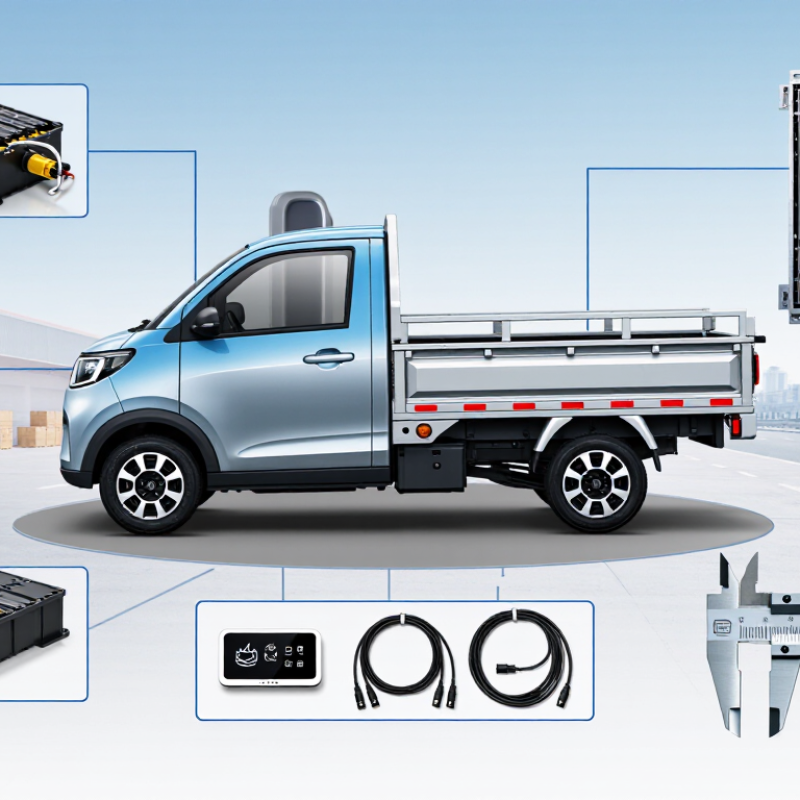
A high-quality electric three-wheeler cargo supplier should understand daily transport, not just sell vehicles. Experience appears in practical details: reinforced frames, balanced cargo boxes, strong brakes, and weather-resistant wiring. A useful vehicle must handle narrow streets, repeated loading, and uneven roads without feeling unstable.
Technical knowledge matters. The supplier should provide clear payload ratings, battery specifications, charging guidance, motor performance data, and maintenance schedules. Independent testing records add credibility. Ask how each vehicle is inspected before shipment. Check welding points, tire alignment, lighting, and controller protection. Small defects can become expensive problems.
Reliable suppliers also communicate honestly. They explain expected range under real loads, not ideal showroom conditions. They offer spare-parts support, training materials, and responsive after-sales service. Traceable production records show stronger quality control. No supplier is perfect. A polished brochure may still hide weak service or inconsistent components. Suppliers should admit limitations and improve them openly. Buyers should request samples, inspect assembly quality, and compare performance with documented requirements. That practical process often reveals more than a low quoted price.
A practical supplier evaluation should prioritize vehicle safety, payload performance, battery reliability, service capability, and total operating value. The 100-point scorecard below provides a balanced sourcing framework for comparing electric cargo three-wheeler suppliers.
The weighting is designed for commercial fleet procurement: safety and durability reduce operational risk, while payload, battery performance, after-sales support, and cost determine long-term business value.
China is a major source of electric cargo three-wheelers because its manufacturing network is unusually complete. Motor, battery, frame, controller, tire, and cargo-box suppliers often operate within connected industrial regions. This proximity reduces transport time between factories and supports faster design changes. Buyers can request different wheelbases, cargo dimensions, braking systems, and weather protection. Small delivery fleets benefit from this flexibility.
Production volume also helps control costs. However, a low price does not automatically mean reliable quality. A serious sourcing process should examine battery-cell information, motor ratings, charging performance, and maximum payload data. Ask for test records. Request clear photos. Inspect welds and cable protection. These details affect daily safety and maintenance.
Suppliers should explain warranty coverage, spare-parts availability, and export documentation before payment. Independent pre-shipment inspection can reveal loose connectors, uneven paint, or weak hinges. These issues may look minor at the factory but become expensive after arrival. Field conditions also matter. A vehicle designed for flat urban roads may struggle on steep streets or rough farm paths. Some specifications are optimistic, and that deserves careful questioning. The strongest supplier is not always the cheapest one; it is the one that answers technical questions consistently and supports the vehicle after delivery.
China Best Electric Three Wheeler Cargo Supplier?
Key Vehicle Features to Compare Among Chinese Suppliers
Choosing a Chinese electric three-wheeler supplier requires more than checking the lowest quotation. Compare the rated payload with the vehicle’s actual curb weight. A cargo box may appear large, yet weak suspension can reduce stability under heavy loads. Inspect the frame thickness, weld quality, axle design, and ground clearance. These details matter on uneven warehouse roads and crowded market streets.
Battery performance deserves careful testing. Ask whether the battery uses lithium or lead-acid technology. Compare usable capacity, charging time, expected cycle life, and protection against overheating. Do not trust advertised range alone. Test the vehicle with at least 70% of its rated load. Record distance, speed, road slope, and remaining battery power. Real results can differ sharply from brochure figures.
Braking and control systems also separate reliable suppliers from average ones. Check hydraulic or mechanical brakes, tire size, steering response, lights, mirrors, and reverse alarms. Request inspection records, spare-parts lists, wiring diagrams, and clear warranty terms. A supplier should explain service procedures without vague promises. One practical mistake is comparing motor wattage alone. A powerful motor may drain the battery quickly or strain the controller. Review both performance and long-term maintenance costs. Safety certifications and export documentation should match the destination market’s requirements.
| Comparison Feature | Entry-Level Cargo Three-Wheeler Light urban delivery | Mid-Duty Cargo Three-Wheeler General commercial use | Heavy-Duty Cargo Three-Wheeler Industrial and rural transport | Information to Verify with the Supplier |
|---|---|---|---|---|
| Typical Rated Payload | 300–500 kg | 500–1,000 kg | 1,000–1,500 kg | Confirm whether payload includes the driver, battery, cargo box, and accessories. |
| Battery Voltage | 48–60 V | 60–72 V | 72 V or higher | Request the nominal voltage, operating voltage range, battery configuration, and protection rating. |
| Battery Chemistry | Lead-acid or lithium-ion | Lead-acid or lithium-ion | Usually lithium-ion for frequent heavy-duty operation | For lithium batteries, verify cell type, battery-management system, thermal protection, and serviceability. |
| Typical Battery Capacity | 40–80 Ah | 80–150 Ah | 120–200 Ah | Check whether the stated capacity is measured at the specified discharge rate and temperature. |
| Motor Rated Power | 1.5–3 kW | 3–5 kW | 5–10 kW | Compare continuous rated power, peak power, motor type, controller rating, and overload protection. |
| Driving Range per Charge | 60–100 km | 60–120 km | 50–100 km | Range varies with payload, road gradient, speed, temperature, battery age, and test method. |
| Maximum Speed | 25–45 km/h | 30–50 km/h | 30–50 km/h | Confirm the electronically limited speed and whether the configuration complies with the destination market. |
| Gradeability | 12–20% | 15–25% | 15–30% | Ask for the gradeability test load, road surface, distance, and minimum battery state of charge. |
| Charging Time | 6–10 hours with lead-acid; 4–8 hours with lithium-ion | 6–12 hours with lead-acid; 4–8 hours with lithium-ion | 6–12 hours, depending on charger output and battery capacity | Verify charger input voltage, output current, connector type, charging protection, and spare-charger availability. |
| Charging Input | 220 V AC is common | 220 V AC is common; three-phase options may be available | 220 V AC or higher-capacity commercial charging equipment | Confirm compatibility with the electrical system at the operating location. |
| Braking System | Front drum or disc brake with rear mechanical or hydraulic brake | Hydraulic drum or disc brakes on at least two wheels | Hydraulic braking system, often with larger drums or discs | Check braking distance, parking brake design, brake-balance adjustment, and replacement-part availability. |
| Suspension | Leaf spring or basic rear suspension | Reinforced leaf springs with hydraulic shock absorbers | Heavy-duty leaf springs and reinforced axle components | Compare axle load ratings, spring thickness, shock absorbers, and performance under rated payload. |
| Common Cargo Box Size | Approximately 1.5–2.0 m long and 1.0–1.3 m wide | Approximately 1.8–2.5 m long and 1.2–1.5 m wide | Approximately 2.2–3.0 m long and 1.4–1.7 m wide | Confirm internal dimensions, usable volume, side-wall height, tailgate design, and waterproofing. |
| Frame and Cargo Bed | Steel frame with steel or aluminum cargo bed | Reinforced steel frame with steel cargo bed | Heavy-gauge steel frame and reinforced cargo bed | Request frame material, structural drawings, corrosion treatment, weld quality, and floor load rating. |
| Turning Radius | Approximately 3.5–5.0 m | Approximately 4.0–6.0 m | Approximately 4.5–7.0 m | Verify the turning radius using the fully loaded vehicle and the intended steering configuration. |
| Cab and Driver Protection | Basic roof, windshield, lights, and mirrors | Enclosed or semi-enclosed cab with improved weather protection | Reinforced enclosed cab with optional heating or ventilation equipment | Check seat-belt provisions, windshield material, wiper system, lighting, mirrors, and cab strength. |
| Safety and Control Features | Headlamps, indicators, horn, reverse alarm, and speed limiter | Lighting package, reverse alarm, parking brake, battery protection, and optional camera | Lighting package, hydraulic braking, reverse alarm, overload protection, and optional camera | Request the complete wiring diagram, controller protections, emergency shutoff, and diagnostic functions. |
| Water and Dust Protection | Basic splash protection | Improved sealing for controller, motor, and battery enclosure | Reinforced enclosure and cable protection for demanding environments | Ask for the tested IP rating of the battery, controller, motor, and charging connector. |
| Operating Temperature | Typically about −10°C to 40°C, depending on battery type | Typically about −10°C to 40°C, depending on battery type | Typically about −10°C to 40°C, depending on battery type | For cold climates, verify low-temperature charging protection and battery-heating options. |
| Warranty Coverage | Commonly 12–24 months for the vehicle; battery terms may differ | Commonly 12–24 months for the vehicle; battery terms may differ | Commonly 12–24 months for the vehicle; battery terms may differ | Obtain written coverage for the frame, motor, controller, charger, battery, axle, and consumable parts. |
| After-Sales Support | Remote troubleshooting and standard spare parts | Technical manuals, parts lists, and training may be available | Structured service procedures, parts planning, and technical support are especially important | Compare spare-parts lead time, service documentation, response time, training, and local service capability. |
| Export Documentation | Commercial invoice, packing list, and shipping documents | Commercial documents plus technical specifications and test records | Commercial documents plus detailed technical, battery, and transport documentation | Confirm destination-market type approval, road registration, battery transport documents, and conformity requirements. |
| Total Cost of Ownership | Lower purchase cost; higher battery replacement frequency may occur with lead-acid batteries | Balanced purchase price, capacity, and operating cost | Higher initial cost, but potentially better productivity under regular heavy loads | Compare battery life, energy consumption, tire wear, brake wear, maintenance intervals, and replacement-part prices. |
Choosing the best Chinese electric three-wheeler cargo supplier requires more than comparing prices. The IEA Global EV Outlook 2024 reports that global electric car sales reached nearly 14 million in 2023. Electrification is expanding quickly. Yet cargo vehicles face harder conditions, including heavier loads, rough roads, and longer daily operating hours.
A reliable evaluation should begin with factory evidence. Ask for battery test reports, payload measurements, motor efficiency data, and production quality records. Check whether the stated range was tested with a loaded vehicle, not an empty one. During a factory visit, inspect welding points, cable protection, brake components, and battery enclosure seals. Small details matter. A polished showroom can still hide weak wiring.
The manufacturer should provide clear warranty terms, spare-parts availability, maintenance procedures, and delivery timelines. The World Bank Logistics Performance Index 2023 highlights the importance of dependable logistics and shipment visibility. Request serial-number tracking and documented pre-shipment inspections. Compare total operating cost, not only the purchase price. Battery replacement assumptions must be written down. I would also question unusually high range claims. No audit is perfect, and a supplier may pass one inspection while failing later production consistency. Independent testing remains worthwhile, especially for payload, braking, charging safety, and performance in local weather conditions.
Choosing a Chinese electric three-wheeler supplier requires more than comparing factory prices. The IEA’s Global EV Outlook 2024 reports that electric two- and three-wheelers represented over half of global sales in 2023. Demand is strong, but specifications vary sharply. Confirm payload, battery chemistry, motor rating, charging time, gradeability, and real-world range before ordering. Request a production sample. Test it with a full load, rough roads, steep ramps, and repeated braking. A brochure cannot replace field evidence.
Compliance needs written proof. Ask for certificates required by the destination market, battery transport test records, charger safety documents, and clear vehicle identification details. Requirements may cover lighting, braking, electromagnetic compatibility, noise, recycling, and road registration. The United Nations Economic Commission for Europe publishes vehicle regulations, but local authorities still control approval. Check the rules independently. I once saw a low-cost specification omit the charger’s operating temperature; that small detail caused avoidable delays.
Tips:
Put warranty terms in the purchase contract. Define battery capacity retention, covered parts, labor responsibility, claim evidence, and response time. Request a two-year spare-parts list, wiring diagrams, repair videos, and remote troubleshooting support. The warranty should state whether failed cells, controllers, tires, and chargers are included. After-sales quality is measurable: track first-response time, parts availability, and repair closure days. The International Energy Agency also stresses charging access and battery durability as important adoption factors. Suppliers may promise fast support, yet local technicians and stocked parts often matter more.
WhatsAppOffer Electronics Manufacturing All-in-One
PCBONLINE® is a registered trademark or service mark of pcb online limited or its affiliates.
Copyright © 2001-2024 Pcb Online Limited. All rights reserved