Choosing a dispersant is not just a purchasing decision. It can change how quickly pigments wet, how evenly particles separate, and how a finished coating moves through a pump. For manufacturers comparing options in China, the “best” product depends on the pigment, resin, solvent or water base, and target application. Rheology pioneer George W. Scott Blair described rheology as “the science of the deformation and flow of matter.” That idea matters on the factory floor. A batch that looks smooth in a beaker may still settle in a storage tank or show uneven flow during application. Small changes matter.
This guide examines how dispersants can Improve Dispersion Rheology by supporting particle stability and controlling viscosity. It considers common chemistries, including polyacrylate and polymeric dispersants, alongside practical selection factors such as compatibility, dosage, and processing conditions. A few details deserve close attention: pigment surface chemistry, mixing energy, and the order in which ingredients enter the vessel. Then measure again. Viscosity readings, grind checks, and storage observations provide more useful evidence than a supplier claim alone. One limitation is easy to overlook: laboratory results do not always predict production behavior. That is why this overview treats product selection as a starting point, not a guaranteed fix. Trial batches still matter.
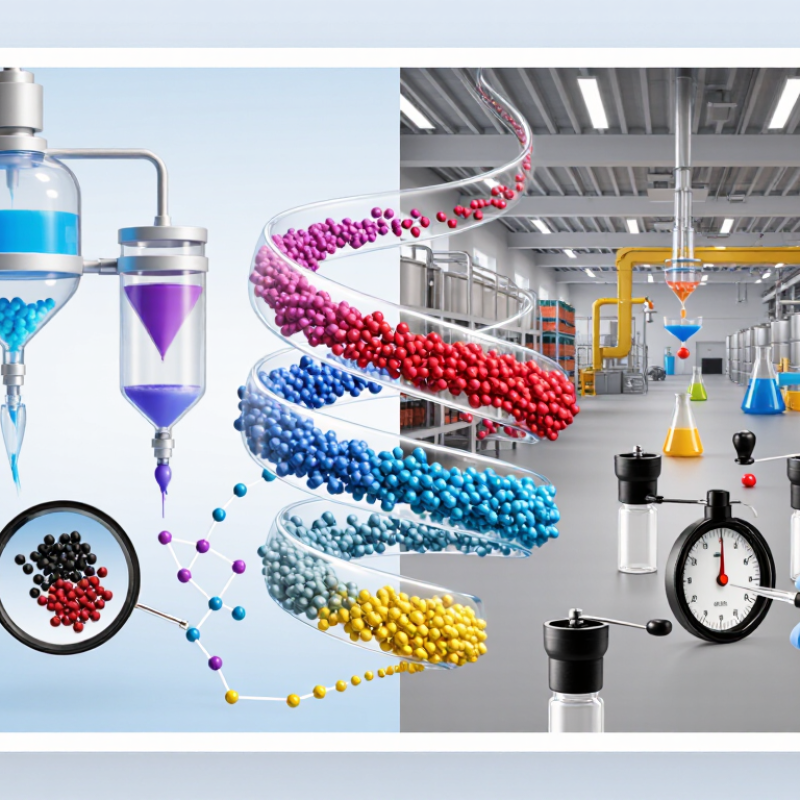
A dispersant is an additive that helps solid particles spread evenly through a liquid. It can wet particle surfaces and reduce the attraction that causes clumps. Some dispersants work mainly through electrostatic repulsion; others use polymer chains to create steric separation. The right mechanism depends on the particles, liquid, and other ingredients. Small details matter.
Better particle separation can change viscosity, yield stress, and flow under shear. A well-matched dispersant may make a concentrated mixture easier to pump or apply, while helping reduce settling. Too little may leave visible specks or a grainy texture. Too much can sometimes increase viscosity or disrupt other ingredients. Not always predictable. A useful evaluation compares samples at measured dosages, using the same mixing conditions and checking flow at relevant shear rates. Also inspect the material after storage; a smooth fresh sample can still settle or thicken later. Results vary with temperature, particle size, and milling energy, so no single dosage fits every formulation. This part is easy to underestimate. A small test series, with notes on both processing and storage, often reveals more than a single viscosity reading.
China Best Dispersants to Improve Dispersion Rheology
How Dispersants Stabilize Particles in Liquid Systems
Dispersants help keep fine particles separated in liquids. Their molecules attach to particle surfaces, then create electrostatic repulsion or a protective steric layer. This reduces flocculation, where particles gather into loose clusters. In a pigment slurry, that can mean smoother flow and more even color. Small changes matter.
The right dispersant depends on the particle surface, liquid chemistry, and intended use. Too little may leave clusters and uneven settling; too much can sometimes affect viscosity or film properties. pH and dissolved salts also change how well particles repel each other. Not automatically better. A practical check is to compare grind fineness and viscosity across small, controlled dosage steps.
The scale of the coatings industry makes reliable dispersion important: Grand View Research estimated the global paints and coatings market at USD 179.98 billion in 2023. That figure is market context, not proof that any additive improves performance. ASTM D1210 provides a standard method for checking pigment dispersion fineness with a gauge, but a gauge alone cannot confirm long-term stability. Check samples after storage, too. A mix that looks uniform on day one may still form sediment later, so testing under actual storage and processing conditions remains essential.
China Best Dispersants to Improve Dispersion Rheology
Main Dispersant Types Used in Chinese Industries
Chinese manufacturers use several dispersant families, with the right choice depending on the powder, liquid, and production process. Polyacrylate dispersants are common in water-based coatings, ceramic slurries, and mineral suspensions. They can help keep fine particles apart and reduce viscosity. Small doses matter. Lignosulfonates are used in cement and some mineral-processing mixtures, where flow and water demand are practical concerns. Phosphate-based dispersants can support mineral and ceramic dispersion, but performance may shift with pH and dissolved salts.
Nonionic polymeric dispersants and surfactants are also used when wetting is difficult or the formulation contains mixed particle surfaces. In practice, a dispersant that works well with one pigment may perform poorly with another. Check slurry viscosity, settling, and flow after storage, not just the initial mix. A neat laboratory result can still mislead if factory water has different hardness or salt levels. This is easy to overlook.
Tips: Add dispersant gradually under steady mixing. Compare a control batch with treated samples, and record dosage, pH, and temperature. Test at production solids levels; dilute bench samples may hide problems.
A qualitative comparison of the stabilization mechanisms commonly associated with major dispersant classes.
Electrostatic stabilization uses particle-surface charge to promote repulsion; steric stabilization uses adsorbed polymer chains to hinder particle contact. A value of 1 indicates a commonly associated mechanism, not a measured performance score. Actual behavior depends on the formulation, particles, and processing conditions. These dispersant classes are used across applications such as coatings, ceramics, cement, and mineral processing.
Choosing a dispersant starts with the material’s surface, not its label. Carbon black has a high surface area and often needs strong adsorption; calcium carbonate usually responds to wetting and adequate surface coverage. For waterborne coatings, check compatibility with pH and salts. In solvent-borne inks, test resin affinity and solvent balance. Small changes matter.
The market context is broad: Grand View Research estimated the global paints and coatings market at USD 179.98 billion in 2023. That variety makes one “universal” choice unlikely. In lab trials, compare dispersants at equal active dosage, then track grind, viscosity, and storage stability.
Use a Hegman gauge for coarse particles and a rotational viscometer for flow changes. Keep the temperature consistent. A smooth sample can still settle after a week. That is easy to miss. For mineral fillers, check whether the dispersant lowers viscosity without causing hard settling; for pigment concentrates, watch color strength and rub-up.
ASTM D2196 provides a method for measuring non-Newtonian flow, but it cannot replace application testing. Start with a small dose range, record the order of addition, and adjust one variable at a time. The first choice may be wrong. That is useful data.
Evaluating dispersant performance requires a controlled comparison, not a single viscosity reading.
Prepare samples with the same solids loading, water quality, temperature, and mixing sequence. Record the dispersant dosage and allow each mixture the same conditioning time. Small details matter. A slightly different mixing speed can change the result.
Use a rotational rheometer to measure viscosity across low and high shear rates. Low-shear readings can reveal settling risk, while higher-shear data show how easily the mixture flows during processing. Record yield stress and recovery after high shear when these properties matter to the application. Repeat measurements on fresh samples; one run can mislead. Then compare sedimentation or visible separation after a defined rest period, such as overnight. A useful dispersant often reduces clumping and keeps flow consistent without making the mixture unstable. Still, the lowest viscosity is not always the best result. I have seen a smooth sample separate too quickly. Note any trade-offs, including foaming, slow wetting, or sensitivity to pH, and confirm promising results under real process conditions.
WhatsAppOffer Electronics Manufacturing All-in-One
PCBONLINE® is a registered trademark or service mark of pcb online limited or its affiliates.
Copyright © 2001-2024 Pcb Online Limited. All rights reserved