What Is an Optical Sorter and What Are Its Applications?
An optical sorter uses cameras, sensors, and software to inspect materials moving along a production line. It identifies visible differences, then directs selected items with timed air jets or mechanical gates. The result can be a cleaner product stream, a recovered material fraction, or less manual inspection. In practice, performance depends on more than the machine. Lighting, feed consistency, calibration, and operator judgment all matter.
Optical Sorter Applications span food processing, recycling, mining, and other industries that handle mixed materials. A food processor might remove discolored beans from a fast-moving belt. A recycling facility may separate clear plastic from colored pieces. In mining, sensor-based systems can help distinguish rock types before further processing. Each task needs suitable sensors and carefully chosen settings. One machine cannot reliably solve every sorting problem.
Dr. Volker Rehrmann, a sorting-technology executive at TOMRA, is associated with the development of industrial sorting systems. A practical principle reflecting his work is: “Good sorting starts with seeing the material clearly, then making a consistent decision.” This is a paraphrase, not a verified verbatim quotation. That distinction matters. Buyers should test representative samples and review results under real operating conditions, rather than rely on a headline accuracy figure. Even a well-designed sorter can misclassify items when materials overlap in color, shape, or surface appearance. The technology is useful, but not magic. Its best results come from matching the sensor, software, and process to the material—and checking that match over time.
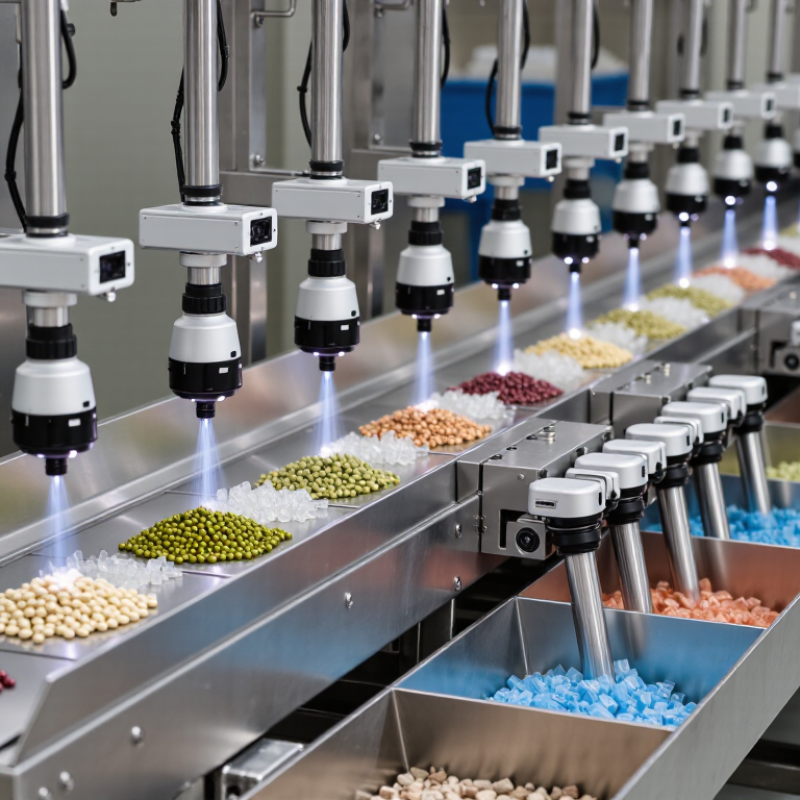
What an Optical Sorter Is and What It Does
An optical sorter inspects items as they move along a conveyor or pass through a chute. Cameras and other optical sensors collect information about each item, such as its color, shape, size, or reflected light. Processing software compares those readings with set criteria. When an item does not match, a timed air jet or mechanical gate can divert it.
The machine does not simply “see” good and bad products. Its performance depends on how items are presented and on the sorting rules selected for the task. For example, uneven lighting, overlapping pieces, dust on a lens, or inconsistent product spacing can affect detection. Small details matter. Operators may need to adjust settings when a crop, material, or production line changes.
Optical sorters are used in food processing, recycling, mining, and manufacturing. A food facility might separate discolored beans from acceptable ones; a recycling line may distinguish materials by color or optical response. Some systems use near-infrared sensors, which can help identify differences not visible to the human eye. Still, no sorter catches every defect. Regular cleaning, calibration, and sample checks help teams understand what the equipment is missing—and whether its decisions remain useful in real operating conditions.
How Optical Sorters Detect and Classify Materials
An optical sorter examines materials as they travel across a moving belt or pass through a chute. Carefully controlled lighting helps cameras record each item’s color, shape, and surface features. Depending on the task, sensors may also measure near-infrared responses, which reveal differences not obvious to the human eye. Software compares these readings with configured criteria and assigns a category to each detected object. A red piece among pale flakes is easy to picture. Subtle material differences are harder.
The system tracks each item’s position, then may use timed air jets to direct selected pieces into separate outlets. Accurate classification depends on clean lenses, steady lighting, and materials spread far enough apart to be seen individually. Operators often test representative samples and adjust thresholds; one setting rarely works equally well for every batch. Dust, moisture, overlapping pieces, or changing surface colors can confuse detection. False rejects happen. Reviewing uncertain cases matters, because a sorter’s output reflects both its sensors and the assumptions built into its setup.
Key Components and Stages of the Sorting Process
An optical sorter separates materials by detecting visible differences and directing selected items away from the main flow. Its components usually include a feed system, an inspection zone, sensors, a processing unit, and an ejection mechanism. A vibrating feeder spreads pieces into a thin, steady layer. This matters because overlapping items can hide useful color or shape information.
In the inspection zone, controlled lighting helps cameras or other sensors capture consistent images. Some systems use additional sensing methods to distinguish features such as material type or surface defects. The processing unit compares each item with configured criteria and sends a signal when it detects a target. Then, precisely timed air nozzles—or mechanical gates in some designs—redirect that item into a separate chute. Timing matters. A nozzle firing too early may push a neighboring piece aside.
The process depends on clean optics, stable feed rates, and regular checks against known samples. Dust is troublesome. It can weaken image quality, while irregular shapes and changing moisture may affect results. Operators may need to adjust lighting, thresholds, or belt speed as the incoming material changes. No setup catches every defect, and borderline items can be misclassified. Reviewing sample outputs helps reveal where the settings need more thought.
Applications of Optical Sorters Across Industries
Optical sorters use cameras, lasers, or near-infrared sensors to identify material by color and spectral signature, then direct air jets or mechanical gates to separate it. In food processing, they remove discolored grains, stones, and damaged produce from fast-moving lines. This matters at scale: FAO’s 2023 report on SDG food-loss indicators estimated that 13.2% of food was lost after harvest and before retail in 2021. Sorting cannot prevent every loss, but it can help processors detect defects consistently.
Recycling facilities use optical systems to separate plastics by resin type and color, while mining operations can sort some ores before energy-intensive crushing. The World Bank’s What a Waste 2.0 report estimated 2.01 billion tonnes of municipal solid waste were generated globally in 2016; at least 33% was not managed in an environmentally safe manner. Better sorting can support material recovery, though results depend on clean feed, sensor settings, and what happens to rejects. Not a perfect fix. Wet, dusty, or overlapping items can confuse sensors, and poor calibration can send valuable material to waste.
Tips: Match the sensor to the material, test it with real samples, and check reject streams regularly. Track accuracy and throughput together; a fast line is not useful if good product leaves with the rejects. Keep a record of changes. That detail is often missed.


 Phone
 WhatsApp
 Email