What Is an Aluminium Tri Fold Blind Rivet for Composites?
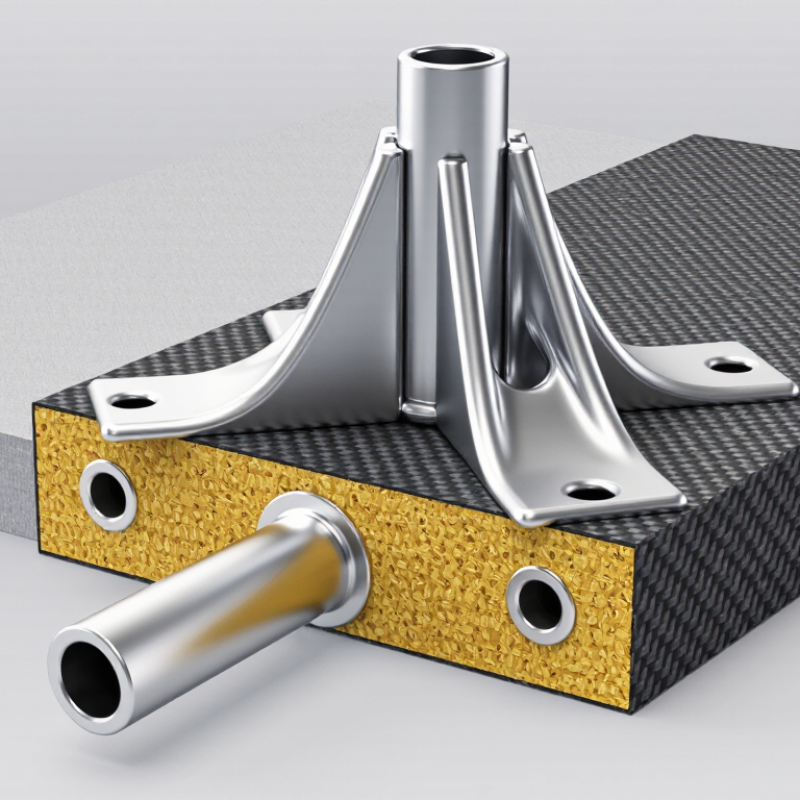
An Aluminium Tri-Fold Blind Rivet for Composites is designed for joining thin composite panels when access is available from one side. Its three-legged expansion creates a broad bearing area behind the panel. This helps reduce pull-through and distributes clamping pressure more gently than many conventional blind rivets.
Aluminium Tri-Fold Blind Rivets For Composite Materials are commonly considered for fiberglass, carbon-fiber laminates, sandwich panels, and lightweight assemblies. Their low weight can support efficient designs. The tri-fold body also helps accommodate uneven or fragile surfaces. However, compatibility depends on laminate thickness, hole quality, rivet length, and expected loads. Small details matter. A poorly sized rivet may crush the core, loosen during vibration, or damage the surface around the hole.
Practical installation begins with accurate drilling and careful cleaning. The hole should remain round, smooth, and free from loose fibers. Engineers often check grip range, shear strength, tensile strength, galvanic compatibility, and environmental exposure. Test coupons can reveal problems before production begins. This is useful because composite behavior varies widely between resin systems and laminate structures. Manufacturer data should guide selection, while independent testing can confirm performance in demanding applications. It is tempting to assume that an aluminum rivet suits every composite. It does not. In some assemblies, a coated rivet, isolating washer, or different fastener material may be more appropriate. Experienced technicians also inspect the folded legs after setting. Their shape provides valuable evidence of proper installation, although visual inspection alone cannot prove long-term reliability.
Definition and Purpose of an Aluminium Tri Fold Blind Rivet
What Is an Aluminium Tri Fold Blind Rivet for Composites?
Definition and Purpose of an Aluminium Tri Fold Blind Rivet
An aluminium tri fold blind rivet is a one-sided fastener designed for composite panels. During installation, its sleeve opens into three broad legs behind the panel. These legs spread the clamping force across a larger area. That design helps reduce pull-through and local crushing in softer materials.
Its main purpose is joining composites when the rear surface cannot be reached. Typical applications include fiberglass panels, honeycomb structures, plastic laminates, and lightweight enclosures.
Aluminium keeps the assembly relatively light and offers useful corrosion resistance in suitable environments. However, it is not automatically the best choice for every load. High vibration, repeated impact, or galvanic contact with other metals may require a different material or protective measure.
Tips: Check the panel thickness and the rivet’s grip range carefully. Drill a clean, correctly sized hole, and remove loose fibers before installation. Use steady pressure rather than excessive force. A deformed head may look secure but still clamp unevenly. It is easy to assume that three legs guarantee strength. That assumption can fail when the core is damaged or the hole is oversized. Inspect the formed backside and the joint surface after setting. For critical structures, follow tested engineering data and perform a sample installation first.
Key Components and Structural Design
An aluminium tri-fold blind rivet for composites uses a hollow body, a mandrel, and a formed head. Its body is usually aluminium, while the mandrel may use a stronger metal. Material pairing requires attention.
During installation, the mandrel pulls the rivet body through the joint. The rear section splits into three broad legs. These legs fold against the hidden surface, creating a large bearing area. That matters. The load spreads more evenly across the composite panel, reducing local pull-through risk.
The visible head controls surface seating and helps clamp the outer laminate. The rivet body controls deformation, while the mandrel provides the setting force. In sandwich panels, a backing washer or reinforced insert may improve support around the hole. It depends on the core and laminate thickness. Designers should specify hole diameter, grip range, edge distance, and installation force carefully. A short grip can leave weak leg formation. Excessive grip may crush the laminate or deform the core.
Structural design should consider shear, tensile pull-out, vibration, moisture, and thermal movement. Aluminium can also create galvanic concerns when paired with dissimilar metals. Protective isolation may be necessary. The design is not foolproof. A broad folded leg does not replace proper load testing. In practical assembly, small drilling damage or uneven clamping can change performance more than expected. Proof testing on representative composite coupons remains valuable.
What Is an Aluminium Tri Fold Blind Rivet for Composites?
An aluminium tri fold blind rivet uses a deformable rivet body, a mandrel, and a large rear-side folding action to clamp composite panels. The chart compares representative yield and ultimate tensile strengths of aluminium alloys commonly considered for rivet bodies and lightweight structural parts.
5052-H32 and 5056-H32 are often selected where ductility and controlled deformation are important, while 6061-T6 provides higher strength but is less formable. Actual rivet performance also depends on diameter, grip range, hole quality, composite core strength, washer or head geometry, and installation conditions. Final structural sizing should use tested design allowables and applicable fastener standards.
How the Tri Fold Rivet Installs and Distributes Load
What Is an Aluminium Tri Fold Blind Rivet for Composites?
An aluminium tri-fold blind rivet joins thin composite panels where backside access is limited. Its sleeve forms three broad folds behind the panel. These folds press against the rear surface and distribute clamping force over a wider area. That reduces concentrated pressure on soft cores and fragile skins. The rivet is not a cure for weak panel design.
Installation begins with a clean, correctly sized hole. Deburr carefully, because sharp edges can damage exposed fibers. Select a rivet whose grip range matches the total material thickness. If the grip is too short, the folds may form poorly. If it is too long, the joint can loosen. Insert the rivet fully, then use a compatible setting tool. As the mandrel pulls, the sleeve splits and folds outward. Stop when the rivet head sits firmly against the outer skin. Do not over-compress the composite.
After setting, inspect the three legs from the accessible side when possible. They should contact the rear surface evenly. Uneven folds may indicate an incorrect hole, grip range, or tool setting. In service, the folded legs spread load across a larger area than a narrow sleeve. However, edge distance and panel thickness still control joint strength. Repeated vibration requires testing on representative assemblies. That step is often skipped. The fit is not always perfect, and composite behavior can be less predictable than metal. Treat that uncertainty as a design input.
Advantages for Joining Composite Materials
What Is an Aluminium Tri Fold Blind Rivet for Composites?
An aluminium tri-fold blind rivet joins composite panels when the rear side is inaccessible. Its sleeve opens into three broad legs behind the panel. This spreads clamping pressure across a wider area than a standard blind rivet. The design can reduce local crushing in thin laminates. It also supports faster installation with a hand or pneumatic tool.
The advantage is practical. One operator can secure a panel through a single access hole. The joint needs less backside clearance, which helps inside aircraft fairings, vehicle bodies, and lightweight enclosures. Grand View Research valued the global composites market at about USD 114.7 billion in 2023. It forecasts growth through 2030. That expansion increases demand for simple, repairable joining methods. Lightweight aluminium also limits added mass.
But “lightweight” does not mean risk-free. Carbon-fiber composites and aluminium may create galvanic corrosion in moisture. A qualified engineer should specify insulation, sealant, hole diameter, grip range, and edge distance. FAA AC 43.13-1B remains a useful reference for sound fastening and inspection practices. The report’s guidance reinforces a basic lesson: joint preparation matters as much as rivet selection.
Field fitting can expose problems. The three legs may bridge an uneven surface. Poor deburring can damage fibers. A slightly loose fit may also reduce load transfer. Testing representative coupons is wiser than trusting a catalog value. Tri-fold rivets are efficient, but they are not a universal cure.
Selection Factors for Composite Applications
What Is an Aluminium Tri Fold Blind Rivet for Composites?
Selection Factors for Composite Applications
An aluminium tri fold blind rivet expands behind the panel and forms three bearing legs. This spreads clamping pressure across a wider area. It can reduce pull-through risk in thin composite skins and honeycomb panels. The choice still depends on the laminate, core density, and joint geometry. The 2024 JEC Observer reported global composites production at approximately 12.7 million tonnes in 2023. More composite structures mean more lightweight fastening points, but not necessarily easier installation.
Grip range is critical. A rivet that is too short may not form correctly. An oversized grip can crush the core or leave an unstable joint. Measure the complete stack, including paint, sealant, and local reinforcements. Check the manufacturer’s load data for shear, tensile, and pull-through performance. Tri fold expansion looks useful. It is not a substitute for coupon testing.
Corrosion deserves equal attention. Aluminium fasteners can react with carbon-fibre composites, especially with moisture and electrical contact. Use an approved isolating layer, compatible washer, or protective sealant. The 2023 Global Composites Market Report identifies durability and lightweighting as continuing design priorities. Yet reports rarely capture every workshop mistake. Hole quality matters. Use the specified diameter, control drilling damage, and remove loose fibres before assembly. A practical installation audit should record torque, mandrel retention, hole condition, and panel deformation. Small records often reveal large problems.


 Phone
 WhatsApp
 Email