7 Best Exhaust Pressure Gauges for Global Buyers?
Choosing the right Exhaust Pressure Gauge can feel simple until real installation begins. Global buyers must compare accuracy, pressure range, temperature resistance, fitting size, and display readability. A gauge that works well on a compact diesel engine may perform poorly near a high-temperature turbocharger.
This guide examines seven practical options for different workshops, fleets, and industrial applications. Each product is considered through measurable details, including scale units, response speed, connection design, housing protection, and calibration information. Clear readings matter when diagnosing a restricted diesel particulate filter, checking backpressure, or monitoring a modified exhaust system. Some models also include glycerin-filled dials, which can reduce pointer movement during engine vibration.
However, no single gauge suits every vehicle or operating environment. Product listings sometimes omit sensor limits, thread standards, or calibration procedures. That gap can create expensive installation mistakes. Buyers should verify the engine’s expected pressure range, exhaust temperature, mounting location, and local measurement preferences before ordering. Compatibility deserves more attention than a low purchase price.
The comparison also considers supplier transparency, warranty terms, documentation, and long-term service support. These factors are especially important for international purchases, where returns may be slow and replacement parts may be difficult to source. Testing methods are not perfectly identical across brands, so direct ranking has limitations. Still, the selected gauges offer useful starting points for informed decisions, whether you manage a repair bay, maintain commercial vehicles, or source equipment for a global maintenance program.
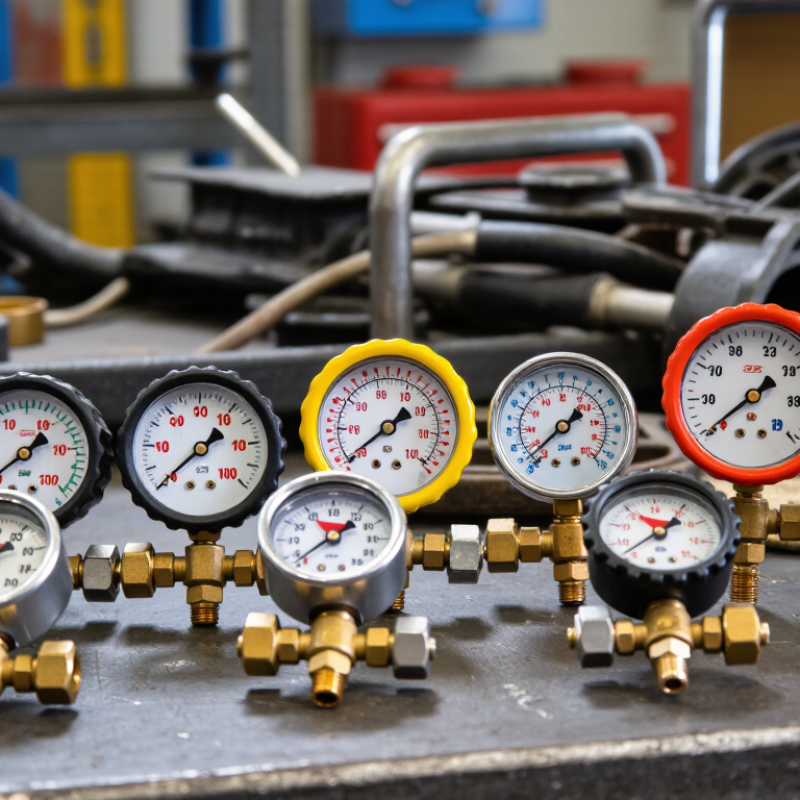
What Is an Exhaust Pressure Gauge and Why Does It Matter?
An exhaust pressure gauge measures the pressure inside an engine’s exhaust system. It usually connects before the turbocharger, diesel particulate filter, or catalytic converter. The reading shows how hard exhaust gases are working to leave the engine.
This matters because excessive backpressure can reduce power, raise exhaust temperature, and increase fuel consumption. In severe cases, it may damage a turbocharger or overload an emissions component. A clear gauge helps technicians identify blocked filters, restricted pipes, or incorrect engine settings before damage becomes expensive. Pressure readings should be compared with the engine manufacturer’s specifications. Universal assumptions can mislead buyers. Some engines naturally operate at higher pressure than others.
Tips: Choose a gauge with a suitable pressure range, heat-resistant tubing, and clear markings. Check whether the sensor and fittings match your engine. Installation should avoid sharp bends and direct contact with extremely hot surfaces. Calibration also matters. A cheap gauge may appear accurate, but small errors can change a diagnosis. Keep the original readings for later comparison.
For global buyers, unit selection deserves attention. Kilopascals, bar, and pounds per square inch are common, but conversion mistakes happen easily. A well-designed gauge should remain readable in vibration, dust, and poor lighting. Digital models offer data features, while mechanical models can be simpler to maintain. Neither option is perfect. The best choice depends on access, temperature, service skill, and measurement needs.
How to Compare Exhaust Pressure Gauge Types and Measurement Ranges
Choosing the right exhaust pressure gauge starts with understanding the measurement, not the display style. Mechanical Bourdon gauges suit rugged workshops and simple inspections. They work without batteries, but vibration can make readings difficult. Digital gauges offer clearer numbers and data logging. However, their sensors may need protection from heat, moisture, and electrical interference. Differential gauges compare exhaust pressure with ambient pressure, which helps evaluate restriction across filters, silencers, or piping.
Range selection deserves careful attention. A gauge should not operate continuously near its maximum scale. For example, a system reaching 2 bar may be better served by a 0–4 bar range than a 0–2 bar range. The wider range protects the instrument, but it can reduce reading detail. I once preferred a broad scale for safety and later found small pressure changes harder to identify. That choice needed reconsideration.
Check the pressure unit before purchasing. Global equipment may specify kPa, bar, psi, or inH2O. Select a gauge with the correct connection, thread standard, and wetted materials. Exhaust gas can carry soot, condensation, and corrosive compounds. A remote line, cooling coil, or snubber can protect the sensing element from heat and pulsation. Confirm the temperature limit carefully. Calibration records also matter, especially when readings guide maintenance decisions. A low-cost gauge is not automatically economical if its range, accuracy, or installation method is wrong.
7 Best Exhaust Pressure Gauges for Global Buyers
Representative full-scale measurement ranges commonly used for exhaust backpressure testing. Actual specifications vary by application, connection, temperature rating, and calibration.
Use lower-range differential gauges for precise restriction testing, and wider-range digital or remote-sensing gauges when exhaust pressure may rise significantly. The values are shown in kPa; 100 kPa equals 1 bar approximately.
Key Features to Check Before Choosing an Exhaust Pressure Gauge
Choosing an exhaust pressure gauge starts with its measuring range. Do not select the widest scale automatically. A 0–10 bar gauge may hide small backpressure changes that a 0–3 bar model shows clearly. Check the engine or exhaust manufacturer’s specified limit first. ASME B40.100-2022 highlights accuracy, repeatability, temperature influence, and case design as key gauge performance factors. These details matter near hot exhaust manifolds.
Temperature resistance needs careful attention. Exhaust gases can exceed 600°C in heavy-duty applications, while the gauge itself should remain within its rated ambient range. A remote-mounted gauge with a cooling line can reduce heat exposure. Look for vibration resistance, a readable dial, corrosion-resistant wetted parts, and a pressure connection that matches local workshop fittings. Metric and imperial threads are not interchangeable. That mistake is expensive.
Response time also affects diagnosis. A slow gauge may miss short pressure spikes during acceleration. A liquid-filled design can reduce needle vibration, although fluid viscosity may change in cold climates. NIST Technical Note 1297 recommends reporting measurement uncertainty with an expanded uncertainty factor of k=2, representing approximately 95% confidence. Ask suppliers for calibration records, accuracy at multiple scale points, and temperature testing data. ISO/IEC 17025-accredited calibration adds credibility, but documentation still deserves inspection. A certificate alone proves little. During field checks, many buyers focus on accuracy and overlook hose routing, condensation, or blocked sensing ports. I have seen that omission distort otherwise careful readings.
How to Install, Calibrate, and Maintain an Exhaust Pressure Gauge
Installing an exhaust pressure gauge requires a cool, accessible mounting point and a clear measurement plan. Select a pressure port recommended for the engine or exhaust system. The port should represent backpressure accurately, not a turbulent outlet area. Use heat-rated tubing, secure it away from the manifold, and allow gentle bends. Sharp bends can trap soot or moisture. Tighten fittings carefully. Excessive force may damage threads.
With the engine off, confirm that the gauge reads zero. If it does not, investigate before running the system. Connect a calibrated reference manometer or pressure source, then apply pressure gradually across the gauge range. Compare readings at several points, including the normal operating range. Record the results, units, temperature, and date. Do not rely only on the factory setting. Small errors can affect maintenance decisions.
Inspect the sensing line for cracks, loose fittings, soot, or condensation during scheduled service. Check the gauge response while the engine warms up. A slow response may indicate a restricted tube. Compare current readings with previous records under similar load and speed. I have seen clean-looking tubing produce unreliable results after moisture collected near a low point. That detail is easy to miss. Replace damaged parts with materials rated for the measured pressure and temperature, then repeat the zero and leak checks. Calibration intervals should reflect vibration, heat exposure, and operating severity, not just a calendar date.


 Phone
Phone WhatsApp
 Email
Email