Choosing the 2026 best screw air compressor requires more than comparing horsepower, price, or brand reputation. Industrial buyers need reliable air at the correct pressure, flow, purity, and operating temperature. A compressor running beside a dusty machining line faces different demands from one serving food packaging. The details matter.
The U.S. Department of Energy’s Improving Compressed Air System Performance: A Sourcebook for Industry identifies compressed air as a significant industrial energy consumer. Its guidance also warns that leakage can waste a substantial share of compressor output, sometimes reaching 20% to 30% in poorly maintained systems. That figure changes the buying decision. A highly efficient machine cannot compensate for open drains, oversized piping, or uncontrolled pressure settings.
Energy performance deserves closer attention.
The International Energy Agency continues to emphasize industrial efficiency, electrification, and system-level energy management in its Energy Efficiency reports. These priorities are relevant because a screw air compressor may operate for thousands of hours annually. A small difference in specific power can become a large electricity cost over five years. Buyers should compare kilowatts per cubic metre, not only rated motor capacity. They should also examine variable-speed control, service access, oil separation, filtration, heat recovery, and documented sound levels.
ISO 11011 provides a recognized framework for assessing compressed-air system energy efficiency. However, no model wins everywhere. That assumption can fail. A variable-speed compressor may suit fluctuating demand, while a fixed-speed unit can remain practical under stable, continuous production. This guide evaluates leading 2026 options through measurable efficiency, lifecycle cost, reliability, controls, and real factory conditions. It also acknowledges an uncomfortable truth: the cheapest quote is rarely the cheapest system.
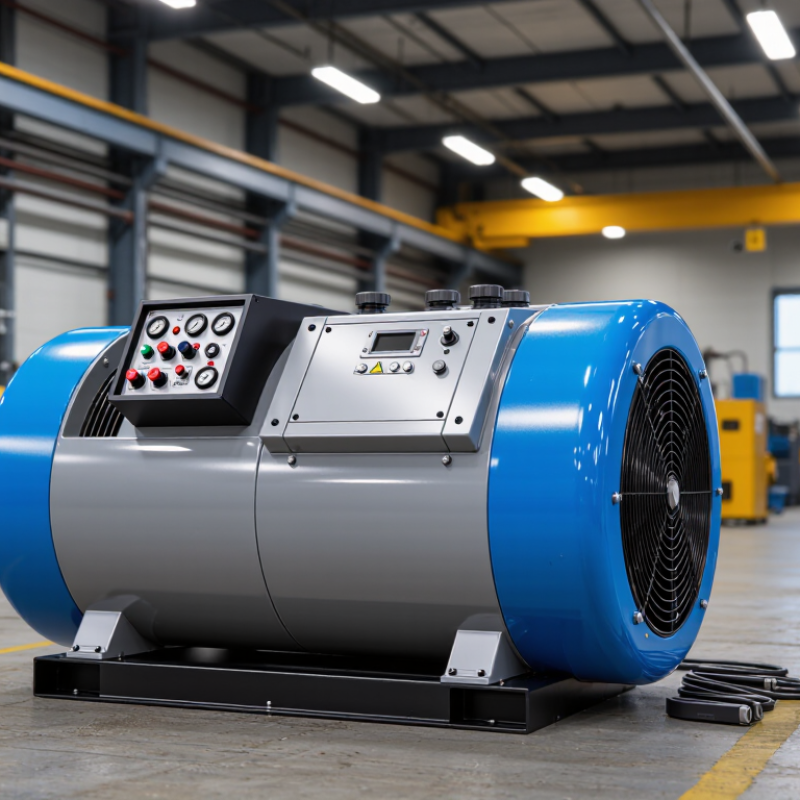
A screw air compressor uses two helical rotors to compress air continuously. The rotors sit inside a precisely machined chamber. As they turn, air enters through the inlet valve. The trapped air moves along the rotors and occupies less space. Pressure rises before the air reaches the outlet.
Oil-injected models use oil to seal clearances, cool the compression chamber, and reduce friction. A separator then removes most oil from the compressed air. Dry-screw models avoid oil in the compression area, but they require careful temperature control. In both designs, motors, bearings, filters, and control systems support stable operation. The process sounds simple. It is not.
In an industrial plant, operators may notice a change before a control panel shows an alarm. A hotter discharge pipe, unusual vibration, or slower pressure recovery deserves inspection. Moisture, clogged filters, and poor ventilation can increase energy use. This is where practical judgment matters. A variable-speed drive can match output to changing demand, but it is not automatically the best choice. Service access, duty cycle, air quality, noise, and maintenance records also matter when selecting a 2026 compressor. Check the actual pressure and flow required at the tools, not only the advertised rating. A small pressure drop across a long pipe can affect production more than expected.
2026 Best Screw Air Compressor for Industrial Use?
Key Factors for Choosing an Industrial Screw Air Compressor in 2026
Choosing an industrial screw air compressor in 2026 requires more than comparing rated horsepower. Start with the plant’s real demand, not its largest occasional load. Record pressure, flow, operating hours, ambient temperature, and production changes. A compressor running below capacity can waste energy through inefficient cycling. I have seen estimates fail when leaks were ignored. Walk the lines. Use ultrasonic testing where possible, and measure pressure at the point of use. Leave room for growth, but avoid buying capacity for an uncertain project.
Energy performance should guide the selection, because electricity often dominates lifetime cost. Compare specific power at the required pressure, not only free air delivery. Request performance data measured under recognized standards, such as ISO 1217. Ask for test conditions, tolerance ranges, and service records. Heat recovery may support process water or space heating, depending on the site. Variable-speed control can help with fluctuating demand, but it is not automatically cheaper. It needs proper sizing and stable operating patterns. Check filtration, oil separation, dryer compatibility, noise levels, and maintenance access. A compact machine may look attractive until technicians need to remove a cooler. That detail matters. Question optimistic savings claims. Real factories rarely match laboratory conditions.
Typical specific power increases as discharge pressure rises. Lower specific power generally indicates better energy efficiency when flow, inlet conditions, and load profile are comparable.
The chart uses representative industrial rotary screw compressor values at common working pressures. Actual performance depends on motor efficiency, variable-speed control, air treatment, inlet temperature, altitude, maintenance, and whether the compressor operates at full or partial load. When choosing equipment, compare the required flow in m³/min, working pressure in bar(g), specific power in kW per m³/min, duty cycle, and total energy cost.
The 2026 best screw air compressor depends on the application, not a universal horsepower rating. In metalworking plants, oil-injected rotary screw compressors often suit pneumatic tools, machining centers, and general assembly. Their compact design delivers steady airflow during long shifts. A refrigerated dryer may protect downstream equipment, although humid workshops often need stronger treatment.
For food processing, pharmaceutical production, and electronics, oil-free screw compressors reduce contamination risks. The correct choice still depends on ISO 8573-1 air-quality requirements, pressure stability, and validation procedures. Two-stage oil-free units can support high demand with lower discharge temperatures. They usually require stricter maintenance. That detail is easy to underestimate.
Variable-speed drive compressors fit factories with changing demand, such as packaging lines operating across several shifts. Fixed-speed models can be practical when airflow remains consistently high. The U.S. Department of Energy’s Improving Compressed Air System Performance guide reports that compressed air may consume 10–15% of industrial electricity. Leak control matters. DOE assessments also show that poorly maintained systems can waste a substantial share of generated air, sometimes exceeding 20%. Actual savings vary because production schedules, pressure settings, and pipe layouts differ. An experienced technician should measure flow, pressure drop, and unloaded running time before selecting equipment. A larger compressor is not automatically safer. It may simply run inefficiently.
| Industrial Application | Recommended Screw Compressor Type | Typical Pressure Range | Typical Capacity Range | Common Motor Range | Air Quality | Why It Is Suitable | Important Selection Considerations |
|---|---|---|---|---|---|---|---|
| General Factory Manufacturing | Oil-injected rotary screw, fixed-speed | 7–13 bar(g) | 1.0–30 m³/min | 7.5–200 kW | Industrial compressed air with downstream filtration | Reliable for steady compressed-air demand and continuous-duty operation. It is usually simpler and less expensive than a variable-speed system. | Best where demand remains relatively stable. Select an air receiver, dryer, and filtration system according to the required flow and air-quality class. |
| Factories with Variable Air Demand | Oil-injected rotary screw with variable-speed drive | 7–13 bar(g) | 1.0–30 m³/min | 7.5–250 kW | Industrial compressed air with appropriate filtration | The motor speed can adjust to changing demand, reducing unloaded running and improving energy efficiency during partial-load operation. | Evaluate the actual demand profile, minimum stable turndown, control response, motor efficiency, and total cost of ownership rather than comparing purchase price alone. |
| Food, Beverage, and Pharmaceutical Production | Oil-free rotary screw, commonly two-stage | 7–10 bar(g) | 2.0–30 m³/min | 30–450 kW | Oil-free compressed air at the compressor outlet; final treatment may still be required | Eliminates oil injection in the compression chamber and reduces the risk of product contamination in sensitive production areas. | Confirm the required ISO 8573-1 air-quality class, installation environment, cooling method, condensate treatment, and validation requirements. |
| Electronics and Semiconductor Manufacturing | Oil-free rotary screw with high-grade air treatment | 7–9 bar(g) | 1.0–20 m³/min | 15–300 kW | Very clean, dry compressed air; final filtration and drying are normally required | Supports contamination-sensitive processes such as pneumatic handling, cleanroom automation, and instrument air systems. | Specify pressure dew point, particle limits, oil limits, filtration redundancy, and monitoring points. Compressor selection alone does not guarantee final air quality. |
| Automotive Assembly and Body Shops | Oil-injected rotary screw with variable-speed drive | 7–10 bar(g) | 2.0–40 m³/min | 15–315 kW | Dry, filtered industrial air | Provides stable air for robotic tools, fastening equipment, paint preparation, actuators, and intermittent production shifts. | Use a refrigerated or desiccant dryer as required by the process. Check peak demand from simultaneous tools and avoid excessive system pressure. |
| Metal Fabrication and CNC Machining | Oil-injected rotary screw, fixed-speed or VSD | 7–13 bar(g) | 1.5–25 m³/min | 11–200 kW | Dry, filtered industrial air | Suitable for CNC machines, pneumatic clamps, cutting systems, material handling, and general plant air. | Consider short high-flow events, receiver volume, chip and coolant contamination, ambient temperature, and the pressure required at the machine inlet. |
| Textile Manufacturing | Oil-injected rotary screw with variable-speed drive | 6–10 bar(g) | 3.0–35 m³/min | 22–250 kW | Dry, clean air suitable for pneumatic machinery | Handles long operating hours and changing demand from spinning, weaving, knitting, and pneumatic control equipment. | Prioritize energy efficiency, low pressure fluctuation, effective condensate management, and a dryer sized for the local climate. |
| Mining, Quarrying, and Construction Sites | Portable rotary screw, often diesel-driven | 7–35 bar(g) | 5–45 m³/min | Typically 50–450 kW equivalent input | Industrial compressed air with heavy-duty filtration | Designed for mobility and demanding outdoor conditions, including drilling, rock tools, blasting support, and remote construction work. | Check altitude derating, ambient temperature, dust protection, fuel consumption, noise limits, towing requirements, and service access. |
| High-Pressure PET Blow Molding | Dedicated two-stage high-pressure screw system | 25–40 bar(g) | 5–30 m³/min | 90–500 kW | Dry, oil-controlled or oil-free air according to product requirements | Provides the elevated pressure needed for bottle and container preform blowing with more efficient compression than using several general-purpose compressors in series. | Use a dedicated high-pressure design. Confirm pressure stability, cooling capacity, dryer performance, receiver sizing, and compatibility with the molding cycle. |
| Chemical and Process Industries | Oil-free or oil-injected rotary screw, selected by process risk | 7–13 bar(g) | 2.0–40 m³/min | 30–450 kW | Process-specific air quality | Can provide dependable instrument air, control air, and process air for continuous operations. | Review hazardous-area classification, gas compatibility, corrosion resistance, ventilation, redundancy, and whether oil-free compression is mandatory. |
| Wastewater Treatment and Utilities | Oil-free rotary screw with variable-speed drive | 0.5–3.5 bar(g) for aeration systems | 10–150 m³/min | 30–500 kW | Oil-free air where biological-process protection is required | Variable-speed operation can match blower or aeration demand, while oil-free compression helps reduce contamination risk in biological treatment systems. | Compare screw compressors with purpose-built blowers. Confirm oxygen-transfer requirements, turndown range, noise, humidity, and continuous-duty performance. |
| Central Utility Air Systems | Multiple rotary screw compressors with sequenced controls | 7–13 bar(g) | Combined capacity based on plant demand | Multiple units from 15–450 kW each | Determined by the most demanding connected process | Improves redundancy, maintenance flexibility, and load matching compared with relying on one oversized compressor. | Use a lead-lag or master sequencing controller, maintain standby capacity where necessary, and evaluate pressure drop across the entire distribution network. |
For 2026 industrial use, the best screw air compressor is not simply the largest model. Compare efficiency at your actual working pressure, not the brochure’s most flattering figure. Request performance data tested to ISO 1217. A reliable comparison uses free air delivery, motor input, and specific power under similar conditions. In a plant I assessed, a small pressure drop exposed more savings than a premium efficiency label. Check full-load and part-load behavior. Heat recovery can warm wash water or a workshop area when demand remains steady.
Capacity should match peak demand plus a sensible reserve, not an exaggerated safety margin. Record receiver pressure, airflow, shift patterns, and short cycling for several production days. A compressor that unloads every few minutes may waste energy and suffer unnecessary wear. Controls matter when demand changes. Variable-speed control can reduce unloaded running, while sequencing multiple units may protect efficiency during lower demand. Ask whether alarms display pressure, temperature, service hours, and fault history clearly. Remote access helps, but it cannot replace local checks or trained judgment.
Maintenance needs are often underestimated. Inspect intake filters, oil levels, separators, coolers, drains, belts, or couplings according to the service schedule. Dusty floors and hot rooms shorten intervals. Clean conditions do not guarantee trouble-free operation. Keep clearance around coolers, and verify condensate drains during routine inspections. Request documented service access, spare-part lead times, and noise readings before purchase. One weakness remains: calculated savings can disappear when operators raise pressure “just in case.” That habit deserves measurement, training, and occasional correction.
For industrial use in 2026, the best screw air compressor is not simply the largest model. Safety, installation, and lifetime cost deserve equal attention. Specify pressure, flow, air quality, duty cycle, and ambient temperature before purchasing. ISO 1217 defines compressor performance testing, while ISO 8573-1 classifies compressed-air purity. These standards help buyers compare verified output instead of optimistic brochures.
Installation details can decide reliability. Place the compressor on a level, vibration-resistant base with clear service access. Provide adequate ventilation, drainage, electrical protection, and correctly sized piping. Hot, dusty rooms can shorten separator and filter life. The U.S. Department of Energy’s compressed-air sourcebook reports that leaks may waste 20–30% of compressor output. Small leaks matter. A commissioning test should record pressure drop, temperature, flow, and unloaded running hours. I have seen systems selected correctly but installed with undersized pipework, creating avoidable pressure loss.
Tips: Use ISO 11011 for an air-system assessment before replacement. Check emergency isolation, guarding, noise exposure, and condensate management with qualified personnel. Keep a baseline energy log. DOE guidance indicates energy can represent roughly 70% of a compressed-air system’s lifecycle cost, so a cheaper purchase may become expensive through electricity, maintenance, and downtime. Variable-speed control can help with fluctuating demand, but it is not automatically efficient. Poor sequencing, excessive pressure, or low-load operation can erase the benefit. Recheck the assumptions after three months of production data.
WhatsAppOffer Electronics Manufacturing All-in-One
PCBONLINE® is a registered trademark or service mark of pcb online limited or its affiliates.
Copyright © 2001-2024 Pcb Online Limited. All rights reserved